Wholesale Letterman Jackets: Information Needed by B2B Buyers Before Ordering Wholesale

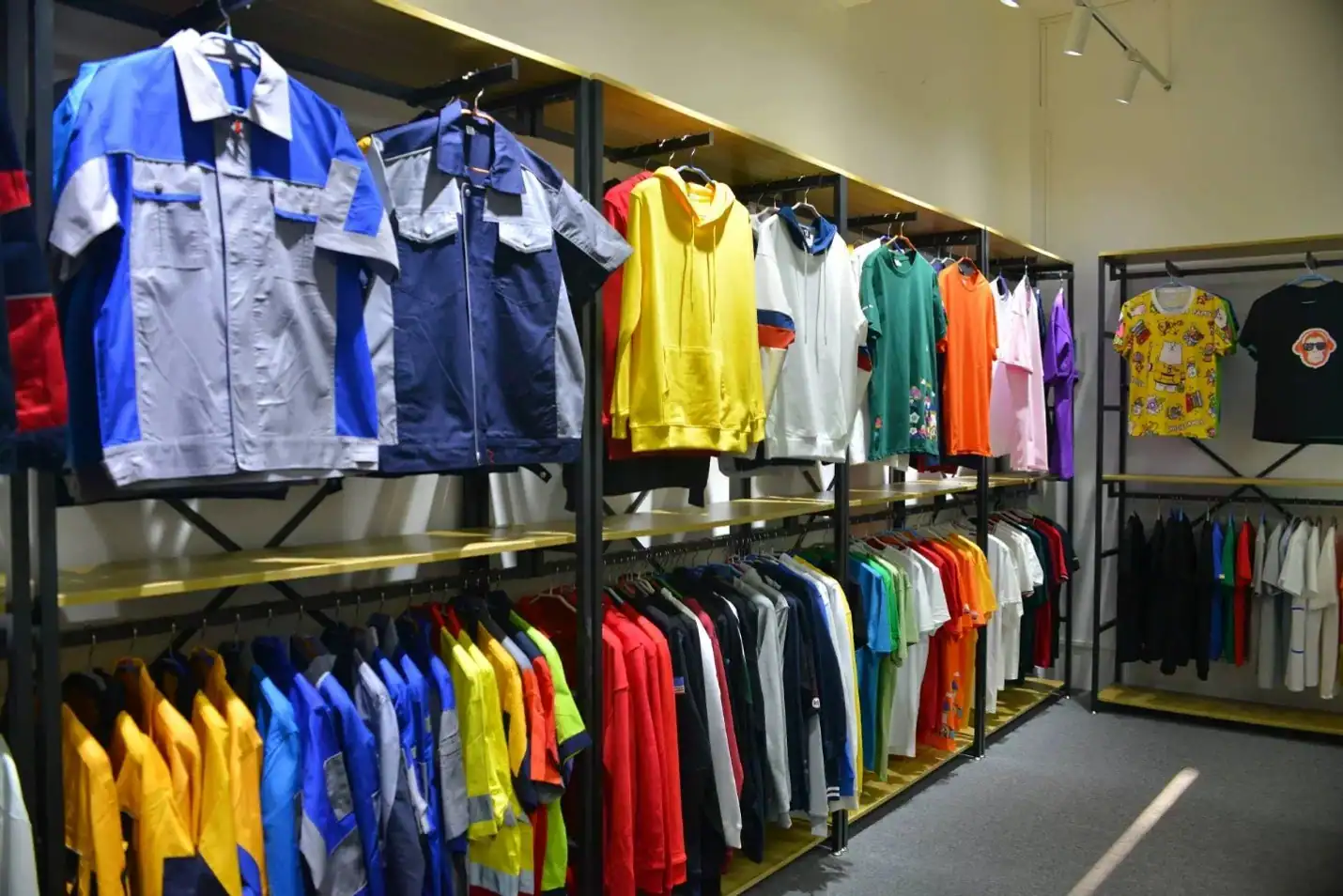
A wholesale letterman jackets order was made by a uniform supplier for a college athletic department for 200 units. The supplier had worked with this factory in the past with a completely different item from another category, and there were no problems. However, what they failed to do this time was check if the factory manufactured the patches used in the jacket or if they used the services of a third party for their manufacture. The patches had been supplied by a third party who had used a felt backing which was much thicker than the Melton wool backing used for the rest of the garment. This resulted in visible puckering in all the patches used. With an award ceremony just three weeks away, there were no solutions left for the supplier. They were given a discount on their next order. Not what they needed, not what they asked for, but then that is what happens when a letterman jacket order is treated like any other apparel order.
1. What Does ‘Wholesale’ Really Mean in Terms of Letterman Jacket Manufacturing?
The term wholesale gets thrown around quite casually in the apparel space. Sometimes it means purchasing ready-to-go merchandise at a discounted rate. At other times, it means placing an order at a factory level. In the case of letterman jackets, however, it makes a bigger difference than it normally would. It’s because these jackets are always custom-made, and thus cannot be readily ordered wholesale.
In terms of letterman jackets wholesale, the process involves placing orders with the factory, discussing the varsity jacket materials and trims, checking on the construction, receiving a sample of the product before production, and approval of bulk production. Buying from a distributor that keeps its inventory is definitely not considered wholesaling. The factories that make these jackets wholesale do so because of your being able to specify your product.
Why is it important? Because the preparation process before you can place a wholesale letterman jacket order is much more complicated compared to the regular bulk apparel ordering process. Knowing this process is what differentiates buyers who get their orders delivered on time from those who don’t.
2. What Types of Buyers Purchase Wholesale Letterman Jackets — And Why It’s Important
Wholesale letterman jacket orders can be placed by various buyers, and the production requirements will vary greatly depending on who is ordering the product. A production plant capable of managing all types of wholesale orders of this type would be valuable to the buyer much more than one specialized in simple and repetitive production runs only.
| Buyer Type | Typical Order Profile | Key Production Requirement |
| Streetwear / fashion brand | Single colorway, 50–300 units, seasonal | Custom lining print, Pantone-matched ribbing |
| School / athletic department | Multiple colorways, personalized patches per jacket | Individual name & number patches, tight event deadline |
| Retail chain / importer | Large runs, 200–1,000+ units, standard spec | Consistent quality across lots, compliance documentation |
| Uniform supplier | Mixed sizes, team branding across full order | Size run accuracy, coordinated patch placement |
| Private label brand | OEM production, own label and packaging | Full branding brief, repeat order consistency |
The importance of understanding the difference in types of buyers purchasing wholesale letterman jackets lies in the fact that each type would require a particular discussion at the brief stage. For a retail chain, you’ll need documents, compliance data, and lot-to-lot consistency. For a school ordering graduation jackets, personalized items produced in a single run will be required. The streetwear brand will be interested in Pantone precision and lining details. Giving a general brief for your manufacturer and not clarifying the type of buyer would result in receiving a general quote.
3. Materials & Construction: What Makes for Good Wholesale Jackets
In wholesale quantities, every little detail about material selection adds up. The seemingly insignificant savings on the leather used for sleeves will become obvious after a season when that leather starts cracking or peeling off. It’s here that professional B2B buyers focus their efforts, while newcomers don’t.
| Component | Standard Spec | Premium Spec | Wholesale Relevance |
| Body Fabric | 20 oz Melton wool blend | 24 oz pure Melton wool | Heavier wool holds shape across hundreds of units |
| Sleeves | PU leather or full wool | 1.2mm genuine cowhide leather | Leather choice drives per-unit cost significantly |
| Lining | Plain satin lining | Quilted satin with thermal interlining | Custom lining print viable from 50+ units |
| Ribbing | Cotton rib-knit blend | 100% cotton rib-knit | Pantone-matched ribbing required for brand consistency |
| Hardware (zipper) | Generic YKK-type | Branded YKK | Hardware failure is a common post-delivery complaint |
| Chenille Patches | Outsourced production | In-house chenille production | In-house = better backing match and faster QC |
Melton Wool: The Significance of the Weight Figure
The weight figure for melton wool is usually denoted in ounces per yard. While a 20 oz Melton wool is lighter and less costly, a 24 oz Melton wool is heavier and will not lose its shape easily over time after use. While a lighter specification will do for those fashion brands that require drape, the heavier one is suitable for those athletics and school awards jackets that will be used for several years.
What most clients fail to note during this short process is that of Pantone matching for all the color zones in the jacket, namely the body, sleeves, and ribbing. Each of the materials takes color differently since wool, leather, and ribbed cotton are all different materials and hence require special treatment in the coloring process in order to ensure the colors match throughout the jacket.
Leather Sleeves: The Cost Factor That Affects Budget
Genuine leather made from cowhide and measuring 1.2mm thick is the specification that is generally considered for the letterman jacket sleeves. This material is flexible for comfortable wearing and durable enough to withstand the constant wear and tear. PU leather is cheaper, and it would be wise to choose this one if you produce products in the fashion industry with a low lifespan. You will see the true value with time: leather will become softer after wearing, whereas PU leather will crack or peel, especially around the cuff and armpit seam, after two to three seasons of wearing.
For those who design products with a longer lifespan or a higher price, leather is the correct specification to use. If you produce seasonal or low-priced products, then PU leather will do just fine – but only if you know what you are choosing.
4. Customization & Chenille Patches on a Wholesale Scale
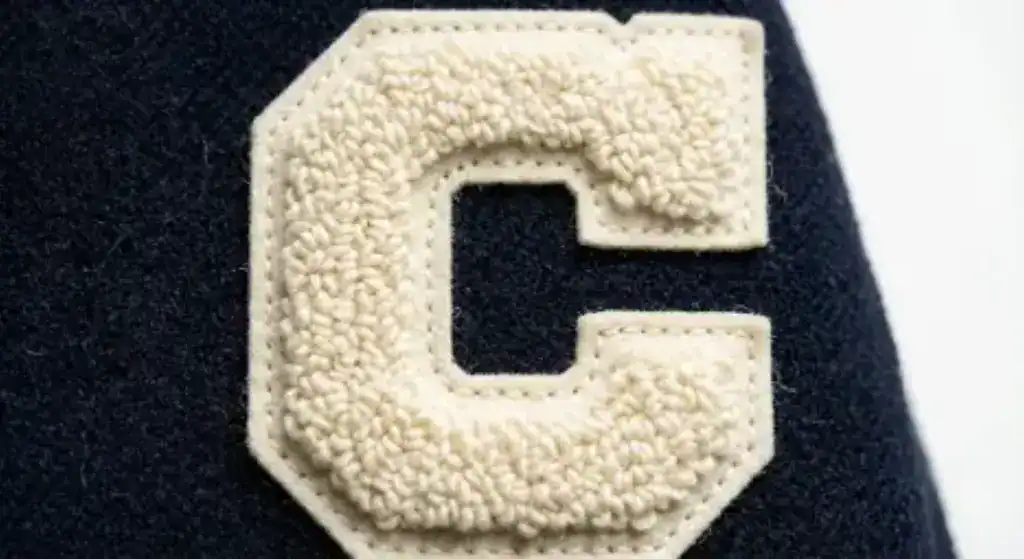
The chenille patches are what make the letterman jacket what it is. They are also the most difficult item to produce at a wholesale scale – that’s why asking about the patches should be among your very first inquiries to a potential manufacturer.
In-House vs Outsourced Patch Manufacturing
If a factory manufactures chenille patches internally, then it can ensure that the backing of the patch has the same weight and flexibility as the type of Melton wool being utilized in your order. The reason for this is that the felt backing, which is attached to the chenille patch, must be of the same weight and flexibility as the fabric on the garment. If it weighs more, there will be strain on the stitching line as the fabric will pull towards the center, while the patch will appear to protrude out. Conversely, if it weighs less, the patch will not maintain its integrity.
Factories that use patches supplied by an external vendor cannot promise that their backing will be consistent.
Individualized Personalization at Wholesale Quantities
Orders calling for individualized patches containing names, graduation dates, or athlete numbers for the entire run create a complication within production that impacts schedule, quality control process, and unit cost. Individualized patches will need a separate artwork file, a separate production run in the chenille process, and placement verification at the assembly phase.
The biggest mistake that people can make when submitting a brief is to consider individualized patches a small component added to an otherwise regular wholesale order. As far as production goes, this is a whole other type of order. Those manufacturers who can execute personalized wholesale orders well have developed a set procedure for receiving, processing, and verifying individual patches — a spreadsheet containing individual patches per unit, quality control where the manufacturer makes sure that the produced patches match the approved list before assembly, and packing where jackets come with the right patch attached. Those manufacturers without a procedure like this are always a risk when dealing with personalized orders, no matter how good their regular production may be.
5. OEM vs ODM: Picking the Best Manufacturing Strategy
The selection of the right strategy for manufacturing wholesale letterman jackets is important because it determines how much flexibility you have in the creation of the product.
| Factor | OEM Manufacturing | ODM Manufacturing |
| Design ownership | Buyer owns the design | Manufacturer owns the base design |
| Pattern control | Full — buyer specifies patterns | Limited — select from existing patterns |
| Customization depth | Complete — materials, construction, branding | Partial — colors, logos, permitted modifications |
| Brief preparation | Tech pack required | Lower — brief covers branding only |
| Lead time | Longer — full sample cycle | Shorter — base pattern already exists |
| Best for | Brands building a distinctive product line | Teams and brands entering market quickly |
For the vast majority of buyers, especially for brands and retail chains, creating a standardized product, OEM will prove the best approach. Although it takes some extra time to prepare, it allows controlling all elements of the production process. ODM manufacturing is better suited for buyers requiring a ready product fast enough, despite the limitations of a ready-made design.
From our experience dealing with brand customers at various stages of their development, we may say that the most problematic clients are those using the wrong manufacturing strategy, ODM instead of OEM, because they accept the standard design for the sake of speed, but discover during the sampling stage that the construction does not fit the required product characteristics.
6. MOQ, Prices, and Production Batches: What You Need to Know
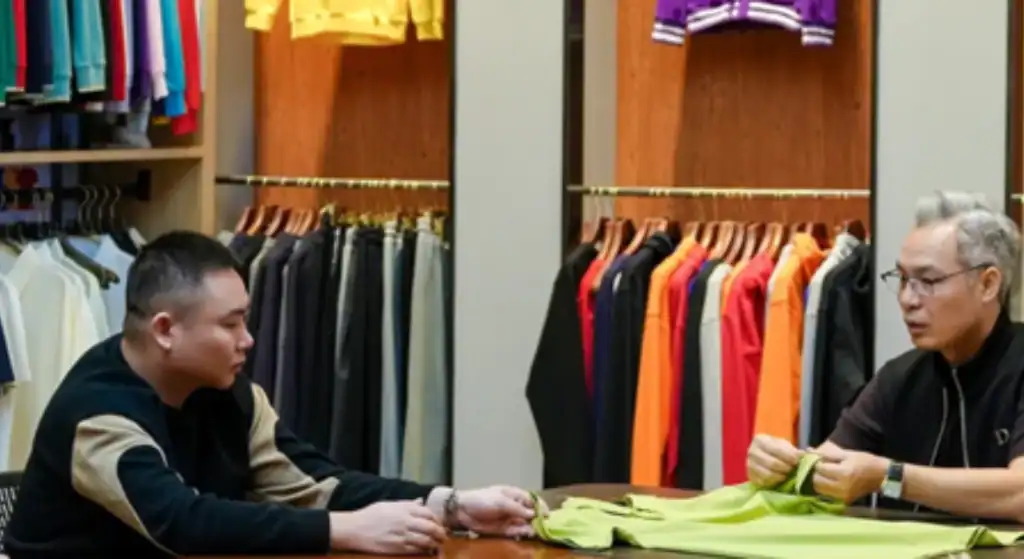
For MOQ on letterman jackets in wholesale, it needs to be noted that the MOQ is per colorway, not per total order. So when you place an order for 100 jackets in four different teams, with 25 for each, it will mean four different production batches with 25 units each, and not one single batch of 100 pieces.
| Order Size | Typical MOQ Range | Cost per Unit Impact | What Changes |
| Small wholesale (25–50 units) | 25 units per colorway | Higher per unit | Limited lining print, standard hardware |
| Mid wholesale (50–150 units) | 50 units per colorway | Moderate reduction | Custom lining prints become viable |
| Large wholesale (150–500 units) | Negotiable | Significant reduction | Pantone dyeing, branded hardware, full OEM viable |
| Bulk / retail supply (500+) | Factory-dependent | Best rates | Full compliance documentation, repeat lot consistency |
Some cost factors that are frequently underestimated by the buyer during the quoting process:
- Pantone matched Melton wool body fabric – custom dye lot typically needs a minimum quantity of fabric that will be higher than the jackets required
- Custom lining prints – available from approximately 50 pieces per colorway; requires artwork in the briefing process for inclusion into the initial quote
- Separate personalization – name and number patches cost extra both in cost and time
- Genuine leather sleeves – the difference in wholesale prices between genuine leather and PU is significant
The only possible way of comparison for wholesale quotations from various manufacturers would be identical specifications of jackets – the same wool thickness, the same sleeve fabric, the same patch type, the same lining, and the same hardware quality. Quotations that are significantly lower than the market price always differ in one or another factor listed above.
When evaluating wholesale pricing quotes from various manufacturers, the only way to compare apples-to-apples is by comparing similar specs: the same weight of wool, the same sleeve material, the same type of patch, the same lining, and the same quality of hardware. Any pricing quote that seems unusually low compared to the market will have differences here somewhere.
7. Things That Should Be Prepared Before Reaching the Manufacturer
The completeness of your brief directly influences the accuracy of your quote. The more vague your brief sounds, “we need 100 letterman jackets in our brand colors,” the less likely it is that your quote will resemble the actual price of the production. The more details your brief contains, the higher the chances that you will receive an accurate quote.
| What to Prepare | Why It Matters |
| Body and sleeve color in Pantone references | Required for consistent dyeing and panel matching across the run |
| Sleeve material preference (leather / PU / full wool) | Drives the biggest single cost variable in the order |
| Ribbing color combination (collar, cuffs, hem) | Three-color ribbing is common — confirm all three upfront |
| Patch details: type, size, placement, artwork | In-house chenille needs vector files before sampling begins |
| Lining preference and any custom lining print | Custom prints viable at 50+ units — needs artwork at brief stage |
| Size run distribution and total quantity | Required for accurate cutting plan and MOQ confirmation |
| Required delivery date (in-hand, not event date) | Build in time for inspection and individual distribution |
| Private label or packaging requirements | Brands with label/hangtag specs need to share at brief stage |
There is one important fact that you should clarify when ordering a large number of products, and that is the deadline by which the product must be delivered to you. The deadline should be your deadline, not the deadline of your event, game, or graduation. In case you would like to get 200 letterman jackets on the day before your distribution event, it is very unlikely that you will have enough time to check them, replace any broken jackets, or organize distribution. At least one week should be scheduled between your in-hand deadline and the distribution date for a regular order and two weeks for a personalized order.
Timeline of Production of Wholesale Letterman Jackets
| Stage | Timeline | What Happens |
| Tech pack & design review | 3–5 days | Pattern grading, material confirmation, patch brief |
| Pre-production sample | 14–21 days | Full physical sample with all branding and patches |
| Client sample approval | Buyer-dependent | Fit, color, patch, and lining review |
| Bulk production | 3–5 weeks | Cutting, sewing, patch application, QC inspection |
| QC (3 stages) | Built into production | Inline, end-line, pre-shipping inspection |
| Shipping | Air: 5–7 days / Sea: 30–40 days | Based on destination and agreed Incoterms |
The time that it takes for the manufacturer to produce your order is associated with the development of artwork, the development of the tech-pack, delivering samples, and approval before mass production. In case your order is related to some special date, such as graduation or season opening, or any other particular event, you should add 2-3 weeks to the production timeline.
8. Selecting the Ideal Wholesale Letterman Jacket Factory
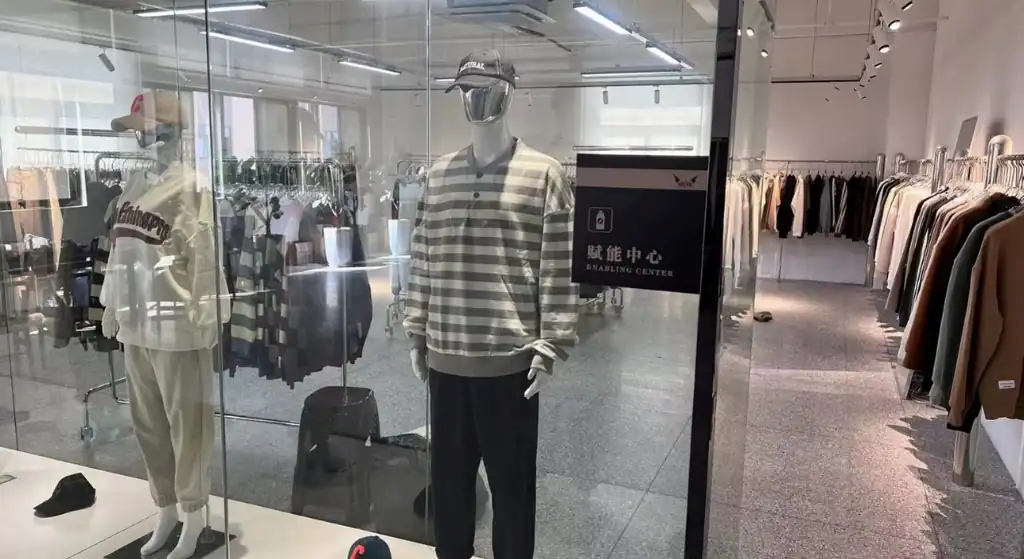
Not all manufacturers of letterman or custom varsity jacket manufacturer have the ability to work through the complexities of construction that make a high-quality wholesale order possible. The assessment must move well beyond considerations of cost and lead time to the specifics of production required by your particular project.
Key questions for consideration before agreeing to a sample include the following:
- Do you manufacture chenille patches? How do you ensure patch backing weight meets the spec for our Melton wool order?
- Have you worked with personalized orders with names and numbers on individual pieces in the run? How do you manage the information for patches, and how do you verify it?
- Can you provide Pantone color confirmation samples of all three material types: body, sleeves, and ribbing – before starting mass production?
- What quality controls are in place in your production process, and what documentation do you provide at each quality control stage?
- What is your policy on quality concerns after delivery? Replacing the units, issuing credits, or providing additional timeline support?
- Can you provide any evidence of wholesale letterman or varsity jacket orders of similar volume?
The sample order before production is non-negotiable in a wholesale letterman jacket order. This is when every aspect of your construction is confirmed physically in a garment prior to you cutting fabric for the entire run. Reliable manufacturers welcome a pre-production sample order. Those who resist, demand exorbitant sample orders, or suggest digital samples instead are not the correct manufacturer for your wholesale order.
9. Frequently Asked Questions
What is the minimum order quantity for wholesale letterman jackets?
Minimum Order Quantity (MOQ) depends on the manufacturer and the order difficulty. MOQs are mostly per-colorway, usually between 25 and 50 units. The buyer requesting four colorways of 25 units each makes four production runs. RaceApparelCUS offers low MOQs for development and starter orders. Just reach out with your brief to find out your MOQ for sure.
How long does a wholesale letterman jacket order take to make?
The development process lasts 14 to 21 days after the tech pack is approved. Production after written approval of samples lasts 3 to 5 weeks. Delivery period is 5 to 7 days by air or 30 to 40 days by sea. The overall lead time of the order from its conception to delivery ranges between 60 and 90 days for an adequately prepared order. It takes longer for personalized or multicolor orders.
Are sizes that vary possible in a wholesale order?
Yes – this is typical in wholesale orders. A size run specification (amount of each size in relation to the total amount ordered) is mandatory during the brief stage to help with making an efficient cutting schedule. One thing you may need to clarify about your size run is that, in case of great variations in the body proportions in the sizes ordered (one of the sizes differs greatly in sleeve length or torso proportions from the other sizes), you should find out if the pattern has been graded or just scaled. Grading ensures the distribution of the proportion differences correctly through sizes, while basic scaling doesn’t do this.
What is the difference between a letterman jacket and a varsity jacket for wholesale orders?
Construction-wise, there’s no difference. The materials used include Melton wool body, leather or wool sleeves, rib-knit trim, and chenille patches. The difference lies in the use and the process of production. Letterman jackets are worn by individuals who have won them, and they normally have individual patches; varsity jackets are made in one batch for a team or a brand.
Is there a possibility of producing wholesale letterman jackets under my own label?
Yes, because private label production is a basic OEM service, which includes production of finished jackets branded with your label, hangtag, and package, without mentioning the manufacturer's name. It will require the creation of a branding brief at the start, detailing the label design, care instructions content, and necessary country-of-origin labeling if applicable. In case your brand develops its repeatable product line, it may be useful to make sure in advance that you can use a private labeling service and receive consistent repeat orders from your manufacturer.
How can I guarantee the same color throughout the entire wholesale order?
It is possible by providing the Pantone colors instead of RGB value, hex code, or even just description 'navy blue', as Pantone is an industry standard that provides dye formulas for both wool and thread. As for the repeated orders, keep the sample of the approved color used during the first bulk order and send it along with the purchase order. Also, ask for a pre-production color approval swatch before starting bulk cutting of fabric.
Do wholesalers offer letterman jackets with customized lining prints?
Wholesalers do offer customization in lining prints, but usually, this becomes economical starting at 50 pieces per color way. A lining print in the form of a brand logo or any other seasonal graphic or school logo increases the perceived value of the product while increasing costs only marginally per piece. It must be noted that the artwork for the lining print must be supplied at the brief stage, rather than the sampling stage, as the lining material itself is pre-printed and any changes after that lead to wastage of material.
Ready to buy your wholesale letterman jackets? Reach out to RaceApparelCUS for a discussion on your requirements. We do OEM, ODM, and private label manufacturing. Get your free quotation within 24 hours.
Learn More: https://raceapparelcus.com/custom-varsity-jacket-manufacturer/
