

Custom Motorcycle Jacket OEM Manufacturing
Custom motorcycle jacket manufacturing cannot be compared to regular outerwear manufacturing.
In the manufacturing process, they are viewed as riding apparel and should perform well at high speeds, under friction, and impacts while lasting in the long run.
At RACEAPPARELCUS, the motorcycle jackets are made as OEM protective wear.
The design starts with structure rather than design. The pattern geometry, the placement of the armor, the way the material behaves, and the consistency of the manufacturing process are important.
Different approaches exist for different brands when making motorcycle jackets for different markets. Some brands focus on protection, others on design, and some need both. The OEM motorcycle jacket manufacturing process is aimed at reconciling these needs in a viable manufacturing process.
Choosing the wrong manufacturing partner at this point is one of the costliest decisions a brand can make. A jacket that looks right in sample photos can turn out to be bad during riding if the pattern work was done hastily or if the armor pocket was not tested against the stretch and seams of the jacket.
This page belongs to our entire jacket manufacturing hub, where you can find all our categories of custom jackets.
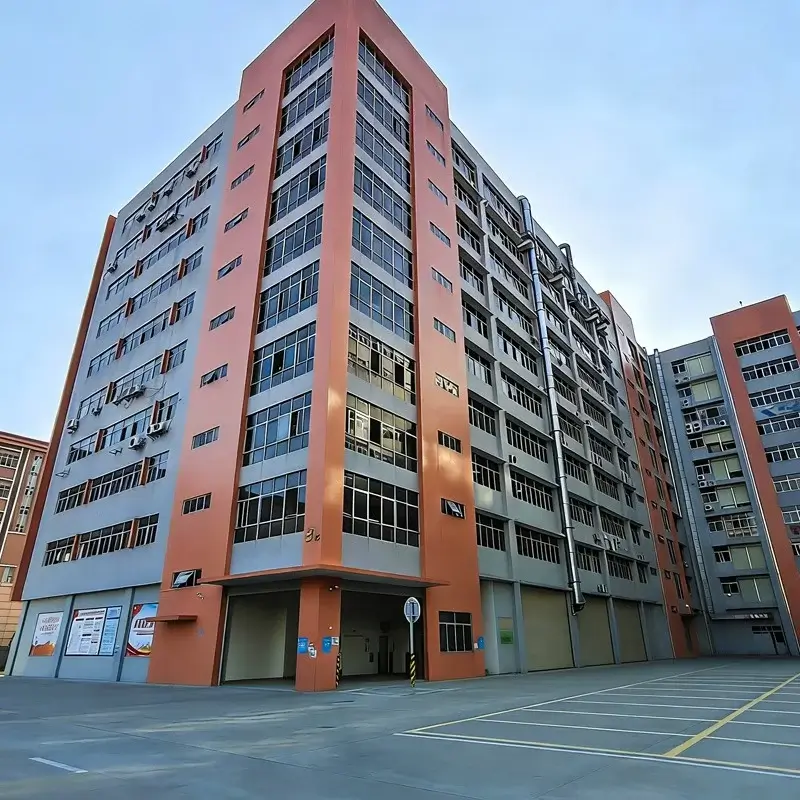
motorcycle jacket oem manufacturing factory
Motorcycle Jacket Construction and Pattern Creation
While creating motorcycle jackets, a structure must be established before the design choice.
Inappropriate sleeve angle, arm movement, back expansion, and panel tension may cause armor dislocation while riding or in case of impact. If the structure is incorrect, even the best fabric won't help.
Some alterations may be made while working on the sample, such as:
- Curvature of the sleeve and riding angle
- Armor pockets position on the shoulders and elbows
- Length of the zipper and opening placement
- Size grading for all sizes of the model
These adjustments must be done more than once to get approval.
Alteration of the pattern during the process shouldn't be considered as an indication of a problem, as it is absolutely natural. A rider moves his arms differently from a mannequin standing on the floor, and a perfect pattern on paper can start stretching, twisting, and pulling during the turn of the rider wearing a jacket. For this reason, feedback from the test wearings must be included in the sample development cycle. This mistake is usually made by companies that do not perform this step and find out about it only in the course of bulk production.
Size grading is another aspect that is ignored until the customer complains. Just because a jacket suits a size medium sample perfectly, it doesn't mean it will fit all sizes.
Leathers and textiles have completely different characteristics.
Leather jackets made of cowhide, buffalo leather, and goatskin have different thicknesses, surfaces, and abrasion resistance. The choice depends not only on how the leather looks, but on how the jacket will be used during riding.
In the case of textile jackets, reinforced fabrics such as Cordura are used along with ripstop structure. Areas of high abrasion resistance are separated and dealt with separately, in terms of panel construction and stitches.
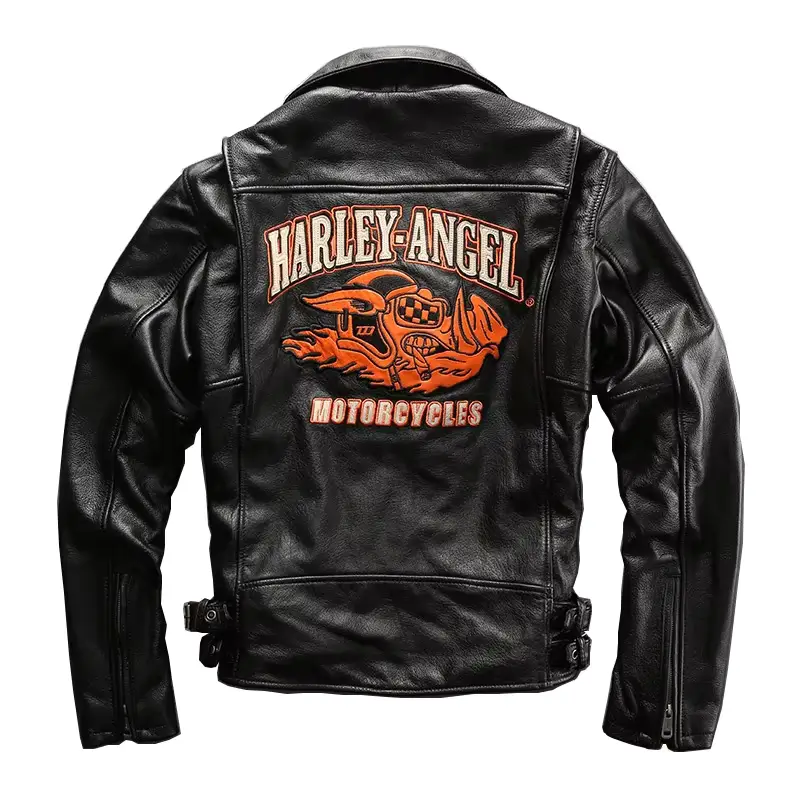
leather and textile motorcycle jacket materials
Leathers
- Cowhide – good compromise in terms of abrasion resistance
- Buffalo leather – higher durability and thickness
- Goatskin – flexibility with good durability
Textile Construction
- Reinforced fabric panels
- Special treatment for high-abrasion areas
- High-stress areas with tear control design
Materials are an important factor in production lead times and the final price of the jacket. This aspect is underestimated by new customers. Buffalo leather, for example, is quite durable, but it's also thick and heavy to process. Thus, it can make production time longer than with cowhide. Textile jackets built using Cordura are usually easy to order in large quantities and standardize on different sizes.
Some color and finish aspects should be considered as well. Dyed leather surface has to be tested for consistency across the whole hide, as the material has natural grains and absorption properties that synthetic materials don't have. That's why sample testing of leather jackets usually takes slightly longer than textile jackets.
Integration of Armor and Protective Zones
The process of armor integration is not about adding protectors alone.
Loose-fitting armor pockets cause them to shift when moving, while tight pockets cause discomfort and the end-user removes the armor. In OEM manufacturing, the armor pocket sizes and placements are adapted together with the pattern design, not considered separately. This is true for shoulder, elbow, back, and optionally chest protection.
There is one particular aspect that sometimes fails to be discussed in early briefs: the tolerance of the armor pocket should consider a variety of armor types and thicknesses. One brand can change armor providers at the stage of sample production to bulk production for various reasons, and if the armor pocket was designed based on the exact size of particular armor, it will cause the need for complete re-design of the pattern.
Customization and Design Personalization (OEM)
Very few OEM projects use a fully standardized design.
Examples of commonly requested customizations include:
- Pattern alteration (slim, relaxed, sporty)
- Market-specific sizing ratios
- Armor level customization
- Thickness of leather and/or textiles
- Treatments and surface finishing options
- Placement and ways to implement a logo
Customizations can be performed provided that there is no compromise to structural safety.
It is important to pay special attention to market-specific sizing requirements for brands that sell their products in multiple geographic markets. If you use a size chart tailored to the European market and apply the same ratios globally, you will face return-rate issues upon your product launch, since it does not apply to the North American or Southeast Asian physique. Researching your target market demographics is a small step you should take early on to avoid bigger fitting problems down the line.
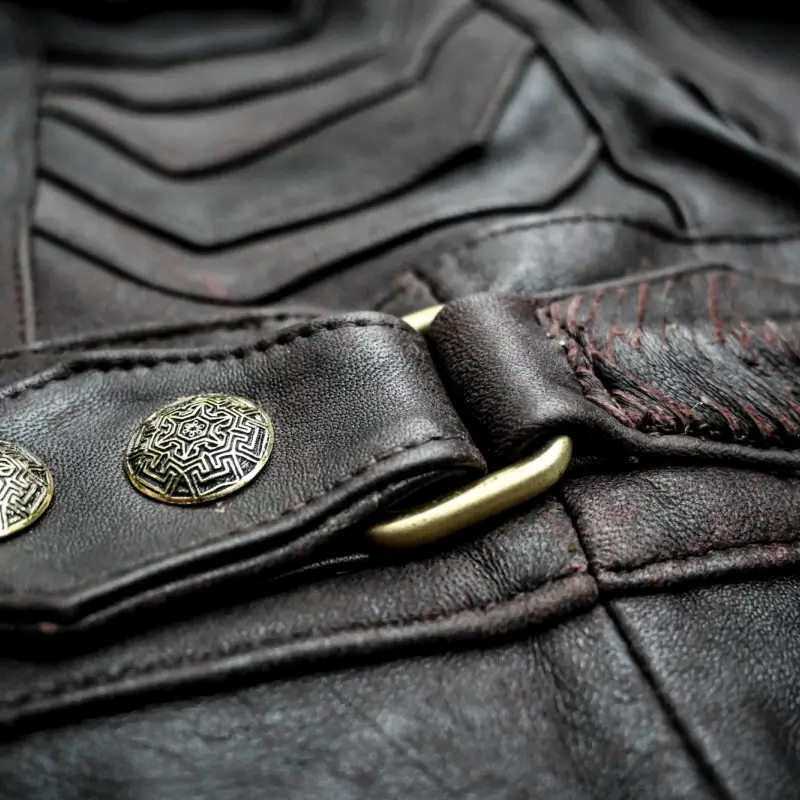
custom motorcycle jacket oem details
Types of Motorcycle Jackets (OEM Classification)
Motorcycle jackets are classified based on usage rather than design:
- Leather Motorcycle Jacket OEM
- Textile Motorcycle Jacket OEM
- Mesh Motorcycle Jacket OEM
- Touring Motorcycle Jacket OEM
- Adventure Motorcycle Jacket OEM
- Cruiser Motorcycle Jacket OEM
- Sport/Racing Motorcycle Jacket OEM
- Urban/Commuter Motorcycle Jacket OEM
- Modular All-Season Motorcycle Jacket OEM
These classifications are the basis of any motorcycle apparel production facility.
Each of these classifications has its own set of technological requirements. For example, a touring motorcycle jacket is designed for long rides, so it should feature excellent air circulation and weather resistance properties due to the fact that it can be worn during changing climatic conditions for a relatively long period of time. Sport and racing motorcycle jackets have a completely different set of technological characteristics because they are made to be as close-fitting as possible and have armor positioned for the most aggressive riding position.
Production Consistency and Quality Control
The approval of the sample and mass production do not equate to one another.
For mass production, consistency is crucial in batch-to-batch production. The stitch tension, armor placement, tolerance in terms of sizes, and material management are constantly checked.
There are protective standards that are used as a benchmark; however, production consistency plays an essential role in determining the overall performance of the product.
Batch-to-batch consistency is where most manufacturing partnerships thrive or fail after some time. A sample could be perfectly made, but in the absence of a standardized quality control checklist for all production batches, small differences will eventually occur — whether it be the stitch tension or the shift of the armor pockets by just a bit. When this happens in a batch consisting of several hundred or even thousands of units, the difference may accumulate and become inconsistent in terms of production batches from the first to the last product.
RACEAPPARELCUS Manufacturing Position
At RACEAPPARELCUS, motorcycle jackets are not manufactured to be marketing items.
Features of OEM manufacturing include:
- structural integrity
- material integrity
- pattern integrity
- process repeatability
- Design varies, but structure does not.
While many jackets may look the same on the outside, their structures may be quite different. That is the essence of OEM manufacturing.
Since the company’s involvement with OEM motorcycle jackets for over 10 years, RACEAPPARELCUS has honed its skills in pattern design, armor installation, and quality control through many rounds of manufacturing. The process of developing new projects is directly influenced by this experience from the very first sampling stage to the last round of manufacturing.
FAQs
Are you a motorcycle jacket manufacturer or a trading company?
We are a motorcycle apparel manufacturer focused on OEM production.
At RACEAPPARELCUS, motorcycle jackets are developed, sampled, and produced in-house based on structural, material, and production requirements rather than retail branding.
Do you support custom motorcycle jacket designs?
Yes. Most motorcycle jacket projects are developed as custom OEM designs.
Customization may include pattern structure, materials, armor configuration, size grading, surface treatment, and branding details, provided that protective structure is not compromised.
What materials can be used for OEM motorcycle jackets?
Common materials include cowhide, buffalo leather, goatskin, reinforced textiles, Cordura fabrics, and ripstop structures.
Material selection depends on riding application, target market, and performance requirements rather than appearance alone.
Can armor systems be customized?
Yes. Armor configuration is usually discussed during the development stage.
Shoulder, elbow, back, and optional chest protection can be adjusted in terms of placement, pocket structure, and protection level based on project requirements.
Do you develop samples before bulk production?
Yes. Sample development is a standard step in motorcycle jacket OEM production.
Sampling allows verification of pattern geometry, armor positioning, material behavior, and overall construction before bulk manufacturing.
What is your MOQ for motorcycle jacket OEM orders?
MOQ depends on design complexity, material selection, and production structure.
Standard designs and repeat orders usually require lower MOQs compared to fully custom developments.
Do you follow any safety or protection standards?
Motorcycle jackets are typically developed with reference to EN protection standards such as EN 17092 and EN 1621 series.
Specific compliance requirements can be discussed during the development stage.
Can you produce different styles under one OEM project?
Yes. Multiple styles can be produced under one project if material sourcing, pattern structure, and production planning allow efficient batching.
Do you handle branding and logo application?
Yes. Common branding methods include embroidery, debossing, heat transfer, silicone printing, and woven or leather labels.
Branding placement is coordinated with pattern structure to avoid interference with protection zones.
What markets do your motorcycle jackets serve?
OEM motorcycle jackets are produced for various markets including Europe, North America, Australia, and other regions.
Design and sizing are adjusted according to market requirements.
How is quality controlled during production?
Quality control focuses on structure consistency, stitching stability, armor positioning, size tolerance, and material handling across production batches.
Bulk production is checked against approved samples rather than marketing specifications.
MOQ, Lead Time & Production
We offer flexible production options for both small and large projects.
| Item | Details |
|---|---|
| MOQ | No MOQ — from 1 piece |
| Sample Lead Time | 7–15 days |
| Bulk Production Time | 25–40 days |
| Custom Options | Design, fit, materials, graphics |
| Production Type | OEM / Custom factory-direct |
Ready to Start Your Custom Motorcycle Jacket Project?
Whether you need protective leather motorcycle jackets, textile touring gear, or a fully custom OEM design with CE-certified armor, we are ready to help. Share your specifications, reference images, or tech pack with us, and we will guide you from sample development to bulk production—step by step.
Contact us to start your custom motorcycle jacket project today.