Custom Motorcycle Suit Manufacturer | RaceApparelCUS

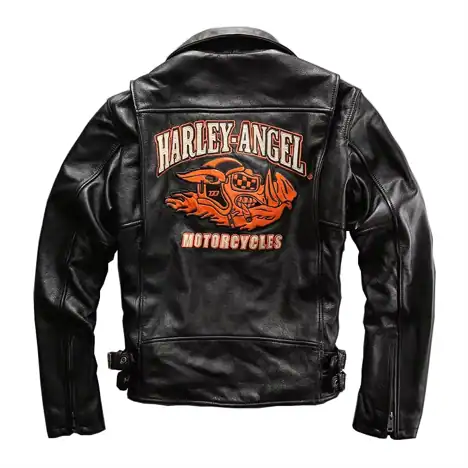
The company in charge of motorcycle protective clothing ordered the very first custom-made suits from a vendor who provided a competitive pricing offer and quick delivery. In photographs, the suits were quite impressive — with nice paneling, stitching, and style. But what the company did not think to ask for was the armor. The suits included foam pads inserted in the shoulder and elbow pockets instead of EN 1621-1 CE-rated armor. One of the customers wearing the suit fell at a slow speed in a parking lot, and when he landed, the foam pad squished completely under his weight and offered him almost no protection. The product range was withdrawn after just a month and replaced by a totally new one. The price was very favorable, but the protection issue was never mentioned. This is the critical difference that sets the category apart.
1. What Makes a Custom Motorcycle Suit Different from All Other Clothing Items?
The motorcycle suit has a look that cannot be differentiated from all other coat-pants suits. However, the mentality of purchasing this suit is very simple: choose your fabric, choose your colors, and add your logo to the suit. It is a way of purchasing a regular, fashionable coat. This should not be the case with a motorcycle suit.
This double need influences every decision made about production. The leather must be thick and of the appropriate quality to protect from road rash, but thin enough to allow for movement of the wearer while on a motorcycle. The seams must be reinforced at places that would suffer an impact but not increase the bulk, which will prevent a correct sitting posture. The protection compartments must be able to contain the CE-certified protection equipment at precisely the right spot for different body sizes. This is not something trivial. This is how the product is engineered.
The impression many startups have is that a motorcycle suit is a design project. But design is just the tip of an iceberg, and it is far more important how this construction process is done by the manufacturer.
2. The Actual Process Of Manufacturing Custom Motorcycle Leather Suits
Like any other cut and sewn leather product, custom motorcycle suits manufacturing involves the same major steps, such as creating patterns, cutting out leather pieces, sewing them together, and completing finishing touches. However, when it comes to motorcycle gear, the tolerance is higher than for the other cut and sewn leather products. Moreover, the handling process is more sophisticated. Leather material cannot be treated like fabric.
Importance of Pattern Engineering In Making Rider-Friendly Patterns
A motorcycle suit pattern differs from that of a standing jacket. First of all, a person sitting on a motorcycle takes a position that differs from the standing position; hence, a pattern should take into account some unique features. Such peculiarities include pre-bent sleeves, joints at elbows and knees, and gussets on the back and underarms. Experienced manufacturers use patterns specifically created for riding, whereas the others manufacture riders’ clothing using jackets’ patterns.
Here is one misconception that we find with beginners when they order their first-ever riding suit from a leather goods factory – that since they work with leather jackets, they will be able to manufacture motorcycle suits too. Fashion leather jackets and riding suits are made using similar materials, but they belong to different production disciplines altogether.
3. Leather Quality and Construction: What Makes a Suit Good or Bad
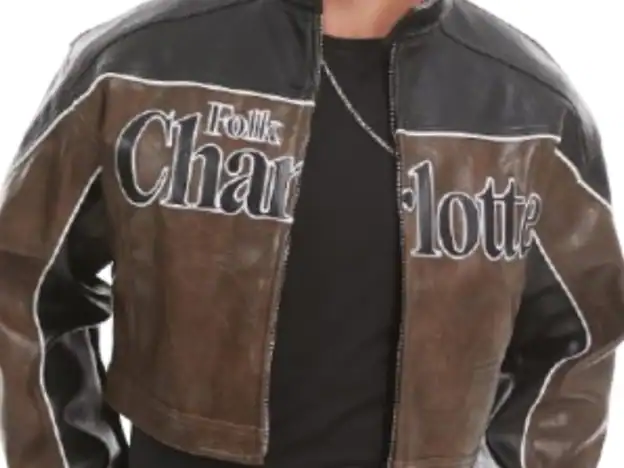
Leather quality and thickness are the two most critical factors to consider when making an order for a custom motorcycle suit. These two factors will define the suit’s resistance to abrasion, its weight, its durability and flexibility, its unit price, and even how it wears out over time.
| Leather Type | Thickness | Abrasion Resistance | Typical Use |
| Full-grain cowhide | 1.2-1.4mm | High | Premium street and sport suits |
| Top-grain cowhide | 1.0-1.2mm | Moderate-High | Mid-range commercial suits |
| Kangaroo leather | 0.7-0.9mm | Very High (pound for pound) | Premium race suits, lightweight builds |
| Split leather panels | 0.9-1.1mm | Moderate | Budget suits, non-impact zones only |
| Textile/leather hybrid | Varies | Moderate, with abrasion-resistant weave | Touring and all-weather suits |
What manufacturers sometimes forget: while thickness specifications are critical, hide selection can make a big difference too. Even if you get a suit made from leather of a specified thickness, a hide that features natural scar marks or any other unevenness will wear out unevenly. It is perfectly reasonable to ask manufacturers how they select their hides.
Seams in Stress Points
The seams in the shoulder area, elbow area, and knee area experience maximum stress when used for routine purposes as well as during any fall. The seams in such areas are sewn using double or triple stitching with strong threads in quality construction. Sometimes, riveting may be used to strengthen the structural joints. A suit where single stitching is used in all areas, including the stressed ones, is definitely taking a shortcut, which only manifests itself when put to the test in real situations.
4. CE Certified Armor and Protective Standards: Verifications Buyers Should Do
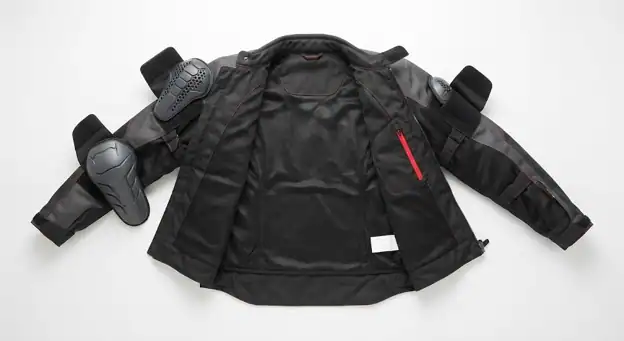
It is here that many buyers encounter the real trouble, as mentioned in the case study presented at the beginning of this article. Certification of motorcycle apparel with CE marking takes place at two levels – the garment itself by means of EN 17092 standard and the armor inserts based on either EN 1621-1 for limb protection or EN 1621-2 for back protection. A garment might be considered armored, while none of the inserts would have proper CE certification. Foam padding does not substitute for CE-certified armor, regardless of its appearance.
| Standard | Covers | What It Means for Buyers |
| EN 17092 | Garment-level protective performance, abrasion resistance, burst strength, seam strength | Confirms the suit itself — not just the armor — meets PPE requirements |
| EN 1621-1 | Limb protectors (shoulder, elbow, knee, hip armor) | Confirms impact absorption performance of armor inserts |
| EN 1621-2 | Back protectors | Confirms spine protection performance — Level 1 or Level 2 rating |
On the manufacturing side, armor procurement must be completed prior to pattern creation, as the pocket size should fit the specific armor insert. Any replacement of the armor supplier after the pattern design becomes a frequent way of saving on costs near the end of the project, and will cause pockets and armor inserts to become incompatible. It cannot be discovered once bulk production begins.
Does the Manufacturer Obtain Certified Armor or Let the Customer do it?
While some manufacturers make the shell of the suit themselves and leave the task of obtaining the armor to the customer, giving full freedom of choice but adding burden in the form of procurement, which is often difficult for apparel brands, other manufacturers obtain CE-certified armor on their own and include it in the manufacturing process. Understanding which approach the manufacturer follows will help to avoid the same mistake made by the company described above.
5. OEM and ODM Manufacturing of Motorcycle Suits
Like all other product categories in clothing manufacturing, both of these manufacturing processes are interchangeable terms among buyers who do not have the need to make a decision between the two options yet. Unlike many other categories where this makes little difference, in this category, it makes all the difference since it determines which side is responsible for defining the safety of the product.
OEM (Original Equipment Manufacturer)
In the OEM process, the buyer controls the design, leather specifications, armor selection and placement, construction method, and branding. The product is manufactured according to these specifications. Full control over the product and its safety is achieved, but it comes at the cost of some preparations – a full technical pack, an agreement with the armor manufacturer, and approval of a pre-production sample.
ODM (Original Design Manufacturer)
In the case of ODM manufacturing, the ownership of the basic suit design, including armor integration and its certification, lies with the manufacturer. The customer then chooses from available designs, adds branding, colorways, and some customization to the design. It’s an easy way to get an already finished and certified suit, and offloads the burden of engineering for safety from the buyer to the manufacturer – presuming, of course, that such certification exists.
Many young brands tend to consider OEM as a more desirable choice than ODM. The truth is that it all depends on the needs of your product. Fast entry into the market with a safe, reliable, and already certified product is achieved more easily via ODM and transition to OEM manufacturing when production increases, and new features need to be implemented.
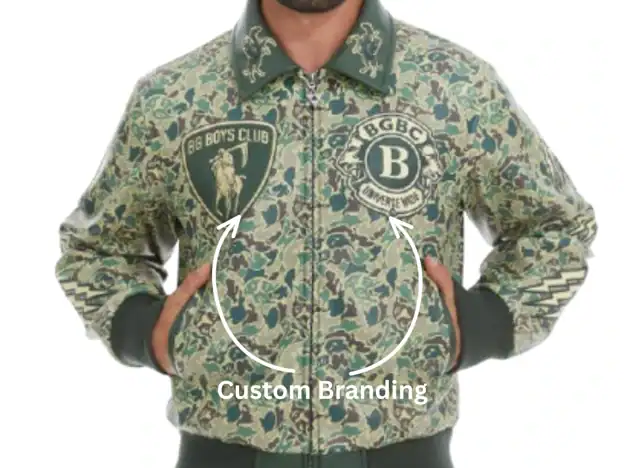
6. Customization Options: Fit, Branding, and Performance
Once the safety issues have been taken care of, there is quite some scope for differentiation in a custom motorcycle suit offering — if the customization process does not sacrifice the protective design of the suit underneath.
| Customization Option | Method | Production Consideration |
| Team or brand colors | Panel cutting and dyed leather matching | Pantone reference required for dye consistency |
| Perforated panels for airflow | Laser or die-cut perforation on non-impact zones | Never perforate impact zones — affects abrasion resistance |
| Branding and sponsor logos | Embroidery, leather appliqué, or printed panels | Vector file required, placement away from armor pockets |
| Race hump / back protector pocket | Integrated shell construction | Must be built around confirmed back protector dimensions |
| Custom fit grading | Adjusted pattern per size, not simple scaling | Critical for suits worn across a size range with armor |
| Private label branding | Label, hangtag, packaging | Brand guidelines and care labeling required |
Perforation and Ventilation: Where Practicality Meets Customization
Leather perforations are a common requirement for suits meant to be used in tropical climates and in touring situations, and it is indeed a practical feature if done in the right places. The technical factor that inexperienced manufacturers tend to ignore in the manufacturing process of perforation is the fact that perforations should not cover any impact areas; this means shoulder, elbow, hip, and knee panels must remain fully intact. If an outfitting company designs perforation simply from the aesthetic point of view and ignores protective aspects of the suit, then it lacks understanding of the protection manufacturing business.
7. What to Have Ready Before Contacting a Manufacturer
A complete brief is the one thing that will help you get the most accurate quote and realistic schedule. Manufacturers who receive a vague inquiry add some buffer for themselves for any uncertainties. A complete brief gets rid of any uncertainties and normally yields a more accurate quote.
| What to Prepare | Why It Matters |
| Target certification level (EN 17092 class, armor standard) | Determines leather spec, armor sourcing, and pattern construction |
| Leather type and thickness preference | Affects cost, weight, and abrasion performance |
| Armor sourcing — buyer-supplied or manufacturer-sourced | Changes pattern development and procurement timeline |
| Pantone color references | Required for leather dye matching across panels |
| Vector artwork files (.ai / .eps) | Needed before sampling can begin |
| Size run and quantity per size | Required for cutting plan and MOQ confirmation |
| Required delivery date | Drives production scheduling and shipping mode |
| Branding requirements (labels, packaging) | For private label or OEM orders |
One thing that may be overlooked by many people: When you are producing garments through a range of sizes, consider the fit of armor pockets separately from the scaling of body size. This means that riders at the upper and lower ends of your range may have a different placement of their armor pockets to provide proper protection.
8. The Choice of the Right Custom Motorcycle Suit Supplier
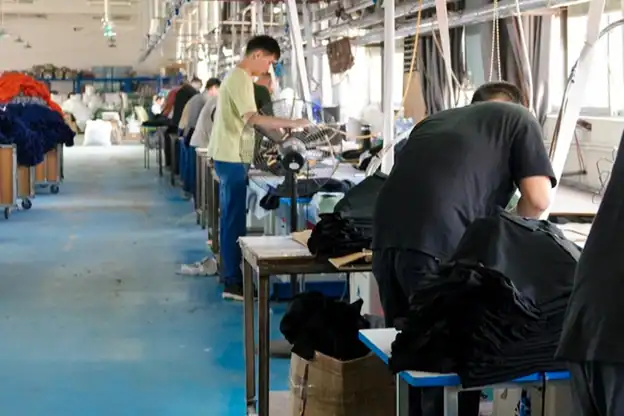
Not all factories manufacturing leather products that claim to be manufacturers of motorcycle clothing can manufacture armored and certified suits. Considering the high priority of security in this case, the evaluation must go much further than prices and terms of delivery.
Questions to be asked before sampling:
- Do you have a chance to provide samples of the previously manufactured motorcycle suits and certifications made?
- Where do you take your CE-certified armor from – directly or from the client?
- What class of the EN 17092 do you achieve in your production, and can you confirm it with test certificates?
- How do you plan to select and guarantee the thickness of the skin for bulk orders?
- What is the content of the pre-production sample, and is it armored?
- How are the post-delivery problems (armor/protective equipment related) being solved?
An inability by the manufacturer to refer to either EN 17092 or EN 1621 standards, or vague references to “meeting safety requirements” without specifying the particular standard, should be considered an indication of something very serious, especially in a category where PPE is concerned.
It is essential to have pre-production samples when placing a bulk order for a motorcycle suit, and the sample should definitely include the armor that will be supplied in the bulk order. There is no other way to ensure that the bulk order is as described, but with the proper leather, proper stitching, and properly fitting certified armor.
Custom Motorcycle Suits – OEM & ODM Manufacturing for RaceApparelCUS
OEM and ODM manufacturing services offered for custom motorcycle suits include material sourcing, designing a pattern specific to the riding position, integration of certified armor, perforation and branding customization, and private labeling. The production process incorporates a triple quality control phase, including a pre-production sample and pre-shipping inspection. Low minimum order quantities can be accommodated by us for brand development orders, and bulk quantities can be made available for distributors and wholesalers. Get a free quote.
Time Frame of Production: Custom Motorcycle Suits
| Stage | Timeline | What Happens |
| Tech pack & armor sourcing confirmation | 5-7 days | Leather grade, armor supplier, and pattern spec confirmed |
| Pre-production sample | 2-3 weeks | First physical sample with armor integrated and branding applied |
| Client sample approval | Buyer-dependent | Fit check, armor fit verification, branding review |
| Bulk production | 4-6 weeks | Cutting, sewing, armor integration, inspection |
| QC inspection (3 stages) | Built into production | Inline, end-line, and pre-shipping checks |
| Shipping | Air: 5-7 days / Sea: 30-40 days | Based on destination and Incoterms agreed |
The time required for sourcing of armor is additional time required in comparison to other types of apparel as a result of which more costly problems can be avoided in the future. For distributor and launch-date-based orders, an additional 2-3 weeks should be added to the timeline.
9. Frequently Asked Questions
What is the difference between EN 17092 and CE armor certification?
EN 17092 tests the protective properties of the garment – its abrasion resistance, strength of seams, and bursting properties of the leather used. CE armor certification according to EN 1621-1 or EN 1621-2 means that the impact protectors placed in the suit are tested separately from the garment. The suit can be considered protective without any of these certifications being confirmed.
What is the minimum order quantity of custom motorcycle suits?
The minimum order quantity depends on the manufacturer and the type of product. The minimum quantity of fully customized OEM suits with armor implementation and brand elements usually starts at 20-30 pcs per colorway. Low minimum quantity is possible for ODM catalog suits with surface customization. RaceApparelCUS offers a low minimum quantity for developing brands – please contact us with your requirements to get an exact quantity.
How long will the process of production last for a customised order for a motorcycle suit?
The confirmation of the tech pack and the source of armour will take 5 to 7 days. Pre-production samples are provided in 2 to 3 weeks. Production is then carried out in 4 to 6 weeks, depending on quantity and complexity. Shipping is an additional 5 to 7 days using air freight or 30 to 40 days through sea transport. Always allow time starting from the sample approval and not from the enquiry because the time difference is about three to four weeks on fully customised orders.
Can we have a customized motorcycle suit under our private label?
Yes. Private label production, where the final suit will have your own brand labels and hangtags instead of any manufacturer labels, is one of our services for OEM clients. This will need the branding guide, including design of labels, care instructions, and other information related to your specific market destination.
Which artwork files would be necessary for my order of a custom motorcycle suit?
The standard artwork file formats that are necessary for logo, fonts, and brand identity are vector formats .ai and .eps. In case sublimation or printing of any kind is involved in the design of your motorcycle suit, then you will need to have a high-resolution file at 300 DPI in accordance with the panel dimensions. In case the artwork you have is in lower resolution or a raster file, then the time taken for development of the tech pack will be between 3 and 5 days before sampling can commence.
Between leather and textile, which material is best for my custom motorcycle suit?
Leather is more resistant to abrasion and is the standard choice for sport or track-based suits. This means that leather is the best choice when you are looking for a suit that provides more protection against impacts and injuries. Textiles or leather-hybrid materials provide much more flexibility and can incorporate elements of water resistance or ventilation that pure leather cannot. What is important here is the intended use of the suit and your customer’s riding conditions.
How do you check pocket fit for the armor in your size range?
Pocket placement for the armor must be checked in size-set samples rather than based on one sample for the base size alone. Given that the inserts of the armor will be pre-defined in their shape, it is critical to ensure the positioning of the pockets allows proper alignment of the protection for all sizes, and sometimes involves more than just scaling. Checking a physical sample in various sizes is the best way to verify this before going into mass production.
What happens if the armor doesn’t fit correctly after bulk production?
This is why armor sourcing and pocket dimensions need to be locked in before pattern development, and why a sample with the actual armor installed is non-negotiable. If a fit issue is discovered after bulk cutting, correcting it usually means reworking the pattern and re-cutting affected units — a costly and avoidable outcome if the sample stage is done properly.
Ready to order your custom motorcycle suit? Feel free to contact RaceApparelCUS to discuss your certification needs and production schedule. Get a free quote within 24 hours.
