

How to Find a Reliable Clothing Manufacturer | Guide

The clothing start-up that made apparel near the realm of footwear had spent eleven weeks and around $4,200 on samples that did not meet the requirements as per their technical pack. Two factories, two wrong sizes, and two specification sheets that got “lost in translation,” and the same old comment from the entrepreneur every time: “If anyone had told me what to check before making the deposit…” The only one-time decision that will ensure the success of your first batch and whether your clothing company becomes a brand builder or money waster is knowing how to choose good clothing manufacturers.
How to Find a Reliable Clothing Manufacturer: A B2B Buyer’s Guide
1. The Importance of Selecting the Right Manufacturer for Your Brand
Learning how to find clothing manufacturers that can actually deliver — on quality, on time, and on budget — is one of the first real tests a growing apparel brand faces. It is easy to assume the hard part is design: picking fabrics, colors, and silhouettes. In practice, the harder part is finding a production partner who can turn that design into a consistent, sellable product at scale.
In most cases, the mistake will be evident only after some time has passed. Four to eight weeks down the road, the order will arrive – it will feature a discrepancy in the stitching, a wrong fabric selected without any approval, and inconsistent sizing. At that point, your money is gone, the launch is around the corner, and it is not really possible to start all over again with another order. The cost of a poor manufacturer choice is very seldom limited to the cost of the sample only.
Fortunately, you do not have to have any industry connections in order to evaluate your potential partners adequately. All you need is an effective process of evaluation and selection, based on certain criteria.
2. Clothing manufacturer types to consider
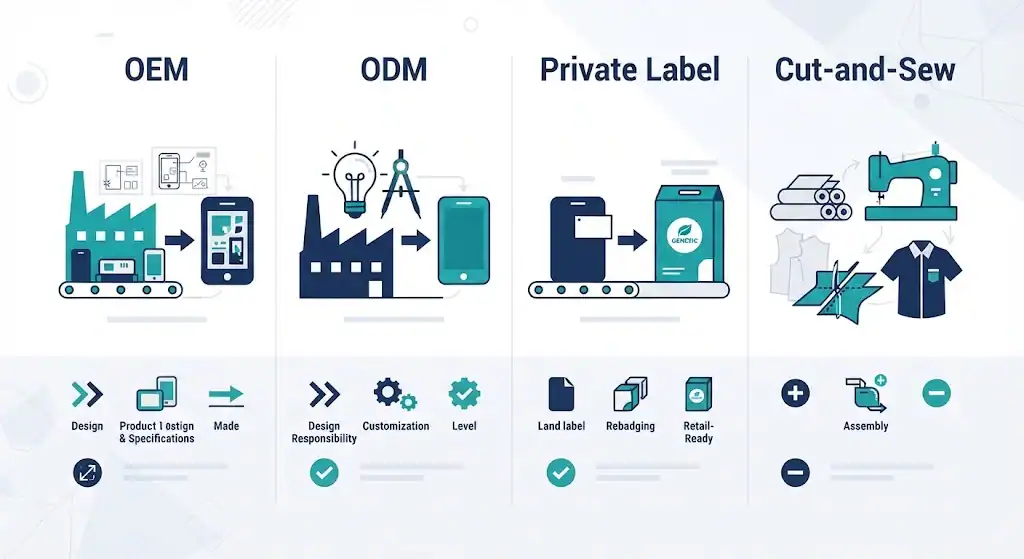
Understanding which manufacturing model suits your business stage and budget can save a lot of time, since not all manufacturers offer all options. Asking the wrong question to the wrong company may cost you both time and money. The Race Apparel custom jacket manufacturer guide provides helpful insight into how the categories can be represented by the working OEM factory.
OEM Manufacturer
The OEM (original equipment manufacturer) manufactures products according to your technical pack requirements only – your pattern, fabric choice, and design direction. This option suits you if you already have a tech pack, size chart, and design direction and want to control the final result.
ODM Manufacturer
The ODM (original design manufacturer) provides existing designs that you can customize according to your preferences – you can choose your colors, logo, and other details. This option significantly reduces the product development time and is often used as a starting point by brands that want to test a new product category without spending a fortune on its development.
Private Label Manufacturer
This type of manufacturer is similar to ODM, but you need to choose an existing product and customize only its labeling, hang tags, and packaging. It is the quickest way to bring a branded product to the market without developing each construction element separately.
Cut-and-Sew Manufacturer
This type of manufacturer builds clothes from the pattern and raw fabric provided by you. If you care about the details such as fit, fabric, and finishing – choose this manufacturer to produce your technical or high-end garments.
Full-Package Manufacturer
This type of manufacturer is responsible for a wider scope of tasks, from fabric sourcing to labeling, packaging, and even shipping of the product.
3. How to Source Clothing Manufacturers? A Step-by-Step Guide
After determining which manufacturer suits your needs best, the actual search and selection process takes place according to a rather consistent order. Omitting steps results in costly mistakes mentioned in the introduction.
First of all, define your product and develop a tech pack
Without a detailed specification, a manufacturer cannot give you an accurate quotation. Thus, before reaching out to potential manufacturers, determine the type of fabric you want, target price level, construction, and the volume of order you plan to issue. It’s a tech pack that transforms your concept into something a manufacturer can quote and produce. The review of our process of transforming a concept into delivered production will give you insight into what a well-organized OEM process looks like.
Search in the Right Places
Manufacturers can be found with direct search, via sourcing platforms, trade shows, industry directories, and referrals from other brands. Do not limit yourself to one source or one quote — at least three different quotes on the same specification have to be compared before making a final decision.
MOQ is Crucial
The minimum order quantity determines how much money you invest in production before having a guarantee that your product sells well. There are manufacturers who require 300-1,000 units of each style; there are manufacturers who offer smaller production runs with higher unit cost. If you are a new brand and/or want to test a new product line, it is better to find a manufacturer with a “no MOQ” policy — that will allow you to verify your product demand without the risk of getting stuck with unsold inventory.
Ask For Samples Before Issuing the Order
The sample is the only evidence that you have proof of what will be produced in a bulk run. The sample must be complete — with the right fabric, correct branding, and the right construction. Before issuing a request for the sample, it is worthwhile to learn what exactly is covered by the factory’s custom jacket samples policy of the factory, how much they cost, and how much time it takes to deliver them. If a factory resists giving you a sample, or charges a disproportionately high sample fee, it speaks volumes about their capabilities.
Communication Style is Important
The quality of communication during the inquiry stage is quite a strong indicator of communication style during the production process. It is a good sign if the answers to your questions are clear and honest, and the factory tries to warn you of possible problems upfront.

4. Warning Signs of an Unreliable Manufacturer
There are a few warning signs that always come up when the production process turns out to be difficult. Any one of these should be considered a signal to stop and think before proceeding:
- Doesn’t offer a physical sample and substitutes digital renderings for that
- Can’t give answers on certification, testing, or the content of fabrics
- Offers one lump sum quote without explaining where this price comes from (fabrics, trims, labor, customizations)
- Suggests skipping sampling and going into mass production right away
- Isn’t clear who will do the actual production (internal staff or subcontractors)
- Has nothing to show for their past experiences with production (references, portfolio, proof)
- Gives a price quote way below other factories in comparison, without any reasonable explanation
None of these warnings, by itself, doesn’t mean anything, but two of them together are a good reason to reconsider your decision and look elsewhere.
5. Domestic vs. Overseas vs. China Manufacturing
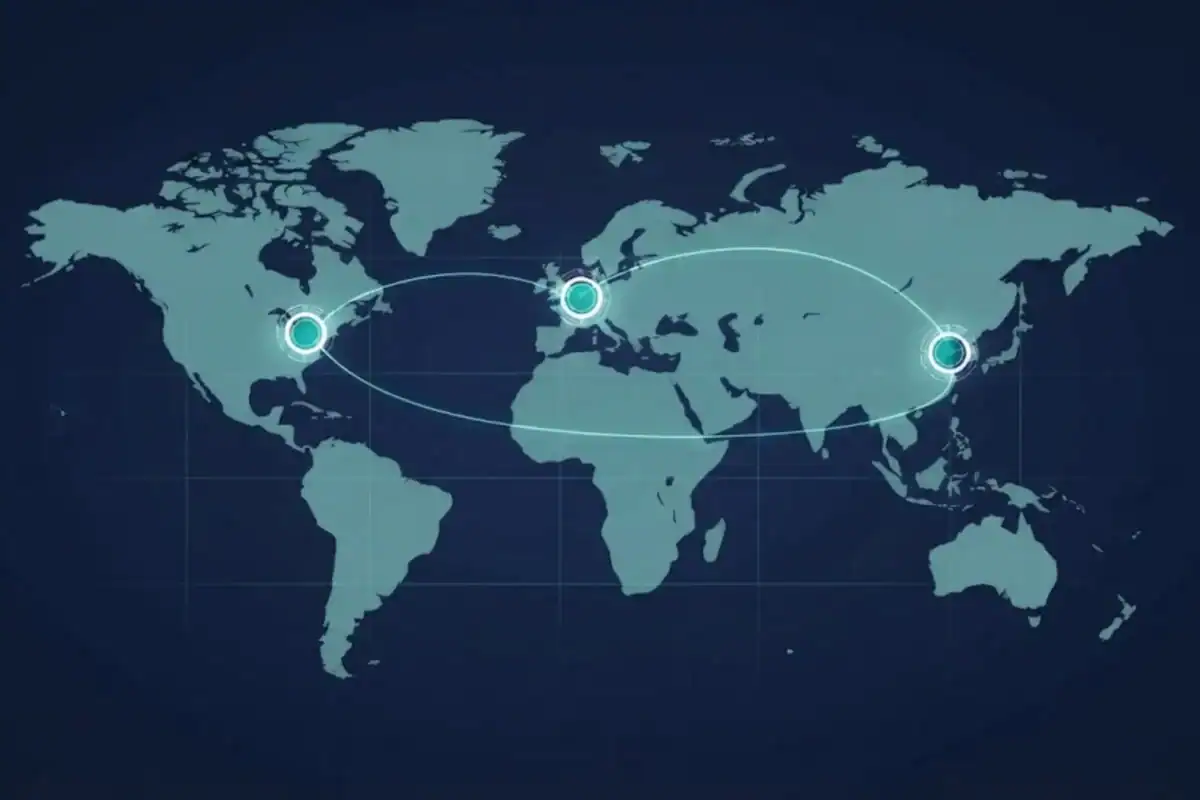
Production location will have a bearing on costs, lead times, minimum order quantities, and level of control. This cannot be generalized in a blanket statement and should be left to individual companies to choose based on their budget and level of complexity in the product lines.
| Region | Typical Strength | Typical Trade-off |
| Domestic | Easier factory visits, shorter shipping, faster reorders | Higher per-unit cost, fewer factory options for niche categories |
| China | Broad specialization, competitive pricing, flexible customization | Longer shipping, requires more rigorous remote vetting |
| Other Overseas Hubs | Mid-range cost, regional trade advantages | Variable infrastructure and certification consistency by country |
In the case of technical or structured garments such as outerwear, protective wear, or fitted jackets, the factories that specialize in those particular items will produce better than those that do not, no matter what the location of the factories is. Strict control in the supply chain management process will help avoid mid-production changes in fabrics and trim, which result in problems in later production stages.
6. Verifying Certifications and Compliance
Certifications are one of the fastest ways to separate a factory that only claims compliance from one that has actually been independently audited. Three certifications come up most often in apparel vendor qualification:
- ISO 9001 — confirms the factory runs a documented, independently audited quality management system, not just an informal end-of-line inspection.
- SMETA — the Sedex Members Ethical Trade Audit covers labor standards, health and safety, environmental management, and business ethics, verified by an independent auditor.
- OEKO-TEX Standard 100 — confirms the finished textile has been tested against a defined list of substances considered harmful to human health.
A factory that holds current, verifiable certifications will usually provide the original PDF documents on request, not just a badge on its website. It is worth asking directly to see a manufacturer’s garment factory certifications before finalizing a vendor decision, particularly if your retail buyers or compliance program require documented proof rather than a verbal assurance. If a certificate is missing, a transparent factory will tell you plainly whether it is in progress rather than implying it already exists.
7. Manufacturer Vetting Checklist
Use this checklist as a final pass before approving a bulk order with any new manufacturer:
| Checkpoint | Why It Matters |
| Product specialization | Confirms the factory can actually produce your specific garment category |
| MOQ | Matches order size to your current budget and growth stage |
| Sampling process | Reduces risk before committing to a bulk production run |
| Communication quality | Predicts how mid-production issues will be handled |
| Certifications on file | Confirms compliance is independently verified, not self-declared |
| Quality control process | Protects the consistency of every unit in the order |
| Lead time transparency | Lets you plan launch dates and reorder cycles accurately |
| Pricing structure | Avoids hidden costs discovered only after the deposit is paid |
8. Frequently Asked Questions
How long does it take to find a reliable clothing manufacturer?
On average, most brands need 2–6 weeks for research and negotiations, sampling, and certifications to make the final decision about making bulk order. It takes too much time, and rushing through this stage is one of the main reasons why production turns out to be problematic.
What is a reasonable MOQ for a new clothing brand?
It depends on the type of manufacturer and the products you are going to sell. For some factories, MOQ is only one sample, and for others — 300 pieces per style. It is important to check the MOQ of a particular factory before writing down a brief.
Do I need a tech pack made for contacting a factory?
You do not necessarily need to send a tech pack before the contact. However, the more details you send to a factory about your product (measurements, fabric type, etc.), the better sample and price you will get from the manufacturer. A lot of factories can help to make a tech pack.
How many samples should I order before bulk order?
The minimum number of samples you should order is one sample for each size range that you plan to manufacture. For team orders or multi-size orders, you should order more samples in different sizes.
What certifications should I ask for from a clothing manufacturer?
ISO 9001, SMETA, and a textile safety certificate (such as OEKO-TEX Standard 100) are the three most frequently asked.
Is manufacturing in China still a good option for a new clothing brand?
Yes, there is. China is known for broad specialization and competitive pricing, especially for technical clothing or special types of clothes. But you should understand that the quality of products also depends on the specialization of the specific factory.
What is the difference between OEM and private label manufacturing?
The difference is in the starting point. In the case of OEM production, the manufacturer produces your clothing from scratch. But in the case of private label, the manufacturer produces your product based on the product he already produces.
What should I do if the manufacturer refuses to send me a sample?
You should consider this refusal as a warning sign. A legitimate manufacturer always provides a sample for an appropriate cost. Refusal to send you a sample, asking for too much money, or sending you a rendering instead of a sample is a bad sign.
Thinking about switching from your research into an actual quote? Get in touch with us using your concept, reference images, or technical pack, and our manufacturing team at Race Apparel will guide you through fabrics, MOQs, and sample lead times.
