Custom Racing Fire Suits: What Your B2B Customer Needs to Know Before Ordering

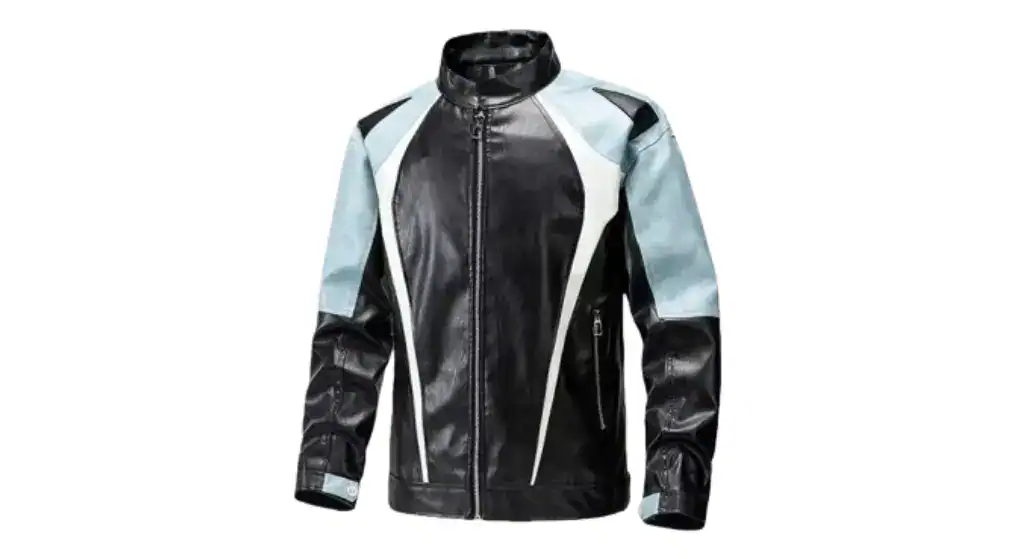
A motorsport brand had just signed a deal to provide custom racing fire suits to a regional touring car series – 60 suits, two color combinations, and names/numbers printed on each one. They found a suitable supplier online, set the price, and ordered their suits. Four weeks ahead of the first round, the suits arrived. Color matches to renders were spot-on. Then the series scrutineer disqualified every suit because the manufacturer used a Nomex-blend fabric that did not meet the SFI 3.2A/5 requirements. The supplier said nothing about certification. The brand had forgotten to ask. With only weeks left before the first race, there was not enough time to reorder. That sort of problem, which could have been prevented from the very beginning of the conversation, is one of the reasons to know about all aspects of a
Custom racing fire suit production before contacting manufacturers..
1. Why Racing Fire Suits Don’t Have Any Other Function but Personal Protection
While most custom apparel items depend on the choice of colors, fabrics, and branding options, racing fire suits are entirely different. These are pieces of personal protective equipment first, and branded clothes next. This means that every single decision made during the production process will differ from others due to the special characteristics of these clothes.
While a brand that orders custom racing fire suits for the first time may consider the production process of custom sportswear that involves the selection of a fabric, sublimation printing, and the addition of logos, in reality, it has everything to do with safety standards that determine the type of fabric used in advance.
This is not a drawback but rather something that makes racing fire suits valuable products. Customers who know about this beforehand will prepare better briefs, receive better samples, and will be able to avoid costly errors when producing in bulk.
Read More About Custom Racing Suits Manufacturer
2. Manufacture of Custom-Made Fire Race Suits
Manufacturing a custom-made racing fire suit goes through similar manufacturing processes as any other sewn item; these processes entail pattern making, material cutting, sewing, and finishing. However, in the manufacture of the fire suit, tighter tolerances and harder material handling are required.
Besides needle type and thread weight, other issues have to be taken into consideration when using Nomex and aramid blends in fire suits. Positioning of seams is important as seams affect the heat barrier in the area of stress. Stitch density is an issue that affects both the strength and permeability of the fabric. Such issues definitely do not arise in any conversation on pricing.
Pattern Grading and Its Importance in the Performance of the Suit
Fire suits fit the driver tightly. Additional material causes bulk in the areas covered by the harness strap, which makes it uncomfortable for the driver to operate the vehicle. Pattern grading, or grading the pattern proportionally through the different sizes, means everything when it comes to the performance of each suit on the driver. Those companies ordering team wear in different sizes should ensure that their suppliers use graded sizes and not just scaled patterns in the different sizes.
That’s when the sample that has been made before production becomes important. Examining the sample physically in each size before bulk cutting is what an experienced buyer does. It’s not because they want to, but this is the only way of spotting grading mistakes.
3. Layers and Structure: Layer Count
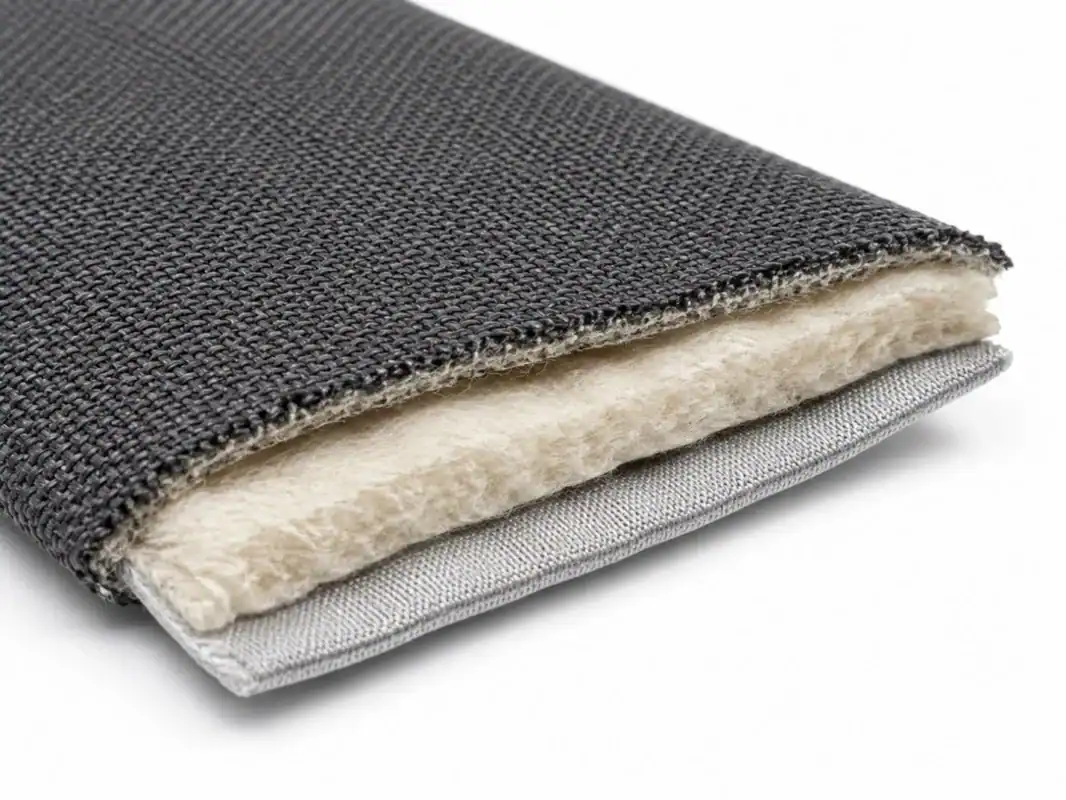
Layer count is perhaps the most important technical specification when it comes to making your own fire suits. It determines everything about your suit, including how much protection it provides, its weight, breathability, cost per unit, and safety classification rating.
Details include:
| Fabric Type | Thermal Protection | Weight & Comfort | Typical Use |
| Nomex® (single-layer) | Moderate — SFI 3.2A/1 | Lightweight, breathable | Kart racing, club motorsport |
| Nomex® (2-layer) | High — SFI 3.2A/5 | Medium weight | Club to semi-pro racing |
| Nomex® (3-layer) | Highest — SFI 3.2A/20+ | Heavier, max protection | FIA F1, endurance racing |
| Carbon-Nomex Blend | High | Lighter than standard Nomex | Premium custom suits |
| Aramid Fiber Blends | High | Varies by construction | OEM private label options |
What many people often forget is that the layer count does not merely refer to the layer count in which the pieces of the fabric are stitched together, but also refers to the structure of the outer shell as well as the lining. In the case of the 3-layer fire suit, there is the outer shell, the insulating layer, and the comfort layer. This is something that must never be forgotten while ordering the product.
Comfort Layers and Moisture Management
Where the rider is involved in an endurance race – 24 hours, long-distance touring, or rally – then moisture management and thermal insulation become necessary. Properly made comfort layers will make sure that sweat is properly moved away from the skin to reduce fatigue and tiredness. All manufacturers put the same amount of effort into the comfort layer as the outer layer.
4. SFI Versus FIA Certification: What Buyers Should Know
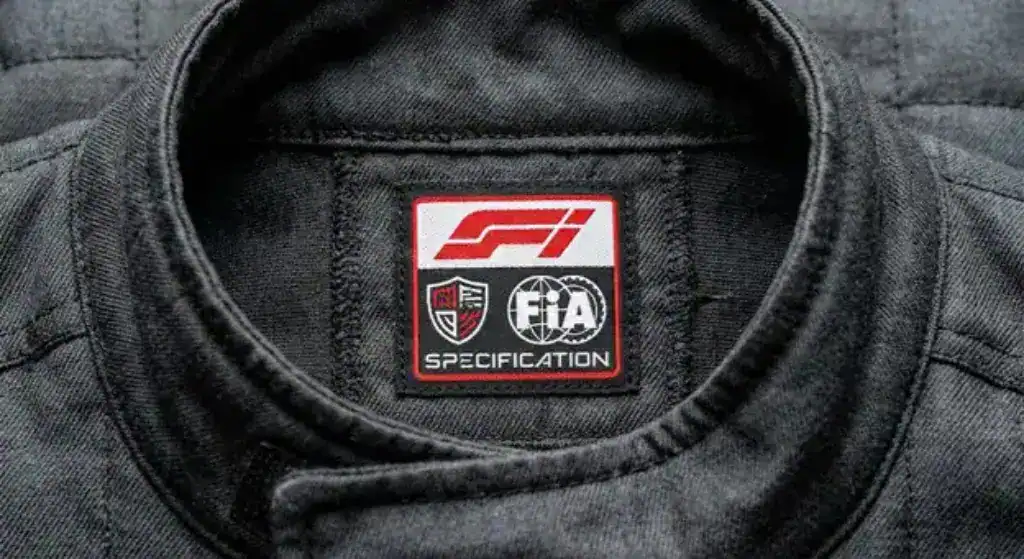
This is where most first-time buyers start having issues. SFI and FIA are not the same certifications. They are done by separate organizations using different procedures and recognized by different sanctioning organizations. An SFI-certified suit won’t pass FIA scrutineering, and vice versa, even if they look exactly alike.
| Factor | SFI Rating | FIA Rating |
| Governing Body | SFI Foundation (USA) | FIA (International) |
| Standard | SFI 3.2A series | FIA 8856-2018 / 8856-2000 |
| Acceptance | North American series | Global motorsport series |
| Heat Exposure Rating | TPP value (seconds) | TPP test + wear life limit |
| Recertification | Annual sticker required | Life-limited (5 or 10 years) |
| B2B Relevance | Key for US market exports | Required for EU/international clients |
In terms of production, the decision about which certification should be sought out needs to be made prior to ordering the fabric. The fabric used to meet the requirements of SFI 3.2A/5 is different from that of FIA 8856-2018. Once the fabric is selected and samples sent out for testing, going for the other certification means starting from scratch.
Suits that are to be worn in multiple marketplaces – let us say a race team that will participate in both North American and European races – will often require certification according to both standards, which will often mean having two different SKUs. Making sure of this at the briefing stage saves you budgeting trouble down the road.
Is the Manufacturer Responsible for Third-Party Testing?
It may be useful to ask that particular question because there are some OEM manufacturers who manufacture their fire suits according to the right fabric specification, but who leave the testing to a third party. Others have developed partnerships with third-party test laboratories and manage the certification process as well.
5. OEM vs. ODM Manufacturing of Racing Suits
Both terms are used interchangeably by many purchasers. Yet they are not interchangeable terms as they describe two completely different models of cooperation, especially important in the case of ordering a product that needs specific safety certifications and performance specifications according to the brand.
Original Equipment Manufacturer (OEM)
If OEM production is chosen, the purchaser will be in charge of the design, including the pattern, the material specification, the manufacturing technique, the safety certification level, and the branding. The factory will manufacture according to the purchaser’s specifications. Thus, the buyer will have the possibility of fully controlling the product and making it unique.
Original Design Manufacturer (ODM)
In an ODM deal, the manufacturer holds the patent on the basic design. The client chooses from the available designs and puts his or her logo, color, etc., on them. This way, lead times are shorter, and there is less prep work involved. However, the product design itself and, in most cases, the certification process, have already been established.
Whereas for those brands that aim at making a unique product, OEM is the best solution, for those teams or brands that want to enter the market with a basic product fast, ODM will be a perfect solution.
6. Customization Opportunities: Colors, Branding, and Graphic Design
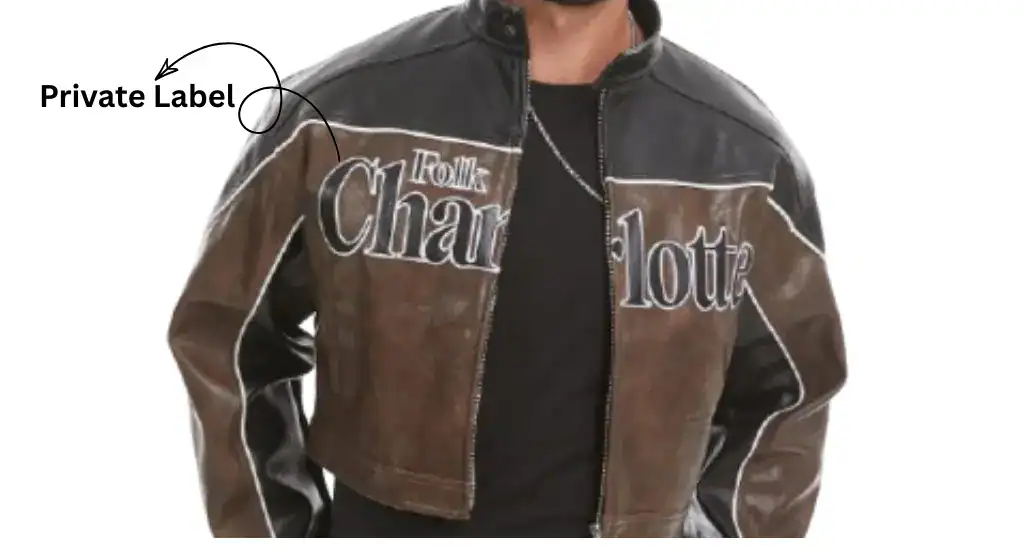
Custom racing fire suits offer numerous options for visual customization as long as the procedure is performed properly and doesn’t affect the strength of the construction.
| Customization Option | Method | Minimum Requirement |
| Team colors | Panel cutting & Pantone-matched dyeing | Pantone reference required |
| Brand logos & sponsor names | Embroidery or woven label | Vector file (.ai / .eps) |
| Number panels | Sublimation or embroidery | Size run breakdown required |
| All-over graphic suits | Full sublimation printing | Design file at 300 DPI |
| Custom patches & badges | Embroidered or woven | Artwork in vector format |
| Private label branding | Label, hangtag, packaging | Brand guidelines required |
Fire Suit Sublimation Printing
Full sublimation printing is the most spectacular way of personalization of race suits as it allows the use of detailed graphics, gradients, and typography, impossible to create with the use of panel cutting only. The main thing concerning the manufacturing process is that the sublimation should be done to the material before the procedure of cutting and sewing. The complete artwork should be ready to use before the start of the production.
Embranded patches and woven labels can be installed after the assembly and can be adjusted during the process of sample approval without any changes in the fabric or cut. It is ideal for branding things to be changed with each new order – sponsor’s name, driver’s name, and season.
7. What Should Be Prepared before Contacting a Manufacturer?
A well-prepared brief is not only a matter of formality – it will influence the correctness of the quotation, the speed of sample delivery, and the chances of meeting the deadlines. The manufacturers who are given incomplete briefs create conservative quotations with a broad range of costs and long-term manufacturing because they have to leave room for uncertainty. A comprehensive brief does away with this uncertainty for both parties.
| What to Prepare | Why It Matters |
| Target certification (SFI or FIA) | Determines fabric spec and testing protocol |
| Fabric preference (Nomex layer count) | Affects cost, weight, and protection level |
| Pantone color references | Required for consistent panel and trim matching |
| Vector artwork files (.ai / .eps) | Needed before sampling can begin |
| Size run and quantity per size | Required for cutting plan and MOQ confirmation |
| Required delivery date | Drives production scheduling and shipping mode |
| Branding requirements (labels, packaging) | For private label or OEM orders |
| Existing suit for reference (if replacing) | Speeds up pattern replication and spec matching |
Two important details are frequently overlooked. First, the delivery date must be the date when suits are needed, and not the day of the first race. It takes some time to inspect suits, distribute them among drivers, and conduct any necessary checks before the event. Second, if you order suits for a whole team consisting of drivers of varying sizes, then every variation in fit must be considered separately, not simply as a change in size. For example, a driver who is 185 cm tall and has a long torso may wear suits of the same size as a driver who is 175 cm tall with a compact figure, but fit adjustments would be required.
8. Finding the Right Custom Racing Fire Suit Manufacturer
Not all textile companies have the capacity to manufacture racecar fire suits, even though they claim to manufacture motorsport apparel. The manufacturing process is unique in such a way that the analysis should consider more than just the cost and delivery time.
Important questions to ask before deciding on whether or not to take samples from a company:
- Could you give me any proof of previous fire suit manufacture – especially certifications met?
- Do you manufacture fire suits in-house, or do you outsource the assembly to another cut and sew company?
- What certifications can your manufacturing process reliably achieve – SFI, FIA, or both?
- How do you ensure a consistent lot of material for the whole bulk order in terms of thermal rating?
- What is your pre-production sampling process, and what is included in the package?
- How do you deal with quality concerns after delivery – replacements, credits, or other compensation?
If the manufacturer cannot give a clear response to the certification issue or responds with an ambiguous statement such as “meeting safety standards,” this is certainly a cause for concern. With regards to PPE manufacturing, this is definitely a red flag.
Preproduction samples are a must when ordering fire suits. The sample that you must receive must be complete, meaning it must be made according to specifications, branded, and using the right material. If the manufacturer refuses to provide samples, charges disproportionate sampling fees, or offers renderings of samples in place of the actual samples, he/she is telling you something about his/her production capabilities.
Production Timeline: Custom Racing Fire Suits
| Stage | Timeline | What Happens |
| Tech Pack & Design Review | 3–5 days | Pattern grading, fabric spec confirmation, certification check |
| Pre-production Sample | 10–14 days | First physical sample with all construction details |
| Client Sample Approval | Buyer-dependent | Fit check, cert verification, branding review |
| Bulk Production | 3–5 weeks | Cutting, sewing, inspection, branding application |
| QC Inspection (3 stages) | Built into production | Inline, end-line, and pre-shipping checks |
| Shipping | Air: 5–7 days / Sea: 30–40 days | Based on destination and Incoterms agreed |
Please be aware that the above relates to production phases only. Overall lead time for the order will take into account the time taken to prepare the artwork, create the technical pack, examine the physical samples, and approve everything in writing before production is started in bulk.
9. Frequently Asked Questions
What is the difference between SFI and FIA fire suit ratings?
The difference between SFI and FIA is that the former is a rating issued by the SFI Foundation and is recognized by North American racing series. The latter is a rating issued in accordance with FIA technical regulations and recognized by international racing organizations. In both cases, there is testing for thermal protection performance; however, protocols and requirements may vary. Fire suits certified by SFI standards do not meet the FIA standards automatically, and vice versa. Buyers who provide suits for several racing championships should indicate their certification needs before sourcing fabric.
What is the minimum order quantity for custom racing fire suits?
Minimum order quantity differs from manufacturer to manufacturer. Some manufacturers have MOQ of at least 20-30 pieces per colorway for customized racing suits which are certified and printed with sublimation. Panel color suits without full sublimation printing might be ordered in lower MOQ. If you are looking for a company which offers custom fire suits in low MOQ, RaceApparelCUS can help you with that — write us your brief for consultation.
What is the production time of custom fire suits?
Samples generally require 10-14 days starting from approved tech pack. Production time for bulk order starts from 3-5 weeks from written approval of the sample depending on quantity and complexity. Shipment time varies from 5 to 7 days by air and from 30 to 40 days by sea. Start planning from sample approval rather than date of first request since difference between these two dates could be easily three to four weeks for a complicated order.
Is it possible to print driver's names and numbers on each suit?
Yes. Driver identification – names, numbers, and national flags – is normally used for orders of racing teams' suits. If your suit uses sublimation printing, then you will need to add this information to artwork file before starting the production since graphic is transferred to the fabric before suit cutting. If the suit will be embroidered or woven with the name or number, then this process takes place after assembly.
What artwork files do we need for custom racing fire suits?
Files in vector format (.ai, .eps) are needed for logos, typography, and patches' art. For full sublimation, it is necessary to have a high-resolution file at 300 DPI or higher in design format prepared to exact suit size specifications. In case artwork is available only in low resolution format, tech pack development is required which usually takes 3 to 5 working days. Starting the tech pack development in advance will save you significant amount of time.
Are private label fire suits available?
Yes. Private label manufacturing when finished product does not have any indication of manufacturer on it, but has your brand's own labels, tags and packaging instead is a common practice in OEM business. Full briefing of your branding including design of labels, hangtags and care instructions together with information about country of origin if necessary is needed. It's a logical next step for a brand that already produces OEM apparel manufacturing line for motorsport.
How does a one-layer suit differ from a three-layer fire suit in terms of production?
In production terms, multi-layer garments include more material elements, more complicated assembly of interlinings, and narrower tolerances for sewing the seams since they have to match perfectly. The production takes more time and needs skilled personnel who know how to make the product. While a one-layer garment can be made on a regular cut-and-sew line with some technical adjustments, a three-layer certified suit needs to be ordered from a factory that has experience in making protective clothing.
Ready to buy custom racing fire suits? Reach out to RaceApparelCUS to talk about certification, design, and production of your suit. We offer you a free quote within 24 hours.
