

Custom Clothing Manufacturers for Startups: A Jacket Sourcing Guide | RaceApparelCUS

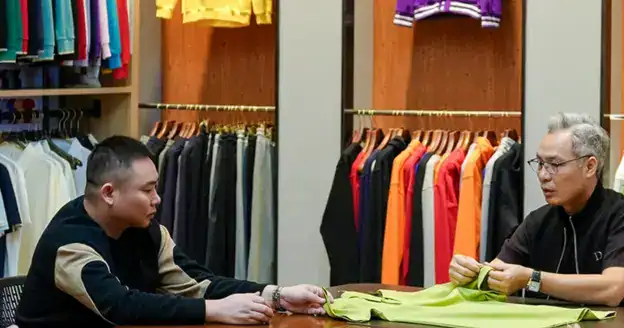
Two buddies who had cultivated an audience through creating online mockups of streetwear designs wanted to bring their idea to life through a line of varsity jackets. They reached out to five custom clothing manufacturers for startup via email, attaching only a single image for a mood board, and requested a quote. Two manufacturers didn’t reply. Two offered a 500-unit minimum in one colorway, which was more than their entire budget for the project. The fifth offered a quote too good to be true, which eventually turned out to be true six weeks later, when a deposit was already made.
Of course, none of the five manufacturers mentioned above could have been truly bad in some aspects. It was just that the brief wasn’t prepared taking into account the actual situation of the startup – a tight budget, a small batch size, and a lack of a technical designer in the team. Knowledge of what to look for, what to ask for, and what to expect from a manufacturer changes everything.
Custom Clothing Manufacturers for Startups: A Guide to Finding Your First Jacket Manufacturer
1. Why Startup Jacket Brands Need a Different Sourcing Approach
Most sources regarding the subject offer information for experienced buyers with volume orders – well-established brands buying multiple orders of jackets across all sizes. For startups that need to place the first order to test whether an idea is worth pursuing, that approach doesn’t apply.
The priorities change. While an established brand with a large number of products in storage will care mostly about quality and cost of manufacture, a startup will care about minimum order size and communication much more. Of course, there is nothing right or wrong about these priorities – applying them to the wrong manufacturer simply results in a bad choice.
Learn about Custom Jackets manufacturing tailored specifically to your needs.
2. How to Find Custom Clothing Manufacturers for Startups?
Not all the manufacturers who mention custom clothing as their product line are suitable for working with novice founders, because sometimes they focus on huge repeat orders and have nothing to offer for those brands that will make 150 units on the first drop.
Signs That A Manufacturer Will Suit Your Brand
- Lists real MOQ for the products instead of vague “it depends on the order”;
- Provides a definite sample process with a definite price and time;
- Explains the construction details in understandable language;
- Answers your questions about materials and fit without offering an expensive variant right away;
- Has experience with the production of jackets, not just t-shirts and other garments.
Sometimes it happens that startups miss the point that the size of a factory does not play any role here. The biggest company may have a small batch program, while the smallest company can be overloaded and react slowly to your requests. What matters is whether a company answers you positively to these five things.
3. Realistic MOQs: What the First Order of a Jacket Should Be
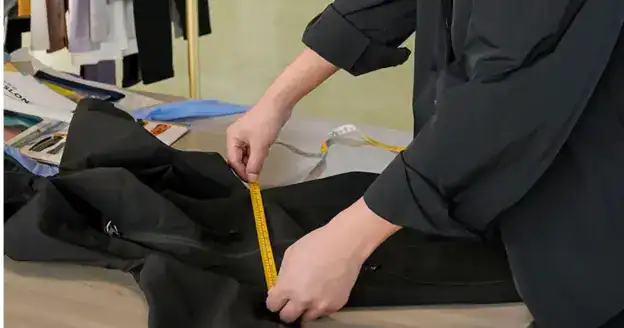
Minimum order quantity is always the first figure that determines a sourcing strategy of startups and, surprisingly for many entrepreneurs, depends on various factors.
| Order Type | Typical MOQ Range | What Affects It |
| Basic panel-color jacket, no custom print | 50–150 pieces per colorway | Simpler cut, fewer components, lower risk for the factory |
| Sublimation-printed jacket | 150–300 pieces per colorway | Printing requires committing to fabric yardage upfront |
| Fully custom pattern (new silhouette) | 100–250 pieces, sample-dependent | Pattern development and grading add cost regardless of order size |
| Private label on existing blank | 50–100 pieces | Faster since the base garment is already developed |
It is often believed that MOQ is a strict rule of the industry. In reality, it is the assessment of risks made by each factory separately. If a startup simplifies its first order (one colorway, one size run, minimal custom printing), it will be possible to negotiate a lower MOQ than is stated on the website of the factory.
Small-batch cut and sew jacket production for a startup order
4. Cut & Sew (CMT) vs. Full-Package (OEM): Whichever Works for Your Startup Budget?
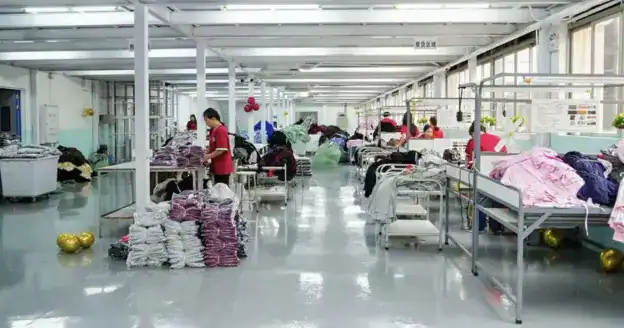
This choice is the biggest factor for lowering the cost of production for your brand – and it’s also the most misunderstood by first-time apparel manufacturers.
Cut, Make & Trim (CMT)
With CMT manufacturing, you source the fabrics and trims yourself, pay the factory to cut, sew, and produce them. It may reduce your unit cost if you have connections with fabric suppliers, but it puts the responsibility of fabric sourcing on your shoulders, as well as the risk if anything goes wrong with a fabric order.
Full-Package (OEM) Production
In the case of full-package or OEM manufacturing, the factory sources the materials and designs/produces them based on either a tech pack or a reference sample. If your startup doesn’t have an experienced designer who can handle this stage, a full package is likely to be the lower-risk way forward because more coordination is done by the factory.
| Factor | CMT (Cut and Sew) | Full-Package (OEM) |
| Startup coordination load | High — sourcing, pattern, QC all on the founder | Lower — factory manages most of it |
| Upfront cost control | More control if fabric is sourced well | Less granular, but more predictable |
| Risk if founder lacks technical experience | Higher | Lower |
| Best for | Founders with a design or sourcing background | First-time founders launching their first drop |
Learn more about OEM apparel manufacturing for startups.
5. The Flow from Sample Production to Large Orders
| Stage | Timeline | What Happens |
| Brief & Fabric Confirmation | 3–7 days | Manufacturer reviews design brief, confirms fabric and construction |
| Pre-Production Sample | 10–21 days | First physical sample built for fit, construction, and branding review |
| Sample Revisions | Founder-dependent | One or two rounds of adjustment before written sign-off |
| Bulk Production | 3–6 weeks | Cutting, sewing, trimming, and in-line quality checks |
| QC & Shipping | Built into production | Final inspection, packing, and delivery to the founder |
First-time startup founders typically schedule their product launch according to when they make their order, not when their sample order is approved. These dates are vastly different, and sometimes the sample approval process requires two rounds of revision, which might easily take three to four weeks before producing large orders begins – budget accordingly before scheduling a product launch.
6. Mistakes Made By Startups When Choosing a Factory
- Sending the mood board rather than the tech-pack and expecting an exact quote
- Picking up the cheapest quote without finding out the cost of what’s excluded from it
- Avoiding getting a sample produced physically and approving it based on pictures only
- Scheduling the product launch before the sample approval instead of after
- Thinking that MOQ requirements apply equally to all fabric/print options offered by the factory
Expert Tip: Cheapest quote is rarely going to be the cheapest order if you consider the cost of revising the design, shipping, and handling. A factory that takes the time to ask detailed questions at the initial stage is pricing the order realistically – if it gives you an instant quote just based on a picture you sent it, it’s likely to be priced blindly and will be adjusted later on.
7. What You Need to Have Ready Before Reaching Out to Manufacturers
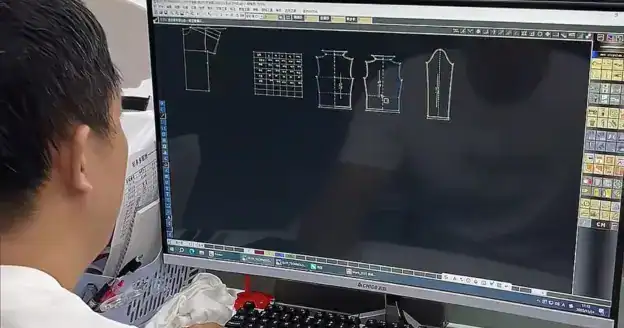
While a startup does not necessarily require a full-fledged technical design team to put a brief together, some key pieces will help you get a genuine quotation as opposed to a rough estimate.
| What to Prepare | Why It Matters |
| Reference sketch or existing jacket to copy | Gives the factory something concrete to quote against |
| Fabric preference or budget per yard | Even a rough idea narrows down realistic options quickly |
| Size run and estimated quantity | Needed to confirm whether your order meets MOQ |
| Branding details (labels, hangtags) | Affects trim sourcing and finishing time |
| Target budget per unit | Helps the factory recommend construction that fits your margin |
| Realistic timeline, not a launch date | Keeps expectations aligned with sample and production reality |
If you haven’t had a proper technical pack developed yet, do not pretend otherwise by giving an estimation of your needs. In reality, most manufacturers working with startups offer tech pack development as a paid service, and it usually takes less time than trying to explain things back and forth for multiple iterations.
RaceApparelCUS sample development for a startup jacket brand
8. The Questions a Startup Needs to Ask Before Placing an Order
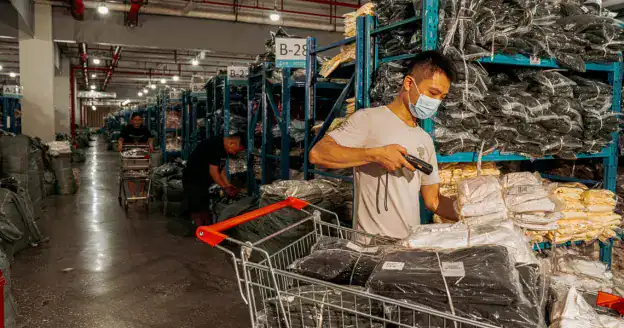
A first-time entrepreneur does not have to be a pro in the field to ask the right questions — the objective is to get concrete information rather than vague reassurance.
- What is your minimum order quantity for a style similar to mine, exactly?
- How much is a pre-production sample going to cost me, and will it be included in the price of bulk production?
- What do I do if I need to change something after receiving the sample?
- Do you work with first-time startups or mostly with established and high-volume clients?
- What isn’t included in the price you quoted — shipment, labeling, packaging?
- Can I look at a sample of a jacket that you made for another startup?
The manufacturer who is ready to give you clear and concise answers is typically ready to work with a founder who places his first order. Otherwise, this is a red flag that is worth considering before putting down a deposit.
Learn more about how we work with new and first-time jacket brands.
9. Frequently Asked Questions
What is the minimum order quantity of a startup’s first batch of jackets?
This depends greatly on construction and fabrics, but panel-color jackets without custom printing may be started at quantities of about 50-150 units per colorway. Custom prints and sublimation printing normally come with higher minimums as both require extra setup time, regardless of the size of the order. Having a simpler first order, one colorway, one type of printing, will help you achieve the lowest minimum a factory would accept.
How much does working with a clothing manufacturer cost a startup?
Cost will depend on fabric, construction complexity, and the size of the order; the manufacturer should be capable of breaking down costs and explaining all charges. If you are comparing quotes, try asking for exclusions from them; those are usually what makes the budget over.
Do I need a tech pack to approach a manufacturer as a first-time founder?
No, you don’t necessarily need a tech pack to initiate the dialogue, but you will need one, or its alternative developed by the factory, to commence production. If you lack design experience, then there are plenty of manufacturers that work with startups that provide tech pack development services as a fee-based extra.
Should I go with cut-and-sew (CMT) or full-package production for my startup jackets?
Most first-time founders lack an in-house technical designer, and that is why full-package production is a less risky choice. While the cut-and-sew will give you better control over materials and costs, if you have the experience in dealing with fabrics yourself.
How long does it take to get to bulk orders from the pre-production samples for a startup jacket company?
Production samples may take up to one to three weeks, depending on complexity and the number of revisions required. The bulk production will take around three to six weeks after the approval of samples. Plan your product launch according to the date of sample approval, not of your manufacturer communication initiation, as it may last up to three to five weeks.
How much should be reserved for the initial manufacturing run of a startup company?
Other than per unit cost, allocate funds for sampling fees, deposit (usually 30% – 50% of total), shipping, and some extra money for the potential revision of the sample. It is always the case that entrepreneurs allocate funds only for the per-unit prices that factories give them, leaving no room for other additional costs that will come halfway through the process. Additional resources, such as the U.S. Small Business Administration, provide helpful information regarding budgeting and financing for the first production run.
Can a startup negotiate an MOQ with the custom clothing manufacturer?
Yes, usually it can – MOQ is more of a risk assessment performed by the factory rather than an established industry rule. The easiest way to negotiate the minimum order is to make an order easier to manufacture – fewer colorways, no custom print, using common material that is already in the inventory of the factory.
What are the major risks for a startup company dealing with a manufacturer for the first time?
The major risk is not a bad factory – the major risk is a poorly compiled order brief leading to the sample that wasn’t actually agreed in writing. Verbal agreements and approvals by photo are the biggest time and money killers for startups. Always try to obtain a written and dated agreement on the sample before going into mass production.
Ready to start your first production run? Contact RaceApparelCUS for a free quote, sample development, and guidance on realistic MOQs for your first order.
