

Small Batch Clothing Manufacturers: A Jacket Brand’s Guide | RaceApparelCUS

The owner of a brand producing a 12-piece capsule line approached five small batch clothing manufacturers, asking the same thing: “What’s your price per unit for 80 jackets?” Quotes ranged from $8 to $9 per unit (with four of those quotes falling within roughly the same price bracket). One quote was almost twice as high as the others, without any explanation. After asking the factory why they quoted such a high price, the answer was plain and simple: “We do not produce orders under 300 units.” That’s the part most of the guides omit. “Small batch” is not a service offered by every manufacturer on equal terms — it’s an ability, and not all factories claiming that actually structure production in that way. Realizing that shifts priorities when choosing quotes to follow.
1. “Small Batch” Explained in the Clothing Manufacturing Industry
There’s no official definition of “small batch” in either legislation or industry standards. Most first-time customers believe there should be, since they tend to associate this term with a certain number of units. In reality, this phrase is more about the way manufacturing is done than a number written on the specification sheets.
In the case of jackets, most small batch clothing manufacturers that specialize in small batches can handle from 20 to 300 units per style. Below that limit, per-unit cost increases too quickly for most factories to produce an order. Above it, there is already bulk production, and other pricing rules apply.
What’s important here is whether the factory has production capabilities to produce short runs, or whether “small batch” is something written on the website.
2. Why Small Batch Manufacturing Costs More Per Unit
Here’s where the founder assumption becomes very expensive: thinking that unit pricing scales proportionally to order size, like material pricing. This is a mistake, since a significant portion of manufacturing cost does not scale down with volume.
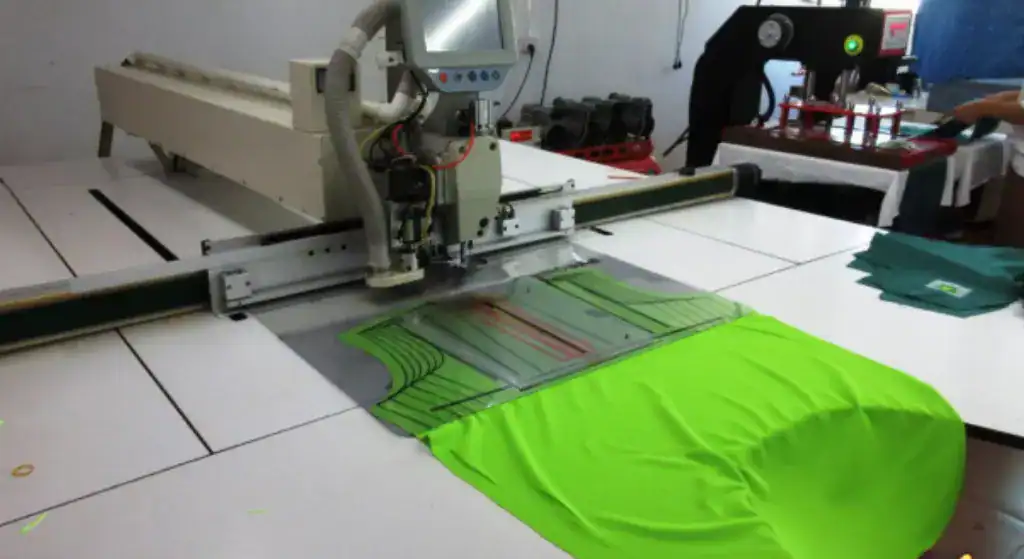
Pattern grading, marking up, and machine setup take about the same effort in terms of skilled labor, whether the batch is 50 or 5,000 pieces. When spread over 50 jackets, this fixed cost may add a few dollars to the cost of production of each unit. Spread over 5,000, and this will have a marginal impact. This is actually the way small batch pricing works – not markups or amortization.
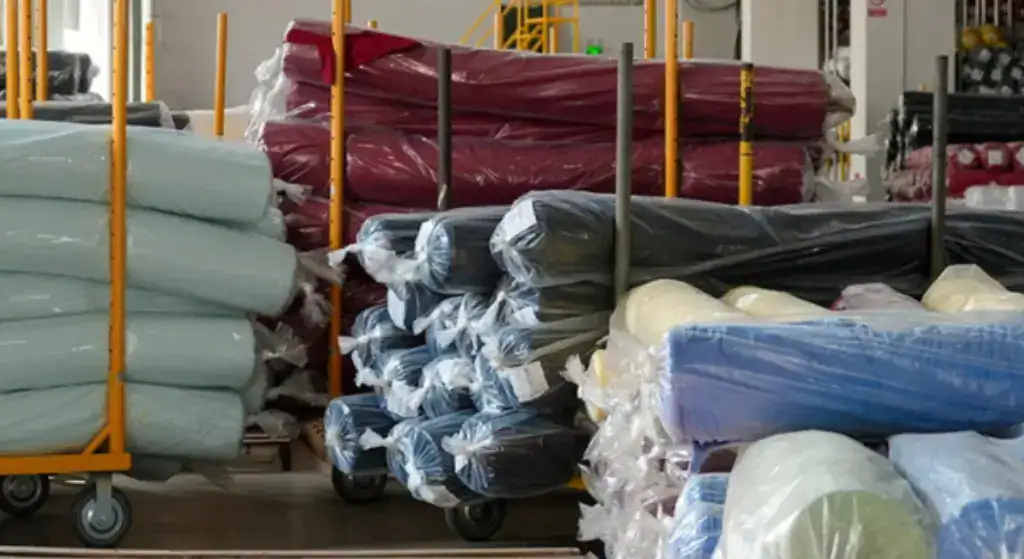
Another factor is fabric sourcing. Mills produce yardage in minimums; 300 to 1,000 yards per colorway at least. A small batch order of jackets usually needs less material than this yardage minimum. Manufacturers specializing in small batch manufacturing resolve this problem by using deadstock or roll-end fabrics, in-house short run dyeing, or including the yardage minimum in manufacturing cost. It is wise to ask the manufacturer how exactly he produces fabric in runs smaller than his minimum order quantity.
RaceApparelCUS provides jacket manufacturing with an MOQ.
3. Small Batch vs. Cut and Sew vs. Full Package: What Fits into It
The terms “small batch,” “cut and sew,” and “full package” are commonly used by buyers interchangeably as if they were competitive categories. This is not the case – they just answer different questions. “Small batch” refers to order volume. “Cut and sew” versus “full package” tells whether you or the factory is sourcing the material and managing the manufacturing process.
There can be small batch cut and sew, where you provide your own fabric and pattern for producing 60 units of garments, or small batch full-package, when the factory produces all of its 60 units of garments from your design brief. The volume of the order remains unchanged – the division of labor changes. Mixing up the two results in incorrect briefs – the misconception on the part of a founder that “small batch” means “full service” is the primary reason why fabric sourcing is completely omitted from a quote.
4. Operational Restrictions That Dictate Small Batch Orders
There are a few operational restrictions that determine almost every single small batch order and help avoid problems during manufacturing.
| Constraint | Why It Happens | What It Means for You |
| Limited fabric colorways | Mills won’t break yardage minimums for one colorway | Fewer color options unless you accept a fabric surcharge |
| Trim minimums | Zipper and label suppliers also set minimum order quantities | Custom hardware may need a workaround like stock trims with custom labels |
| 100% inspection instead of sampling | Statistical AQL sampling isn’t meaningful at low unit counts | Slower per-unit QC, but often higher consistency across the run |
| Fewer sizes graded per style | Grading each size adds fixed cost regardless of quantity | Small batch runs often ship in 2–4 core sizes rather than a full range |
What many founders forget about: 100% inspection may sound like an additional service that a factory provides, but it is rather a necessity for low-volume orders. Methods such as AQL sampling can provide you with an accurate estimation of defects only in the case of large batch volumes.
5. What to Ask to Screen Out small batch clothing manufacturers for Jackets?
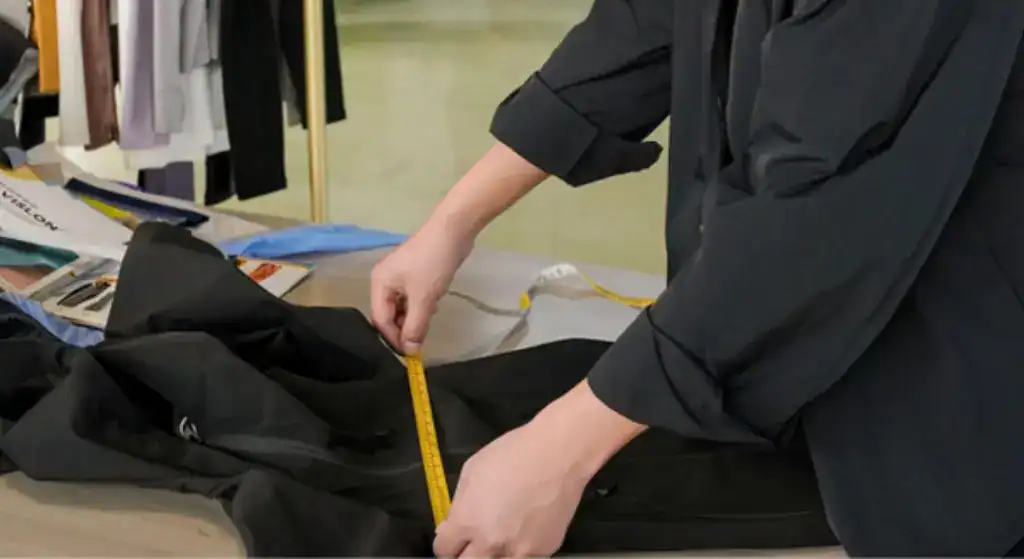
- What is their smallest ever order for the kind of jacket you want to produce?
- How do they manage to get fabrics for orders under the minimal yards a mill can supply?
- Do they provide tiered prices or do all jackets have the same price regardless of volume?
- What do they do with extra trims and fabric for orders that don’t include a full cut?
- Can they send a sample from an order similar in size to yours, but not necessarily the biggest order of their largest customer?
If a small batch clothing manufacturers gives clear answers regarding these things, they most likely have experience in working on small batches. If instead they start talking about their ability to make orders in large quantities, then it means that small-batch orders are not their specialty.
How We Work with Brands at Any Order Size
6. What to Prepare Before Asking for the Quotation?
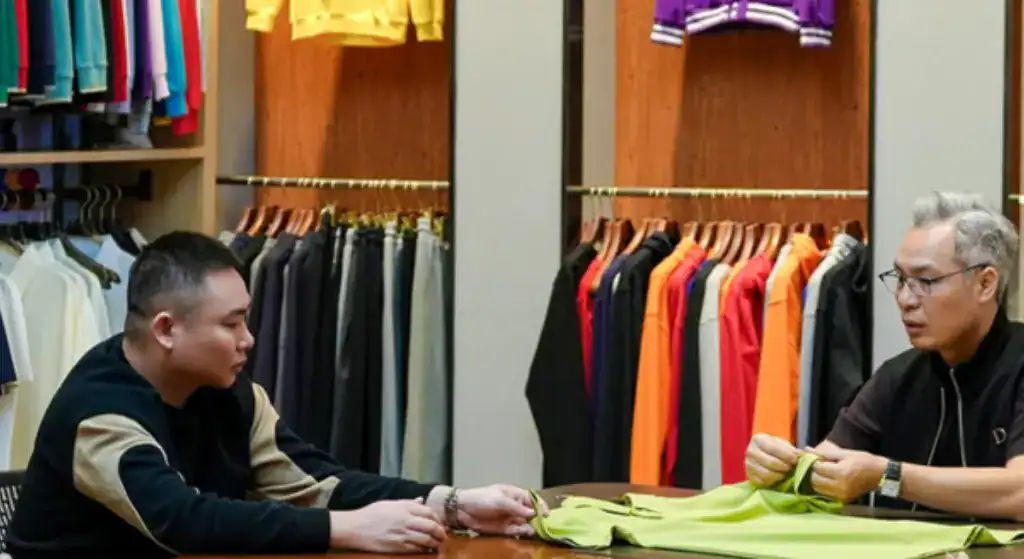
| What to Prepare | Why It Matters |
| Target quantity and size breakdown | Determines whether you’re inside a manufacturer’s real small-batch range |
| Fabric preference, or openness to deadstock options | Affects both cost and colorway availability at low volume |
| Reference sample or tech pack | Removes guesswork from a quote built around a small, fixed budget |
| Trim and hardware requirements | Custom hardware may need substitution to avoid supplier minimums |
| Realistic timeline expectations | Small batch orders aren’t always faster than bulk — setup time is often similar |
Time to prepare for a small batch order? Find out how we produce custom leather jackets in small quantities.
7. Frequently Asked Questions
At what point does a jacket order become small?
There’s no strict number, but manufacturers who truly have the expertise for small-batch jacket production can operate efficiently in the 20 to 300 unit range per style. Orders smaller than that generally incur a higher cost per unit, while those larger are usually in standard bulk pricing.
Why is small-batch clothing manufacturing costlier per unit?
The fixed costs of pattern grading, marker making, and machine setup take basically the same time and effort to complete for an order of 50 units versus 5,000 units. In addition, the fabric will add costs due to the minimum yardage requirement by mills.
Is there a difference between small batch manufacturing and cut and sew manufacturing?
No, the terms respond to two different questions. A small batch is used for the size of an order. Cut and sew is used for the type of manufacturing process in which the buyer supplies the fabric and the patterns. The manufacturer may operate small-batch orders either way, so both terms should be clarified.
How do small batch manufacturers deal with fabric minimums?
They either use deadstock, in-house short-run fabric dying, or absorb it as the standard cost of doing business when producing small batches. This should be explained by the manufacturer; it would mean that its small batch capability is more theoretical than practical.
Can I have customized hardware and trims for my small batch order?
Yes, but keep in mind that there will be minimum order requirements for hardware, zippers, snaps, and labels supplied by specialized trim manufacturers. The usual solution for this problem would be using the standard hardware combined with custom-made labels or hangtags.
Is a small batch quicker because of faster turnover?
Probably not; developing patterns, grading, and doing samples takes a similar period of time regardless of the batch quantity. Therefore, it doesn’t make a difference between the turnaround time of a mid-size and a small batch order. However, what it will save you time in is the shorter time needed for cutting and sewing.
Is it possible to use the “Made in USA” label for small batch jackets?
It depends on how and where fabrics are sourced and assembled, but not on the size of your order or where cutting and sewing are done. FTC defines certain requirements for “made in the USA” claim, which would be worth learning before making such a claim on your packaging or hangtags.
How many colorways can I order in a small batch?
Less than it’s possible at the bulk volume; it is because of the possibility of fabric/dye minimum associated with each new colorway. It is common practice to order one or two colorways at the very beginning and then add more once you start ordering repeats.
Ready to place a small batch of jacket orders? Contact RaceApparelCUS for help with fabric selection, realistic costs, and sample development of all sizes and orders. Get a free quote in 24 hours!
