Custom Track Jackets for Teams & Brands | RaceApparelCUS

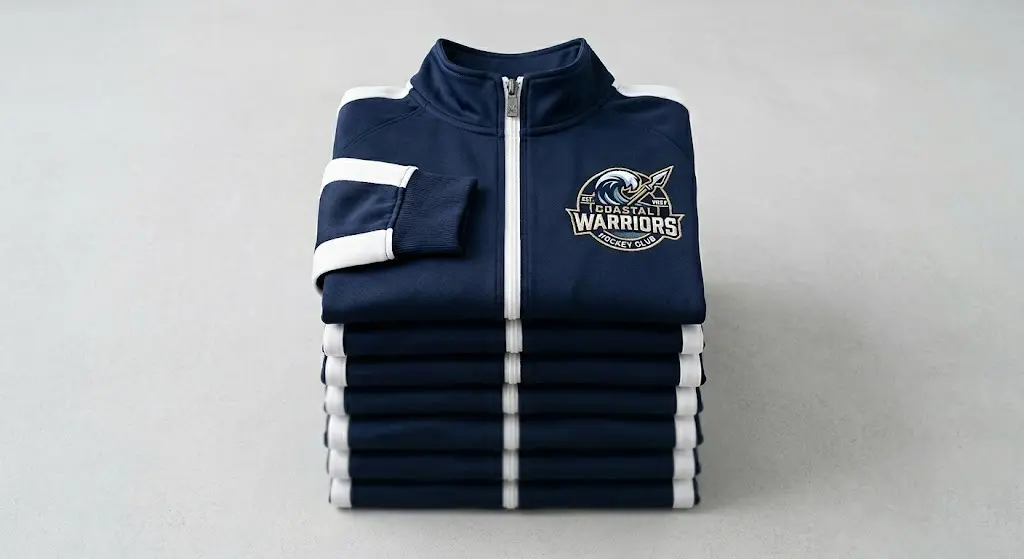
Custom Track Jackets for Teams and Brands: The Complete Ordering Guide
The university’s director of athletics ordered 150 custom track jackets three weeks before the regional track and field competition. After the supplier confirmed the order and backed it up with a deposit, they delivered 150 track jackets. However, the logo on the jackets was incorrectly located, and the initial zip on each jacket jammed when pulled.
There was no problem with the supplier, but rather a one time issue. The order did not have any fabric specifications on it; the sample had never been approved and there was no written confirmation of logo placement. The coordinator assumed, and the factory had to use guesswork to resolve everything. The end result was that it cost more to fix the problem than the initial order was worth.
The purpose of this guide is to help prevent a similar situation from happening to your enterprise. The same can be said about each of these groups of organizations whether they are looking to purchase running jackets for their competitive sports teams or placing orders; locating or ordering running jackets for a university athletic program, private-label brand or corporate wellness initiative — the same process applies, regardless of which group of organizations you belong to. Looking at the process from beginning to end will ensure that you select the right product and get it delivered exactly as specified.
1. What Is a Track Jacket — and Why the Definition Matters
A Track Jacket is a light weight, zip-up performance outer layer that was originally created for athletes warming up prior to competition. Track jackets have distinct features including a full front zipper, fitted athletic cut, ribbed or elastic cuffs and hem, and fabric that allows for freedom of movement as opposed to insulation from the weather.
An accurate definition is important for ordering custom because there are varying definitions for the term “track jacket”. Without providing your supplier with detailed specifications in order to clarify the construction of your track jacket, it is possible that your supplier could send you either a bomber style, soft shell or shell jacket that does not meet your needs as a “track jacket”. Providing your specifications to your supplier will help to avoid this problem and prevent losing money.
When seeking specifications from any supplier, be sure to verify:
• A full-length zipper down the front – zipper should be a full length, no quarter length and not just a pullover
• An athletic fit cut (tapered throughout) vs. a relaxed fit
• Ribbed cuffs and hem (functional stretch sealing at all four edges).
• Fabric weighs 100-200 grams per square meter means they are thin enough so they can fit over lighter garments like an activewear top.
• Collar styles include stand-collar or mock-neck. Hooded jackets are a separate briefing from those without hoods.
2. Types of Custom Track Jackets
There are different types of track jackets based on how they are constructed; knowing the different styles will help you with developing the best prototype for your design when talking to manufacturers.
Classic Athletic Track Jacket
Stands out from other styles due to standard fit. Includes full zipper, ribbed cuffs & hem, side pockets, & an athletic cut. Typically used by endless numbers of running clubs, swimming teams, cycling teams and the vast majority of college sports programs. This style is most frequently ordered by members of each sport because it can be worn in competition warm-up situations & as an everyday casual team wear item regardless of the activity.
Sublimation Track Jacket
Full-color printing on every panel of the jacket would be done by competitive teams who are looking for an all-over design – using gradient colors, or photographic elements or intricate patterns which would not be accomplished through embroidery or screen printing. A polyester shell material is mandatory.
Retro / Varsity-Cut Track Jacket
The boxy and roomier silhouette offers a nod to the athletic styles of the 1980s and 1990s and has become popular with private-label streetwear brands and lifestyle brands who are looking for a vintage team look instead of the traditional performance cut.
Hooded Track Jacket
This construction is similar to the classic track jacket; however, the addition of the attached hood makes it slightly heavier than a standard version due to the added hood panel and draw cord. It has also been much used by outdoor sports teams where head protection is essential while participating in different activities (e.g. trail running, mountain biking, cross-country).
Packable Track Jacket
Designed to pack into a chest pocket or side pocket. Feature a lightweight shell (usually 40 fabric count to 70 fabric count of nylon or polyester) with a simpler seam construction. A very solid choice for giveaways related to events, travel sports teams, and lifestyle companies where an item that is easy to transport is valued.
3. Fabric and Construction Standards
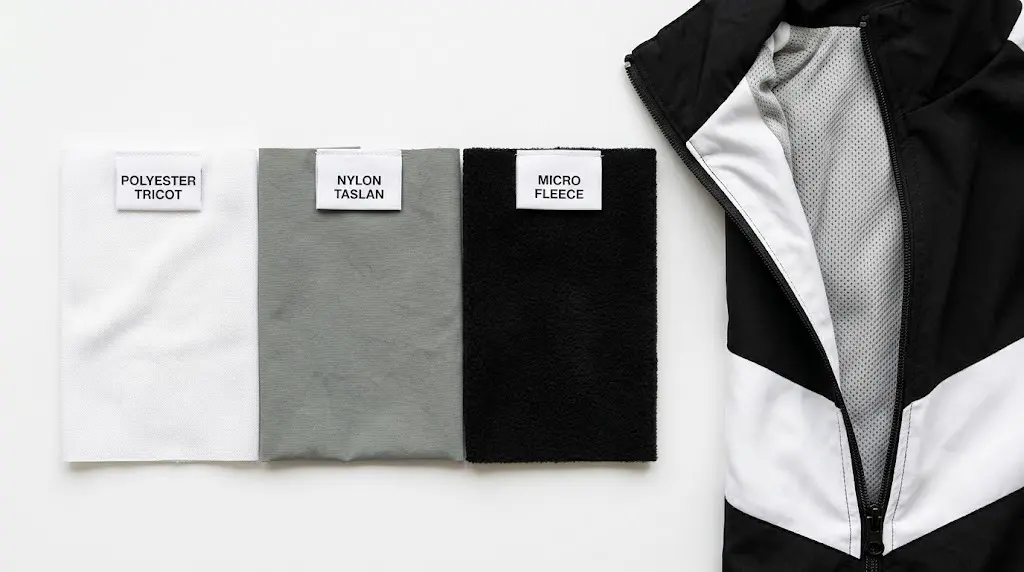
The fabric choice determines how the jacket performs, how long it lasts, and how accurately it can be customized. These are the materials most commonly specified for quality track jacket production.
| Fabric | Weight (gsm) | Best Use Case | Sublimation? |
| 100% Polyester Interlock | 130–180 | All-over sublimation, vivid colour reproduction | Yes |
| Polyester Tricot | 100–150 | Smooth finish, athletic performance jackets | Yes |
| Polyester-Spandex (4-way stretch) | 150–200 | Fitted performance cut, competitive team use | Yes |
| Nylon-Spandex Blend | 120–160 | Lightweight packable styles, high-end brands | No |
| Recycled Polyester | 130–180 | Sustainability-focused brands and labels | Yes |
Beyond The sewing details set an expensive track jacket apart from less expensive ones:
• Flatlock stitches – they sit flat on your skin, which reduces friction when exercising.
- YKK or similar zipper – allows for smooth functionality but long term durability with many times used,
• Taped seams on shoulders – stops seams from stretching out due to many washes.
• Side panel inserts – increases movement in arms and torso.
Mesh or micro lining — adds comfort without significant weight
Brands that have sustainable requirements or need to comply with the retail goals have a strong trust signal from OEKO-TEX Standard 100 Certification (oeko-tex.com) on the shell fabric. This is becoming a requirement from buyers in European and North American retail channels.
4. Customization Methods for Track Jackets
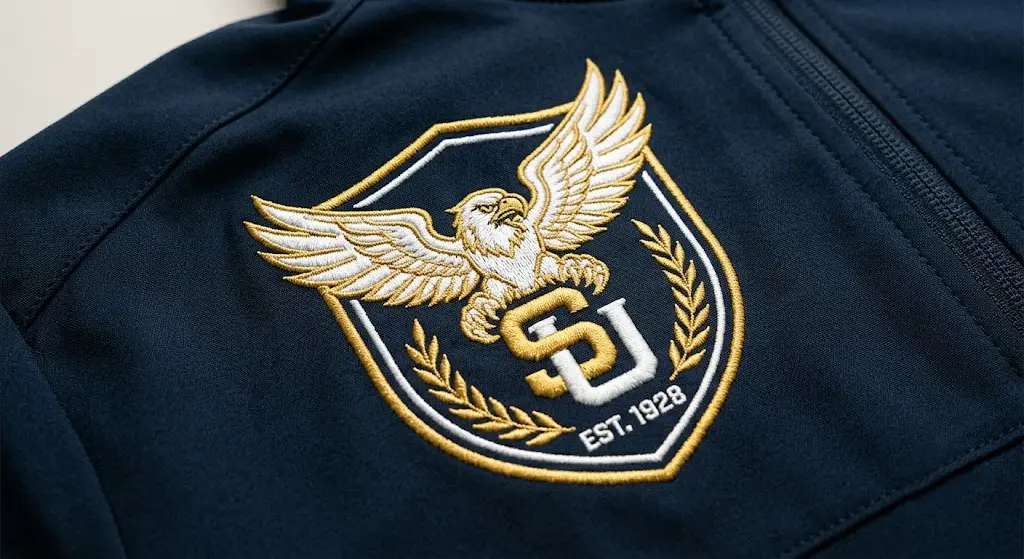
Several factors determine what approach to use for customizing products. In addition to the complexity of the design, the quantity of product being ordered, and the type of material used to manufacture each piece, there are a number of mistakes teams commonly make while sourcing team apparel that can contribute to choosing the wrong approach.
Sublimation Printing
Sublimation printing is the only method that achieves true all-over, full-color designs by converting dye into a gas that bonds directly into the polyester fibers — rather than sitting on top of the fabric. Because the dye becomes part of the material, the design will not crack, peel, or fade after washing. This method is performed on cut panels before the jacket is sewn, allowing seamless gradient colorways, photographic elements, and edge-to-edge patterns that cannot be replicated through embroidery or screen printing. A 100% polyester shell is required for sublimation to bond correctly.
Embroidery
The best option for a high-quality badge, logo, or detail where an aesthetic, tactile finish is appropriate. Uses weight and texture to provide something special in application and can be used on all types of fabrics. The majority of brands use these attributes to define quality. Ideal for use when multiple laundering will create abrasion-based failures.
Screen Printing
The ideal situation is to utilize this method for a high volume of basic/standard design orders (over 100 quantities). With high production volumes, the price of the printed item (per item) decreases on average as quantities increase. This printing method does not perform well on gradient tone image or detailed graphic applications; however, it can be used on nylon and polyester substrates (foams) with the understanding that most synthetic materials need to be pre-treated before applying this print method.
Heat Transfer Vinyl (HTV)
Heat transfer vinyl works well for small vinyl amounts or vinyl designs that require matching specific colors. This type of vinyl uses heat and pressure to apply vinyl to the target material. Heat transfer vinyl will not last as long as a product that has been sublimated or embroidered when subjected to multiple washes with hot water. However, making small runs or prototypes will be effective using this method of application.
Woven Labels and Custom Trims
In terms of private label jackets, custom neck labels, custom zipper pulls, custom racing suits manufacturer label sewn into the hem, branded drawstring, etc., are examples of what makes a private label jacket distinguished from a standard sports jacket that may only carry a logo on it.
| Method | Min Qty | Design Type | Fabric | Lead Time |
| Sublimation | 50+ units | All-over, gradient, full colour | Polyester only | 4–5 weeks |
| Embroidery | 30+ units | Chest badge, sleeve logo | Any fabric | 3–4 weeks |
| Screen Print | 100+ units | Bold logos, solid colours | Polyester / Nylon | 3–4 weeks |
| Heat Transfer | 20+ units | Precise colour, small runs | Most fabrics | 2–3 weeks |
| Custom Labels | Any | Private label branding | Added to order | With production |
5. How to Order Custom Track Jackets in Bulk
There is a standard method for ordering products. All phases of the order must be followed in order to avoid future problems that will be expensive to fix.
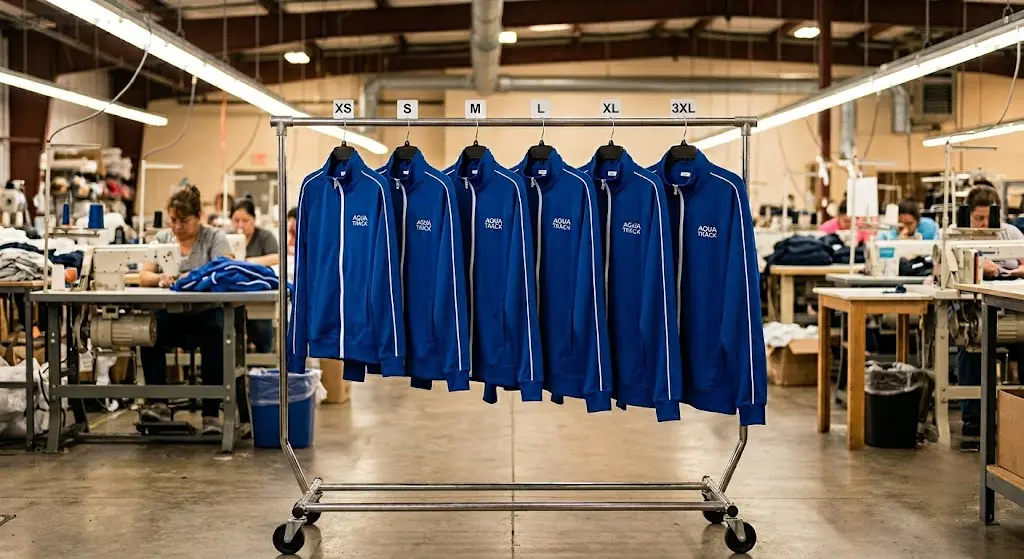
Step 1 — Write a Complete Brief
There are many details to each order: jacket type, silhouette (shape), fabric type and gsm, pantone colors, sizing run and quantity for each size, method of decoration, logo sizing and positioning on garment, labels requirements, packaging method and delivery timeframe. When a buyer does not give production method/type of order and full brief details to the supplier, the supplier will assume the specifications for the order and will typically provide an order based on their own preferences and will not usually be aligned/consistent with what the buyer expects.
Step 2 — Prepare Production-Ready Artwork
When supplying an embroidery file, you must provide the embroidery file in a vector format (.ai or .eps) that has the Pantone colors and the total number of stitches required. If you will be performing sublimation printing, you must provide high-resolution art work (150dpi at full size) created in the CMYK color mode. When supplying a screen-printing file, you must supply the design in separated vector files for each color of your design. If you supply a low-resolution JPEG, it will NOT be accepted as artwork and will cause issues at every stage of production.
Step 3 — Request and Approve a Physical Sample
A signed physical sample is essential before proceeding with all large bulk order production. The sample gives you a feel for how the fabric feels, how well the fabric is constructed, how the zipper works, how closely the sample’s color matches its respective Pantone references, and how your logo will be placed on the sample. Samples take between 2 and 3 weeks from the time you place your order to be completed, and are the primary quality control measure to ensure that the entire process of producing your bulk orders meets your expectations.
Step 4 — Confirm the Full Production Timeline
Based on the Date of Current Sample Approval, you can expect to wait approximately 3-5 weeks to produce your production order. When Factoring in Shipping Options and Destination of Shipment, you should add 1-4 weeks on top of your initial lead time depending on how you are going to ship your order and where you are shipping to. If your production is produced outside of the country, you should also add 1 week for customs. Therefore, you should realistically expect to wait 8-12 weeks from placing your order until receiving your order. If a team’s expectation is 4 weeks, they will be disappointed.
Step 5 — Place the Order in Writing
To have an order regarded as confirmed, you will need to provide the following information: approved sample, sizes produced, colors produced along with price per piece and total purchase order, start date of production and end date of production, and payment terms. Additionally, a verbal confirmation is NOT valid for confirming a purchase order.
Overview of Custom Jacket Manufacturer provides an overview of the manufacturing process for custom jackets — covering OEM and private label options, sampling, quality control, and bulk ordering for teams and brands. It also describes how the sample, quality control process, and bulk order processes are outlined for both teams and brands.
6. Sizing, Fit, and Size Run Planning
The size of team jackets is frequently overlooked when submitting an order for team jackets. Getting size wrong mean you may have a portion of your order that can’t be worn, and replacing individual items after the bulk order has been produced will be significantly more costly per piece than getting it right from the start.
Standard Size Runs
Adult sports teams typically have size runs from XS-Small, Small Medium, and Medium to extra- large – usually the majority of sizes for an adult sports team size will fall within S, M, L and XL range. Youth programs require youth-specific size runs and do not assume they will fit an adult size run.
Fit Types
Athletic fit is more fitted through the body, and shorter in length through the torso than what is commonly used across most of the sports teams. Regular fit will typically accommodate Corporate Wellness Programs, or Lifestyle brands where the jacket is often worn over regular clothing as opposed to fitted athletic layers. Therefore, be specific about which fit you require, as athletic and regular graded patterns are cut differently.
Grading
Grading is the way of scaling a pattern to the full-size range. When a manufacturer has the proper grading capability they will produce goods in proportionate sizes to each size. A factory that uses eye baling to produce their jackets has the ability to create jackets that are proportionate when viewed in medium but will create jackets that are not in proportion when viewed Small or 2XL. Request to see grading documentation or a size specification sheet before accepting your sample for production approval.
| Team Size | Typical Distribution | Notes |
| XS | 5–8% | Only if team includes lighter-frame athletes |
| S | 15–20% | Higher for youth-heavy squads |
| M | 25–30% | Usually the largest single size in adult teams |
| L | 25–30% | Equal to or slightly less than M |
| XL | 15–20% | Varies significantly by sport |
| 2XL | 5–10% | Higher for strength sports, lower for endurance |
7. Common Mistakes When Ordering Team Jackets
Ordering Without a Size Survey
If you would like to avoid having an empty set of apparel (6 people), and 20 XS jackets left over, you will need to ensure that you get a good estimate before placing your order for an apparel order. A simple form sent out to all team members two weeks ahead of the order would provide an accurate estimate of size distribution for the order and save hundreds of dollars due to mistakes.
Ignoring the Wash Care Spec
Customized jackets featuring embroidery, sublimation and heat transfer as decoration will react differently to being washed; specifically, high-temperature washing will damage a heat transfer finish, using a harsh detergent will dull/subdue sublimated pieces over time. The finished garment’s wash care label must accurately reflect the specific decoration method used, as each player on the team will need to be made aware of how they are going to care for their customized jackets and the corresponding machine settings.
Choosing a Manufacturer Based on Price Alone
Many of the lowest-acoustic bars have other compromises. Lighter materials are used, off-branded zippers are used; they have no finishing touch meant for your end consumer (e.g. zipper cutouts). If your order fails because of incorrect fabric or logo accuracy, the cost of replacing your order will be far more than what you saved on your first order. Thus, you should consider price to be part of your purchasing decision process, not the sole factor.
Not Confirming the Color Match Process
Colored images created using a computer monitor are not the same as colored fabric. A computer monitor uses an RGB value while a dyed fabric product will use a dye lot from that particular manufacturer. If you need to match an exact color (e.g., matching your team’s registered color standard) then it is crucial that you also receive a dye swatch prior to beginning any bulk productions. This process is standard with most experienced manufacturers and usually does not add much time to the project.
.
8. Choosing the Right Manufacturer
The quality of your Product, the timing of the Delivery, and the accuracy of your Design are all affected by the decisions made by your Manufacturer. A Factory that is set up to produce high-performance Outerwear or Custom Team Apparel is very different in its Set-Up than a Generic Garment Manufacturer.
Here is what to consider when looking at a custom track jacket supplier:
• Knowledge of athletic outerwear and performance sportswear.
• In-house sublimation and embroidery, as opposed to outsourcing these services through a separate supplier.
• A written pre-approval process will define each of the steps in the sampling process.
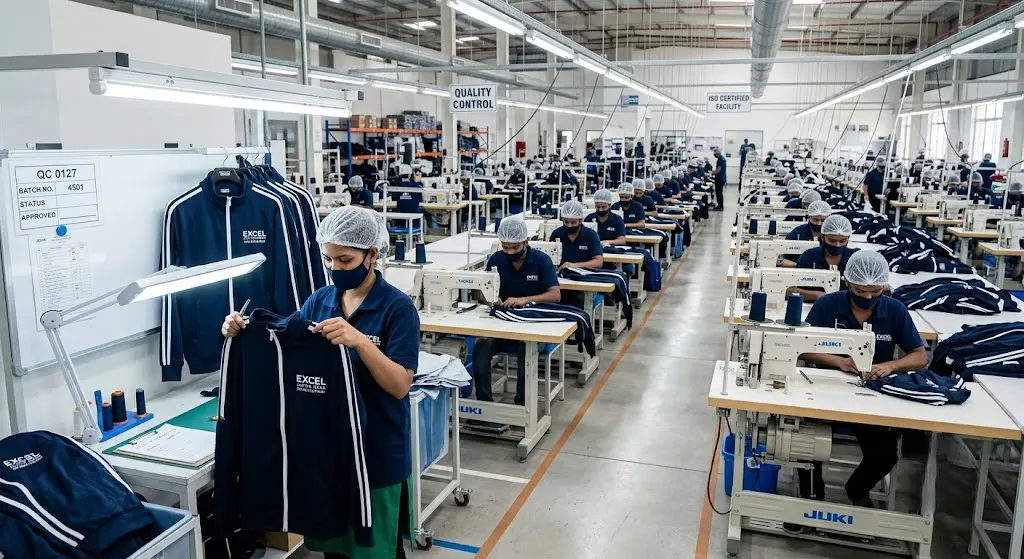
• Fabric will be subject to three documented quality control checkpoints: when the fabric is received, mid-production, and before shipping.
• Approved certifications relevant to your market such as ISO or OEKO-TEX testing will be provided.
- References from completed team or brand orders — photos of actual deliveries, not stock imagery
For brands requiring fabric compliance documentation, all materials sourced for production meet ISO textile testing standards — details at iso.org/committee/51359.html.
Frequently Asked Questions
What is the minimum order quantity for custom track jackets?
Minimum order quantities will be different based on the manufacturer and the form of customization for an item. Many embroidered jackets can be made as few as 30. Sublimated apparel usually needs a minimum order of 50 to be profitable. Many OEM manufacturers (for example, RaceApparelCUS) do not have a predetermined minimum order quantity – check with the manufacturer to confirm.
How long does it take to produce custom track jackets?
Plan on 8 to 12 weeks from the time of the sample's approval until you can make the bulk delivery. Production of samples usually takes between 2 and 3 weeks, after which the bulk production will take between 3 and 5 weeks. International shipping will add an additional 1-4 weeks to your order (or total 8-12 weeks). The biggest mistake people make is underestimating the time required to finish producing their merchandise and hurrying the production process, which leads to producing merchandise with quality problems.
Can I get full-color all-over printing on a track jacket?
Sublimation printing covers the entire garment with one design prior to cutting and sewing; so, the entire jacket can be printed as a seamless all-over print, including gradients and photographic elements. In order for sublimation to adhere properly to the fabric, 100% polyester is required for the jacket.
What is the difference between a track jacket and a training jacket?
Although these two phrases are frequently confused, in general, “track jackets” refers back to the original style of athletic wear, which is now universally recognized as a standard full zip athletic style jacket with ribbed sleeves and bottom hem from the time of their original use by track and field athletes. In contrast, "training jackets" is a more-broad category of jacket including zip up fleece (interior lining), shell and softshell types of jackets.
Can I order track jackets in multiple team colors?
Yes. Most OEM manufacturers can produce the same jacket style in multiple colorways within a single order, provided each color meets the minimum quantity threshold. You specify the Pantone color references for each variant, and the factory sources the fabric accordingly. Confirm per-color minimums with your manufacturer before placing the order.
How do I ensure the colors match my club or brand standard?
If you have to provide dye codes, please use Pantone codes instead of the hex or RGB references. Pantone is the official standard color matching system to use in dyeing fabrics. For any critical color standards (club kits, licensed brands, etc.), you will want to receive a dye sample from your supplier prior to putting their product into mass production. Although this will take additional time to obtain (typically a few extra days), it will eliminate any risk of color mismatch.
What quality checks should a manufacturer carry out before delivery?
The QC process, when done correctly, consists of fabric inspections at entry (weight, color, defect rate), inline inspections during production (accuracy of construction and placement of logos) and finally, pre-shipment (measuring random units from the size run for measuring, finish quality and packaging).
Ready to Order Custom Track Jackets?
To successfully outfit a team, launch an exclusive brand or find custom jackets, you must first have a comprehensive brief and work with an actual manufacturer capable of fulfilling your request. A comprehensive brief is essential to ensure you and your manufacturer are on the same page about the goals of your project. Additionally, having an experienced manufacturer will help set proper expectations before starting construction.
RaceApparelCUS is a custom track jacket manufacturer who manufactures their products for sporting events, retailers, and private label companies. With their factory-direct pricing structure, there is no minimum quantity required, and they can produce sublimated patterned fabric or embroidered parts with a complete quality assurance program through-out the entire ordering process (i.e., sample to full shipment).
Get a free quote in 10 minutes — contact RaceApparelCUS directly.
