Varsity Jacket Women: The Complete Style, Fit & Buying Guide for 2026

Varsity Jacket Women: The Complete Style, Fit & Buying Guide for 2026
The varsity jacket has always carried a particular energy — a blend of achievement, belonging, and effortless confidence that few garments can replicate. For most of the twentieth century, that energy was largely directed at and defined by men’s athletic culture. The women who wore varsity jackets were often wearing men’s versions — deliberately oversized, borrowed, or repurposed as a statement.
That’s changed. The women’s varsity jacket market in 2026 is a genuinely distinct category with its own design language, its own size range, its own styling conventions, and its own customer. Women’s varsity jackets are no longer an afterthought to a men’s product — they’re a category in their own right, and the best versions are designed and proportioned specifically for a female silhouette rather than simply scaled down from men’s patterns.
This guide covers the whole picture. We’ll look at what actually makes a women’s varsity jacket different from the men’s equivalent, the styles and colorways that are resonating in 2026, how to find the right fit, how to build outfits around it, and what to know if you’re considering custom or wholesale orders. Whether you’re buying one for yourself or sourcing for a brand, a team, or a retail programme — this is the guide that gives you the real information.
What Makes a Women’s Varsity Jacket Different
This is the question that most buying guides skip past, and it’s the most important one to answer first. The difference between a women’s varsity jacket and a men’s version isn’t just sizing — it’s construction, proportion, and design intent.
Pattern and Cut
A properly designed women’s varsity jacket uses a pattern built around a female body’s proportions — a more defined waist, a shorter torso relative to shoulder width, and a hip measurement that diverges from the chest more than it does on a male pattern. This means the jacket tapers through the mid-section rather than hanging straight from the armhole, which creates a silhouette that flatters rather than drowns.
Many cheaper ‘women’s’ varsity jackets are simply men’s patterns cut in smaller sizes. The give-away is a boxy, rectangular shape with excessive width through the hips and no definition at the waist. If you’re looking at a women’s varsity jacket and it looks like a small men’s version — it probably is one.
Sleeve Length and Shoulder Width
Women generally have a shorter distance from shoulder to wrist than men of equivalent height. A properly proportioned women’s varsity jacket accounts for this — the sleeves are proportionally shorter relative to the body length, and the shoulder width is narrower. On a poorly proportioned version, sleeves that run too long and shoulders that drop too far create the look of wearing someone else’s jacket — which is a style choice in its own right, but should be a deliberate one rather than an accident of bad construction.
Sizing Range
Women’s varsity jackets should offer a genuine size range that reflects the diversity of female body shapes — from XS through to 3XL or beyond, with consistent grading across the size range rather than simply scaling a single pattern up and down. The way a size S fits should be proportionally equivalent to how a size XL fits. Inconsistent grading — where larger sizes suddenly become boxy or disproportionate — is a common shortcut in budget production.
Design Details and Colorways
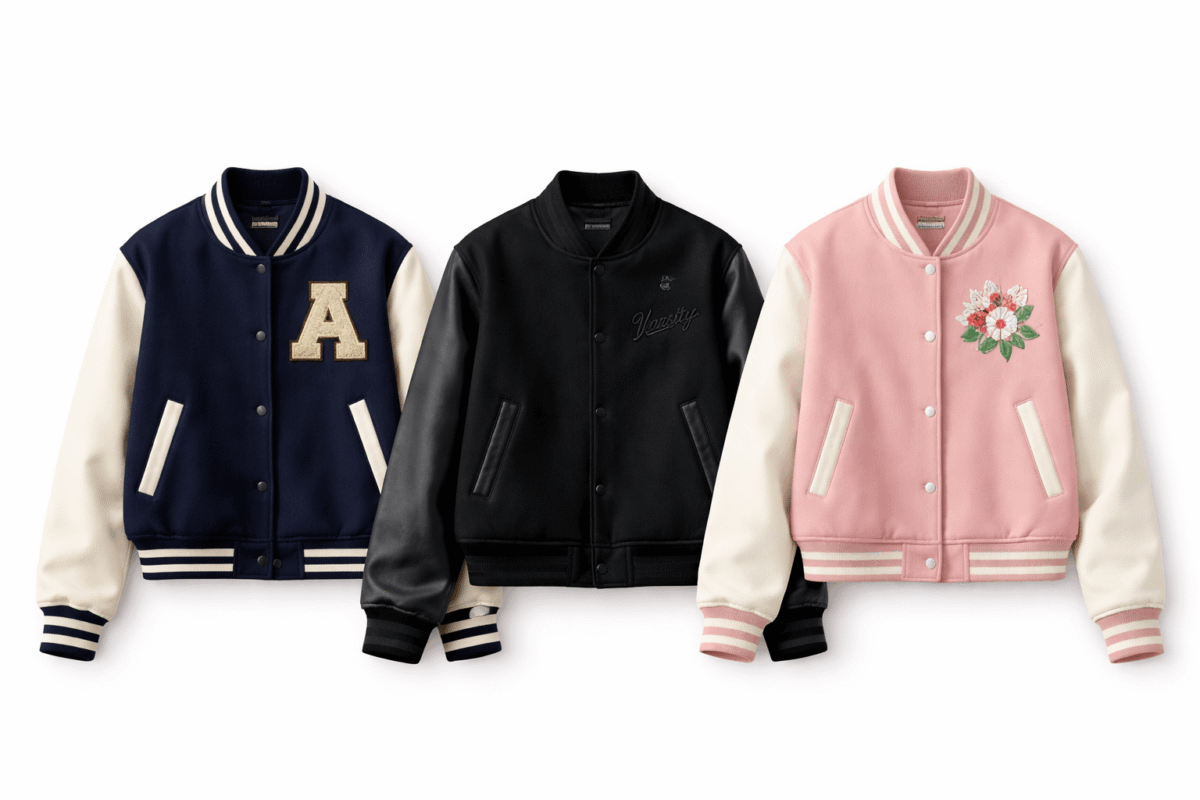
The design language of women’s varsity jackets has diverged meaningfully from the men’s market. While men’s versions lean into heritage colorways and minimal, sports-rooted details, women’s versions embrace a wider palette — blush and cream, black and gold, burgundy and ivory, forest green and tan. Embroidery motifs range from the traditional chenille letter to floral designs, celestial elements, custom monograms, and abstract graphics. The category has a creative range that the men’s market simply doesn’t offer.
Women’s Varsity Jacket Styles in 2026: What’s Actually Selling
The women’s varsity jacket market is broader in 2026 than it has been at any point in recent years. Here’s an honest look at the styles and approaches that are gaining genuine traction.
The Oversized Borrowed-From-the-Boys Look
Deliberately oversized — worn one to two sizes above what would constitute a ‘fitted’ choice — the oversized women’s varsity jacket leans into the garment’s heritage as something traditionally worn by men, repurposing that as an intentional aesthetic. This works particularly well in clean, classic colorways: navy and cream, black and white, burgundy and gold. The styling contrast between a clearly oversized structured jacket and the more fitted or delicate pieces underneath creates a tension that the fashion industry has been thoroughly in love with for the better part of a decade.
The Cropped Version
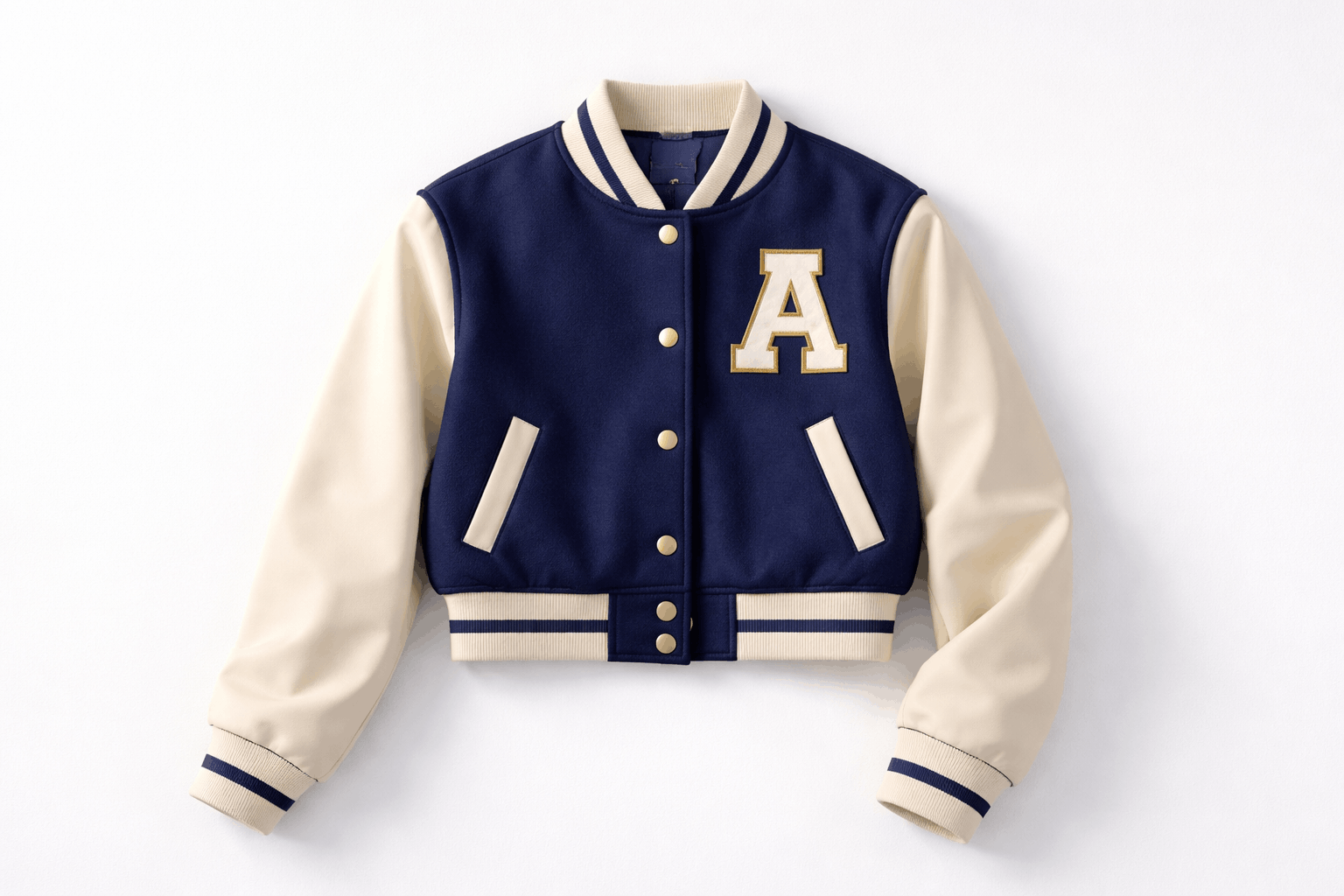
At the other end of the silhouette spectrum, cropped women’s varsity jackets — where the hem sits above the hip, sometimes at the waist — have been consistently popular. The crop works well over high-waisted trousers, skirts, and dresses, allowing the lower garment to be shown in full. This style tends to suit a more fashion-forward buyer and photographs particularly well, which has contributed to its popularity among brands creating visual content.
Tonal and Monochrome Colorways
The same trend visible in men’s varsity jackets is happening in women’s — the tonal, single-color approach has gained ground significantly. All-black, all-cream, all-burgundy women’s varsity jackets feel more sophisticated and more fashion-forward than traditional two-tone versions. They’re also considerably easier to style, which is a practical driver of their popularity. A tonal varsity jacket works with a wider range of what’s already in the wardrobe.
Feminine Color Palettes
At the same time, a distinct direction has emerged in women’s varsity jackets that the men’s market doesn’t engage with at all — softer, more traditionally ‘feminine’ colorways. Blush pink, lilac, sage green, and ivory are all appearing as primary body colors, often paired with cream or white sleeves. This direction has particularly strong traction in South Korea and Japan, but is growing across Western markets as well. For brands targeting a younger female customer, these colorways represent significant opportunity.
Sports Team and Collegiate Heritage
Women’s sports programs have grown considerably in visibility and investment over the past decade, and with that growth has come increased demand for women’s athletic varsity jackets that properly reflect that investment — not men’s jackets with a different size label, but genuinely well-designed women’s versions in team colors, with properly proportioned fits and premium construction. This is a growth market that many manufacturers have been slow to serve well.
How to Style a Women’s Varsity Jacket: 7 Outfits That Work
The women’s varsity jacket’s styling range is broader than most people give it credit for. It moves across casual, smart casual, athletic, and even slightly dressed-up contexts with more ease than almost any other outerwear piece at its price point. Here are seven combinations that genuinely deliver.
1. The Classic Collegiate
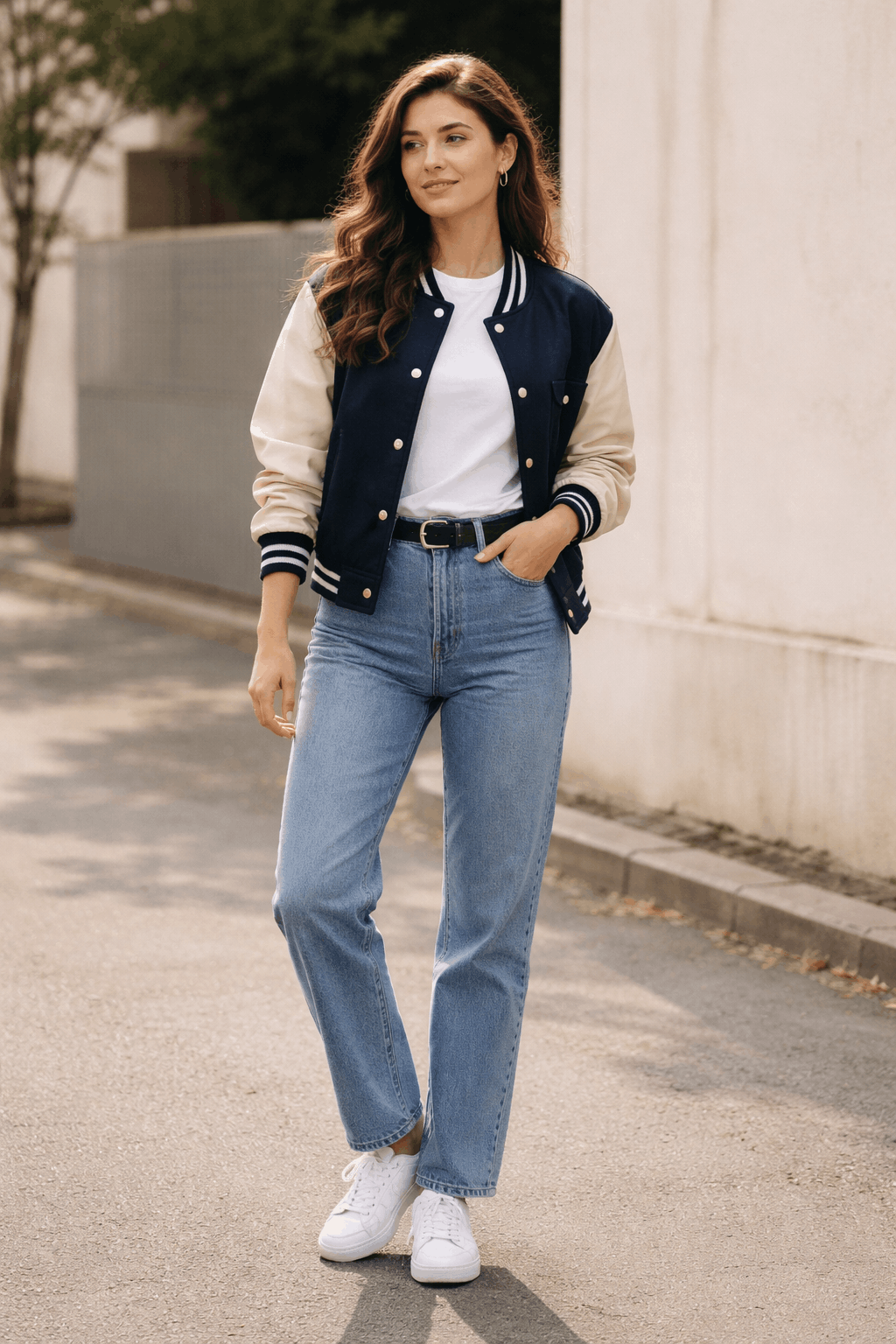
White crew-neck tee tucked into high-waisted straight-leg jeans, varsity jacket worn open, white leather sneakers. This is the baseline — the combination that the jacket was practically made for. Keep the tee slightly tucked (not fully, just the front), make sure the jeans aren’t too distressed or casual, and let the jacket carry the look. Simple, timeless, works every time.
2. Over a Mini Dress or Skirt
A women’s varsity jacket worn over a mini dress or with a mini skirt creates one of the strongest contrast combinations in the jacket’s styling repertoire. The structured, slightly sporty jacket over something distinctly feminine creates an interesting tension. For the dress or skirt, simple silhouettes work best — a plain slip dress in a neutral, or a structured mini skirt with a plain tee. The jacket is the statement; everything else should step back.
3. The Athleisure Approach
Varsity jacket over a fitted ribbed turtleneck or long-sleeve crop top, with high-waisted leggings or joggers and clean white trainers. This leans deliberately into the jacket’s sporting heritage. Works best with the jacket worn open and slightly relaxed in fit. A crossbody bag in a neutral tone completes the look without complicating it.
4. With Wide-Leg Trousers
A fitted or slightly cropped women’s varsity jacket with wide-leg trousers is one of the more sophisticated styling approaches for the garment. The structure of the jacket balances the volume of the wide-leg trouser. Keep the top layer underneath simple — a plain tee or ribbed crop top. Footwear can be either trainers (for a more casual result) or pointed-toe flats or low heels (for something smarter). This combination translates well across a range of contexts.
5. Layered Over a Hoodie
A slightly oversized varsity jacket worn over a matching or tonal hoodie — hood out over the collar — creates a layered street look that has been a consistent performer. The hood adds visual interest at the collar while also being genuinely functional. This works best in cool to cold weather where the layering makes practical sense. Keep the rest of the outfit clean: straight-leg jeans, chunky trainers, minimal accessories.
6. The Smart Casual Push
A premium women’s varsity jacket — properly fitted, quality materials, minimal or refined branding — can push into smart casual territory. Over a silk or satin camisole, with tailored wide-leg trousers and pointed-toe mules or block-heel boots. This requires the jacket to be genuinely well-made, and it requires restraint in everything else. Not a universal look, but for the right occasion and the right woman, it’s genuinely strong.
7. The Brand Statement
If your varsity jacket carries significant branding — a team, a school, an artist name, a label — wear it as the statement piece and simplify everything else completely. White tee, straight jeans, clean trainers. The jacket does all the talking; your job is to get out of its way.
Women’s Varsity Jacket Fit Guide: Getting It Right
Fit is the most common point of failure when buying a women’s varsity jacket. The structured nature of the garment means that a poor fit is immediately obvious in a way that it isn’t on softer, more forgiving pieces. Here’s how to navigate the key fit points.
The Shoulder — Always First
As with any structured jacket, the shoulder seam is the non-negotiable starting point. It should sit right at the edge of the shoulder — not visibly inside it (too small, creates a pulling effect across the back) and not dropping past the shoulder point (too large, loses the jacket’s structure entirely). A shoulder seam that sits incorrectly is not a comfortable quirk you’ll stop noticing — it’s something that looks wrong every time you wear it, and it cannot be fixed without significant tailoring.
Chest and Body
For a fitted look in a properly designed women’s jacket: the chest should have approximately 1–2 inches of ease beyond your actual bust measurement. For an oversized look: 4–5 inches or more. For something in between — relaxed but not intentionally oversized — 2–3 inches. The waist of the jacket (if the pattern is properly women’s) should follow your natural waist with a slight ease; it shouldn’t be tight but should acknowledge the shape rather than hanging straight.
Sleeve Length
Women’s varsity jacket sleeves should end at or just above the wrist bone when the arm is relaxed at the side. The ribbed cuff adds a small amount of adjustability, but a sleeve that runs more than an inch too long will look wrong regardless. If you’re between sizes on sleeve length, size down in the sleeves and adjust from the chest — a slightly snugger chest is preferable to sleeves that bunch over the hands.
Body Length
Standard varsity jacket women are hip-length (hem at the hip bone). Cropped versions sit anywhere from the natural waist to just below the bust. For the hip-length version: check that the hem falls at a proportionate point for your height. Very petite women may find that a standard hip-length version runs long and creates a shortening effect — a cropped version or a petite-specific cut will serve better.
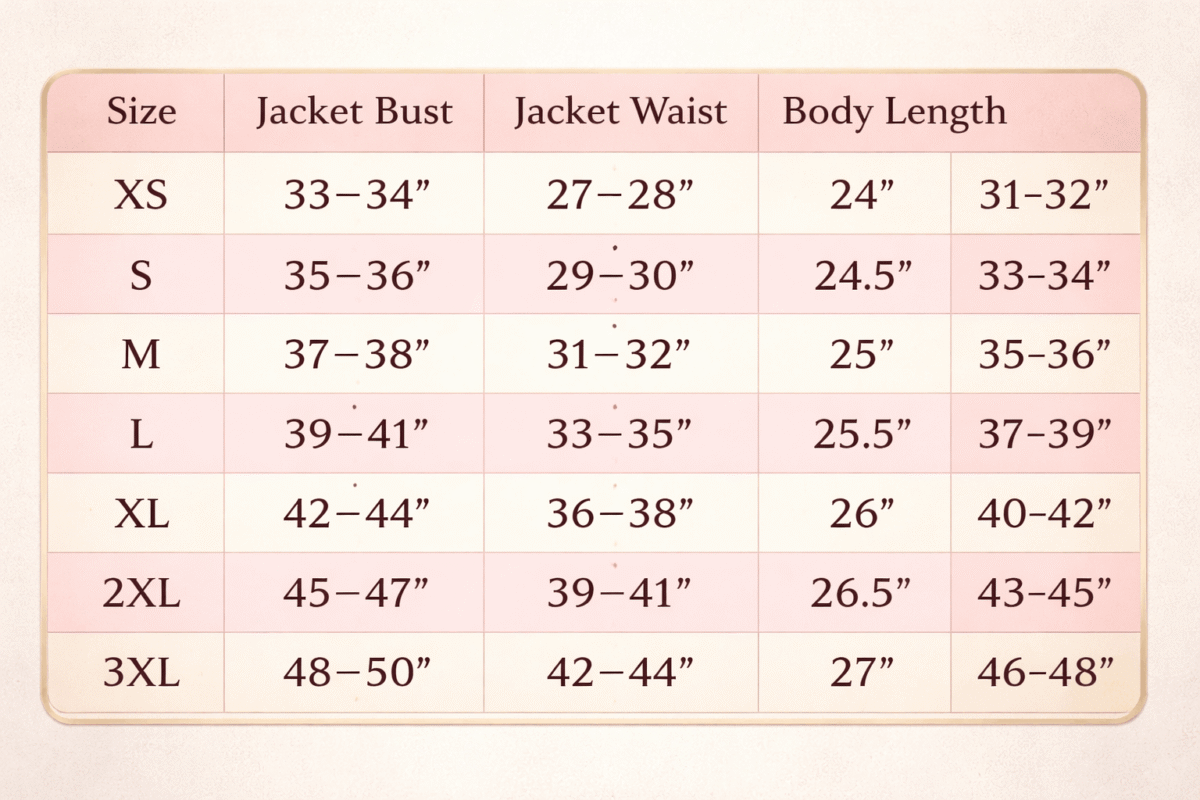
These are jacket measurements, not body measurements. For fitted look, add 1–2″ to your bust. For standard fit, add 2–3″. For oversized, add 4–5″ or more.
Women’s Varsity Jacket Colorways: A Practical Guide
Choosing the right colorway is partly about personal preference and partly about practicality — what works with what you already own, and what the jacket will be doing over its life in your wardrobe. Here’s an honest breakdown of the main colorway options and their real-world implications.
Classic Two-Tone (Heritage Colorways)
Navy body with cream or white sleeves. Burgundy body with cream sleeves. Black body with white or cream sleeves. Forest green body with tan or cream sleeves. These are the heritage combinations — they have a clear visual identity rooted in the jacket’s sporting and collegiate origins. They’re versatile within casual styling but read distinctly as ‘varsity jacket,’ which means they announce their heritage everywhere they go. That’s a feature, not a bug — but it means they have a more specific range of styling contexts than tonal versions.
Monochrome and Tonal
All-black, all-cream, all-burgundy, all-navy. These carry the varsity jacket’s silhouette without the two-tone signal. They’re more flexible across styling contexts, feel more contemporary and fashion-forward, and work with a wider range of what most women already own. If you’re buying one versatile women’s varsity jacket that will work across the most situations, a tonal version is almost always the right call.
Feminine Palettes
Blush pink, lilac, sage green, ivory, champagne. These colorways are specific to the women’s market and represent a genuinely different aesthetic direction. They work best in contexts where the jacket’s fashion credentials are more important than its sporting heritage — fashion-forward styling, brand merchandise targeting a younger female demographic, or personal wardrobe purchases by women who don’t resonate with traditional collegiate aesthetics. These palettes are growing in popularity and are particularly strong in East Asian and Australian markets.
Bold and Non-Traditional
Cobalt blue, orange, yellow, red, emerald green as primary body colors. These are statement pieces — they demand attention and have a narrower styling range than neutral or heritage colorways. They work well for brands that need visual impact in brand merchandise or limited-edition drops, and for individual buyers who already dress with a strong, confident color palette. They require more deliberate outfit construction than neutral or heritage versions.
| Colorway Type | Best For | Styling Range | Trend Direction 2026 |
| Classic two-tone heritage | Sports teams, collegiate, traditional buyers | Moderate — reads as clearly varsity | Stable — timeless classic |
| Monochrome / tonal | Fashion-forward buyers, versatile wardrobe | Wide — works with most outfits | Growing strongly |
| Feminine palette (blush etc) | Fashion brands, younger buyers, gifting | Moderate — specific aesthetic context | Growing — especially AU / East Asia |
| Bold non-traditional | Statement pieces, limited editions, brands | Narrow — requires strong styling | Niche but consistent demand |
Custom Women’s Varsity Jackets: The Wholesale and Private Label Opportunity
The women’s custom varsity jacket market is, frankly, underserved. Most manufacturers have historically focused their custom production capabilities on men’s varsity jackets — the sports team and collegiate market has been predominantly male-focused — and women’s custom versions have often been produced from poorly adapted men’s patterns with a different size chart.
That is changing, and the change represents a genuine opportunity for brands and organizations that move on it now.
Why the Women’s Market Is Growing for Custom Orders
Women’s sports programs at school, university, and professional level have seen significant investment and visibility growth over the past five years. Title IX enforcement in the US has driven spending on women’s athletic programmes. The NWSL, WNBA, and women’s football leagues have attracted meaningful sponsorship and merchandise investment. Each of these trends drives demand for properly designed women’s varsity jackets — not men’s jackets in women’s sizes, but genuinely female-specific products.
At the same time, the fashion and streetwear market for women’s varsity jackets is growing independently of sports. Female-founded brands, women’s music artists, and fashion labels are all finding the women’s varsity jacket to be an excellent brand merchandise vehicle. It photographs well, it’s worn in public, and a well-made version carries genuine perceived value.
What Makes a Good Custom Women’s Varsity Jacket
The fundamentals of quality construction are the same as for any varsity jacket — melton wool body, quality sleeves (genuine leather for premium, high-grade PU for mid-range), tight-knit ribbing with good elastic recovery, full lining, solid metal hardware. What’s specific to women’s versions is the pattern and grading: the manufacturer needs to be working from a genuine women’s block, not a men’s block with a smaller size label attached.
Ask any manufacturer you’re considering about their women’s specific patterns. A manufacturer who works primarily in men’s and describes their women’s range as ‘the same cut but smaller’ is giving you an honest answer that should give you pause. Look for manufacturers who can show you existing women’s custom samples across multiple sizes — the grading across the size range is as telling as the fit of any individual size.
Related reading: Custom Varsity Jacket Manufacturing — Overview & Target Buyers
Private Label Opportunities for Women’s Varsity Jackets
The private label route — where you develop a jacket with your branding and sell it under your own label — works particularly well for women’s varsity jackets because the category is visually distinctive and photogenic. A well-designed private label women’s varsity jacket becomes an identifiable brand asset in a way that more generic outerwear doesn’t.
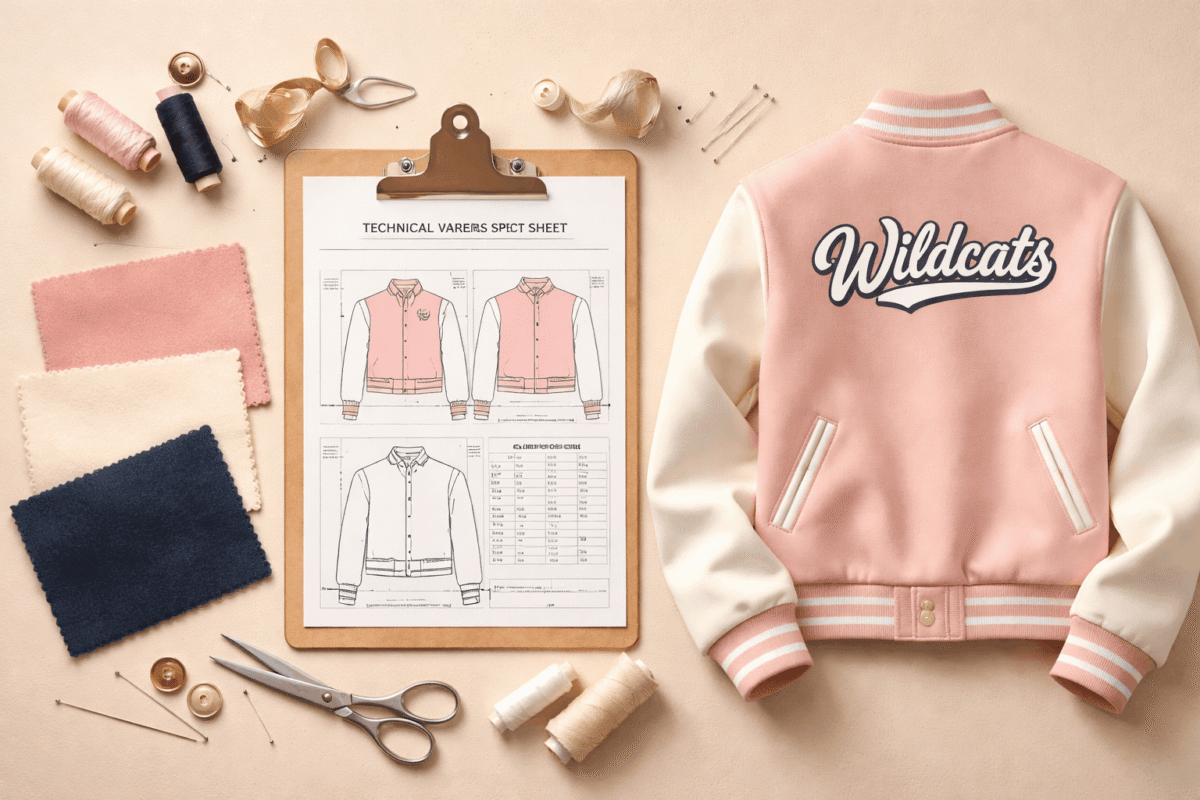
For brands considering this route: start with a clear brief on your target customer, your intended colorway and material specification, and your minimum viable order quantity. Work with a manufacturer who provides genuine pre-production samples and who has demonstrable experience with women’s cut-and-sew. Build sampling time into your timeline — for women’s specific patterns, getting the fit right across the size range typically requires at least one round of fit revisions.
Related reading: Private Label Jacket Manufacturing Process
What to Ask Before Ordering Custom Women’s Varsity Jackets
These are the specific questions that separate manufacturers who can genuinely execute varsity jacket women at a high level from those who will adapt a men’s product and hope you don’t notice.
- Do you have existing women’s-specific patterns, or do you adapt men’s patterns for women’s sizes? Can I see existing samples across multiple sizes?
- How do you grade your women’s patterns across the size range — and can you show me measurements at S, M, L, and XL so I can verify the proportions?
- What is your minimum order quantity for women’s custom varsity jackets, and does it differ from your men’s MOQ?
- Can I request pattern adjustments for specific fit requirements — such as a more defined waist, a longer sleeve, or a cropped hem?
- What is your lead time from sample approval to bulk delivery, and what does your QC process look like specifically for women’s garments?
- Do you have experience producing women’s varsity jackets in feminine colorways — blush, lilac, sage — and can I see color samples for these?
- What is your sampling cost, and is it deducted from the bulk order on approval?
Related reading: How We Work — OEM & Custom Jacket Production Process
Women’s Varsity Jacket Care: Keeping It in Excellent Condition
The care principles for a varsity jacket women are broadly the same as for any quality varsity jacket, but worth stating clearly for those who are new to the category.
Wool Body
Spot-clean minor marks with a damp cloth and the lightest possible application of mild detergent. For a full clean, dry cleaning is the safe option — machine washing risks shrinkage, felting, and distortion of the body shape. A quality melton wool body holds its color and structure well over many years when it’s not over-washed. Store hanging on a padded or wide-shoulder hanger, not folded, and keep in a breathable garment bag away from direct light.
Leather Sleeves
Wipe genuine leather sleeves with a damp cloth for surface cleaning, and condition with a quality leather conditioner every few months. Genuine leather develops character and a personal patina over time — this is a feature, not a fault, and is part of what makes it worth the premium over synthetic alternatives. Faux leather sleeves should be wiped clean with a mild soap and damp cloth, kept away from heat sources, and stored carefully to prevent cracking at fold points.
Ribbing
The ribbing at the collar, cuffs, and hem can be gently hand-washed if it becomes noticeably soiled. Use cool water and a gentle detergent, press excess water out carefully (don’t wring), and lay flat to dry. Never tumble dry the jacket — the heat will damage both the wool body and the leather sleeves.
Storage
Always store hanging — never folded. A wide hanger that supports the shoulder structure is ideal. A breathable fabric garment bag (not plastic) protects from dust while allowing the wool to breathe. Keep away from direct sunlight, which fades both wool and leather over time.
Further Reading
External source: Women’s Sportswear Market Growth Report 2026 — Grand View Research
External source: The Rise of Women’s Sports Fashion — Business of Fashion
Frequently Asked Questions
Can women wear men’s varsity jackets, or do they need to buy women’s specific versions?
Both are valid choices — but they produce different results. Wearing a men’s varsity jacket in a smaller size gives a boxy, square-shouldered silhouette that can look intentionally oversized and is a legitimate style choice. A properly designed women’s varsity jacket gives a more flattering, proportionate silhouette that acknowledges the female body’s shape. Which you prefer is genuinely a matter of taste and styling intent. For most women who want a versatile piece that fits and flatters well across a range of outfits, a women’s-specific pattern is the better starting point.
What is the most versatile colorway for a women’s varsity jacket?
For maximum wardrobe versatility, a tonal or monochrome version — all-black or all-cream — will work with the widest range of what most women already own. For a more classic look with genuine heritage appeal, navy and cream or burgundy and cream are consistently strong. The feminine palette versions (blush, lilac, sage) are beautiful but have a more specific styling context and a narrower range of what they pair naturally with.
Are cropped women’s varsity jackets as warm as the full-length version?
Predictably, no — a cropped jacket exposes more of the mid-section, which reduces warmth. The trade-off is the silhouette flexibility that the crop allows. For genuine warmth as a priority, the hip-length version is more practical. For styling purposes — particularly with high-waisted trousers, skirts, or dresses — the crop is worth the reduced warmth. You can compensate with a warmer base layer underneath.
What’s the minimum order for custom women’s varsity jackets?
For standard colorway custom varsity jacket women from a specialist manufacturer, minimum order quantities typically start at 30–50 pieces. Women’s-specific patterns with particular fit requirements — a more defined waist, a cropped hem, unusual colorways — may require 100 pieces or more to absorb the additional pattern and sampling costs. Always confirm MOQ requirements before committing to a design direction that increases them.
How do I know if a manufacturer is using genuine women’s patterns?
Ask to see measurements across the size range — specifically the waist measurement relative to the bust and hip. A genuine women’s pattern will show meaningful waist suppression (the waist measurement will be meaningfully smaller than the bust). A men’s pattern adapted for women’s sizes will show little to no difference between bust and waist measurements at each size — it will essentially be a straight-sided tube with different circumference at each size point.
Can I get a sample before placing a bulk order?
Yes — and for women’s custom varsity jackets in particular, this step is not optional. Fit across the size range and the accuracy of the women’s pattern are things that can only be properly evaluated on a physical garment. Always request samples at multiple sizes — not just a single size — to verify that the grading is consistent and proportionate across the range.
Final Thoughts
The women’s varsity jacket is in an interesting place in 2026 — genuinely popular, genuinely versatile, and still somewhat underserved by the manufacturing industry in terms of proper women’s-specific construction. That gap between demand and quality supply represents both a challenge for buyers and an opportunity for brands.
For individual buyers: take the time to find a jacket built from a genuine women’s pattern, in quality materials, at a price point that reflects what you’re actually getting. A well-made women’s varsity jacket is one of those pieces that earns its place in the wardrobe over and over again — it works across seasons, contexts, and styling approaches in a way that most outerwear simply doesn’t manage.
For brands and organizations: the women’s custom varsity jacket market rewards those who take it seriously. Investing in proper women’s-specific patterns, quality materials, and a realistic size range — rather than cutting corners with adapted men’s production — is the difference between a product your customers will wear with pride and one that ends up at the back of the wardrobe after two wears.
Get the construction right, get the fit right, and choose a colorway that genuinely serves your audience — the rest takes care of itself.
Start your custom women’s varsity jacket order: Custom Varsity Jacket Manufacturer — Race Apparel CUS
