

Mens Letterman Jacket: History, Styles & How to Order Custom in 2026

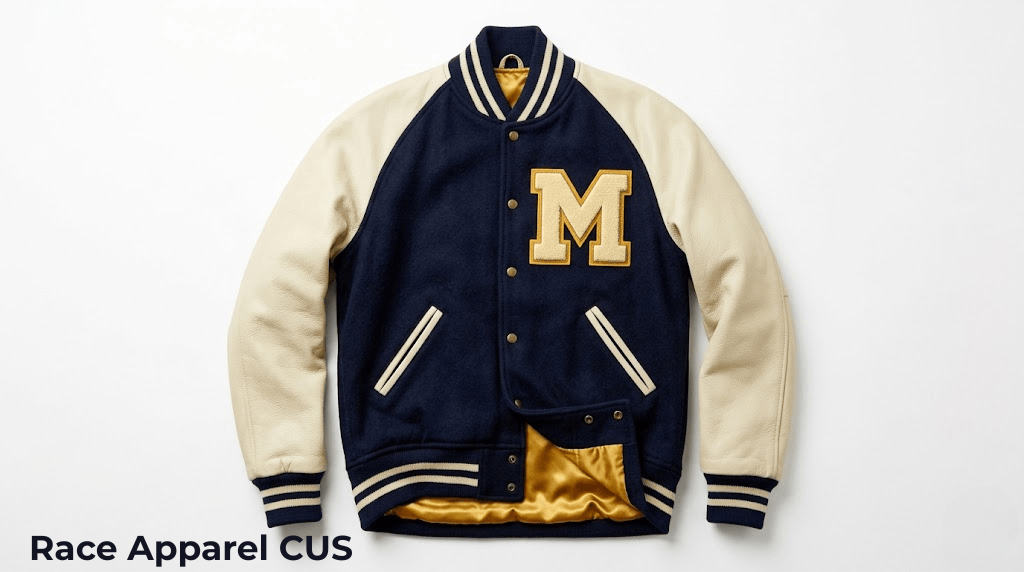
Some garments carry a weight that goes beyond fabric and stitching. The mens letterman jacket is one of them. It’s not just a piece of clothing — it’s a symbol. It represents achievement, belonging, and a particular chapter of life that most men look back on with something close to pride. And yet, despite its deep roots in tradition, it has managed to stay relevant across decades of shifting fashion trends in a way that very few garments can claim.
Walk through any major city in 2026 and you’ll spot letterman jackets on students, on creatives, on men in their forties who’ve found their way back to a piece that simply works. Streetwear labels are producing them. Luxury brands have reimagined them. Custom manufacturers are making them for sports teams, music artists, and emerging clothing brands in quantities from 30 pieces to 3,000.
This guide covers everything — where the letterman jacket came from, how it’s constructed, what makes one genuinely worth buying, how to style it, and what you need to know if you’re considering ordering custom pieces for a team or brand. Whether you’re buying one for yourself or sourcing for a business, you’ll leave knowing exactly what you’re looking at.
The History of the Mens Letterman Jacket
The letterman jacket’s story begins on the baseball diamond at Harvard University in 1865. The Harvard baseball team began the practice of awarding a large block letter ‘H’ to players who had distinguished themselves on the field. Initially, the letter was simply sewn onto a sweater — but as the tradition spread across American universities and evolved through the early twentieth century, the garment underneath the letter transformed into the structured wool-and-leather jacket we recognize today.
By the 1930s and 1940s, the letterman jacket had become deeply woven into American high school and college culture. Earning your ‘letter’ — that large embroidered or chenille initial representing your school — was a genuine mark of athletic accomplishment. The jacket was the public-facing evidence of that achievement, and wearing it carried real social weight.
Hollywood cemented its cultural status in the 1950s. Films of that era placed the letterman jacket squarely in the iconography of American teenage life — the star quarterback, the popular senior, the romantic lead. It became shorthand for a particular kind of confident, capable masculinity that the culture was invested in celebrating.
The decades that followed saw the letterman jacket drift in and out of mainstream fashion, but it never truly disappeared. Hip-hop culture adopted it in the 1980s and 1990s, often in oversized fits with custom patches and embroidery that pushed far beyond the original athletic tradition. Japanese fashion — particularly Sukajan culture — developed its own sophisticated relationship with the varsity silhouette. And in the 2010s, the rise of streetwear brought it firmly back into the conversation, where it has remained ever since.
Today’s mens letterman jacket exists in a genuinely interesting cultural space — it carries all that heritage while simultaneously functioning as a versatile contemporary garment. That tension between tradition and reinvention is a large part of why it continues to work.

Letterman Jacket vs. Varsity Jacket: Is There Actually a Difference?
This question comes up constantly, and the honest answer is: not really, in practical terms. The two terms are used almost interchangeably in the current market, and most manufacturers and retailers treat them as synonyms for the same garment.
That said, there is a subtle traditional distinction worth knowing. A ‘letterman jacket’ specifically refers to a jacket that bears an awarded letter — the chenille or embroidered initial given to student athletes who have met their school’s criteria for athletic achievement. The ‘letter’ is the defining element. A ‘varsity jacket’ is a broader term that refers to the general silhouette and construction style (wool body, leather or faux-leather sleeves, ribbed trim) regardless of whether it carries a letter.
In practice today, you’ll find jackets with all the traditional design elements — the wool body, leather sleeves, ribbed cuffs and collar — being sold under both names interchangeably. When someone searches for a mens letterman jacket, they’re looking for the same thing someone looking for a men’s varsity jacket is looking for. The names have converged even if the original distinction technically still exists.
For this guide, we’ll use both terms to mean the same thing — that distinctive, wool-and-leather American jacket that has become one of the most recognizable silhouettes in contemporary menswear.
What Makes a Quality Mens Letterman Jacket: Construction Breakdown
The letterman jacket has a very specific construction that distinguishes it from other outerwear. Understanding the components helps you evaluate quality quickly — whether you’re buying retail, reviewing a custom sample, or specifying materials for a bulk order.
The Wool Body
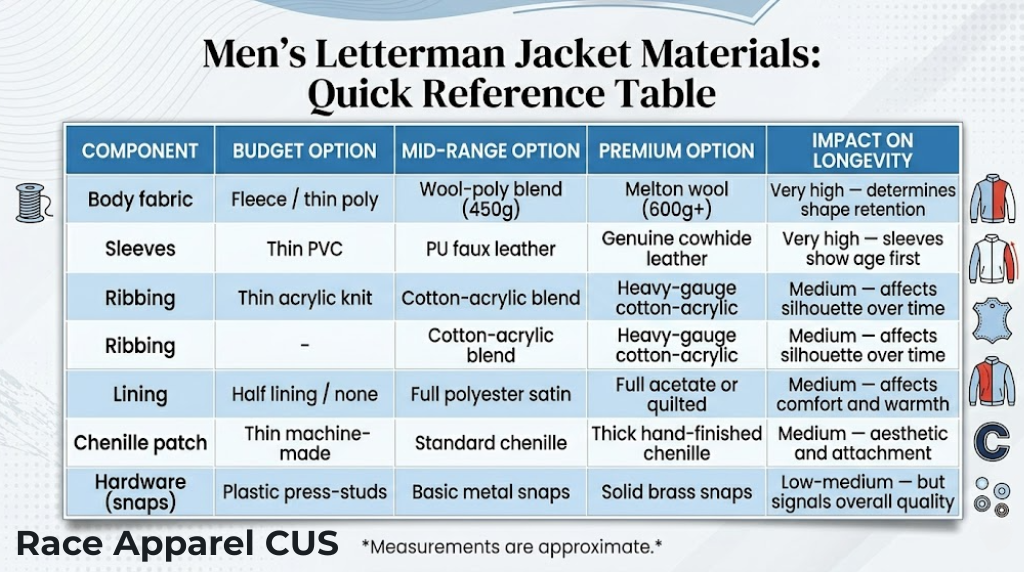
The body of a quality letterman jacket uses melton wool — a tightly woven, heavily milled wool fabric that has a smooth, almost felt-like surface. Melton wool is prized for its durability, warmth, and the way it holds its shape over years of wear. It doesn’t pill the way cheaper wool blends do, and it develops a subtle character with age rather than just looking worn out.
Standard melton used in mid-range letterman jackets runs between 450–550 grams per square metre. Premium versions push to 600g/m and above, which gives the jacket a noticeably more substantial feel and silhouette. When you pick up a well-made letterman jacket, the weight alone tells you something about the quality of what you’re holding.
Budget versions substitute melton with thinner wool-polyester blends or, at the very bottom end, with fleece or synthetic fabrics that mimic the look but deliver a fraction of the durability. These can look reasonable in photos but feel immediately wrong when you handle them.
The Leather Sleeves
Leather sleeves are the other defining construction element. On a traditional letterman jacket, the sleeves are made from genuine cowhide leather — typically a smooth, semi-aniline finish that starts relatively stiff and softens over time as it conforms to your movement and body heat. This break-in process is part of the appeal of genuine leather; the jacket literally molds to you.
Faux leather (PU or bonded leather) is the standard in mid-range production. High-grade bonded leather can look and feel convincingly similar to genuine leather when new, but the difference becomes apparent over time — cheaper versions crack at stress points, particularly the elbow, within two to three years of regular wear. For anything intended to last more than a few seasons, genuine leather sleeves are worth the additional cost.
Ribbing: Collar, Cuffs, and Hem
The ribbed elements — collar, cuffs, and hem — define the jacket’s silhouette and hold their importance beyond just aesthetics. Quality ribbing uses a tight-knit cotton-acrylic blend that has genuine elastic recovery. You should be able to stretch the cuff fully and have it snap back immediately without any bagginess. Poor-quality ribbing loses this elasticity within months and creates the baggy, tired look that makes cheap letterman jackets look cheap.
The attachment of the ribbing to the jacket body is also worth examining. A clean, flat, evenly stitched seam at the point of attachment indicates proper construction. Puckering, unevenness, or loose threads at this seam are early warning signs of quality issues that will become more pronounced with wear.
The Chenille Letter and Patches
The chenille letter is the letterman jacket’s signature element. Traditional chenille is made by twisting short lengths of yarn around a core thread to create a thick, fuzzy, almost velvet-like texture. Quality chenille patches feel substantial and plush — they have real depth and texture. Budget versions use thinner yarn or a different technique that produces a flat, scratchy patch that looks wrong from the moment it’s sewn on.
The attachment of the patch matters as much as the patch itself. A properly attached chenille letter is sewn around its entire perimeter with clean, even stitching that follows the shape of the letter precisely. Edges should be fully secured with no lifting. A patch that’s already lifting at the edges on a new jacket will be falling off within a year.
Related reading: Varsity Jacket Materials & Chenille Patches — Full Guide
Mens Letterman Jacket Materials: Quick Reference Table
How to Style a Mens Letterman Jacket in 2026
The letterman jacket’s versatility is genuine — not just a fashion cliche. Its structure and silhouette sit comfortably across a surprisingly wide range of contexts. That said, there are combinations that consistently work and others that consistently don’t. Here’s the honest breakdown.
The Foundation Rule
The letterman jacket is a mid-layer piece in most styling contexts. It sits over a top layer (tee, sweatshirt, or shirt) and under nothing — it’s your outermost layer for cool-to-cold weather. Its structured collar and ribbed hem mean it needs room to sit properly; layering a heavier coat over it tends to crush the collar and lose the silhouette entirely. Wear it as the top layer, or not at all.
Classic Street: Still the Best Starting Point
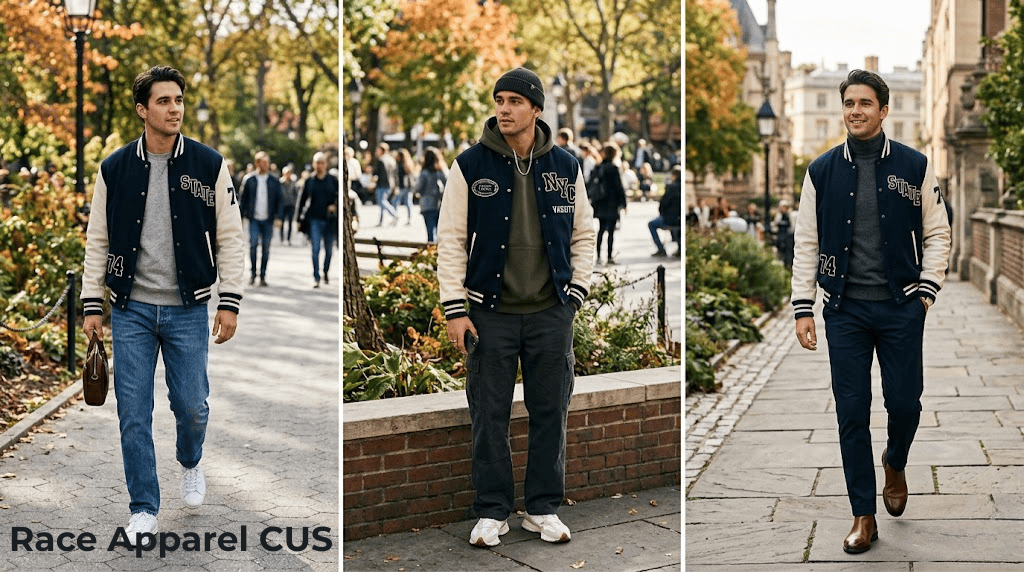
White or grey crew-neck sweatshirt, straight-leg jeans in a mid-to-dark wash, clean white or off-white leather sneakers. This is the combination that has worked for forty years and will work for forty more. The letterman jacket’s heritage makes it most comfortable in this kind of unpretentious, low-fuss context. Don’t overthink it.
The Heritage Athletic Look
Wear over a plain crew-neck tee (tucked or slightly untucked) with athletic or chino-style trousers and clean training shoes. This leans deliberately into the jacket’s sports origins. Works best when the jacket itself has genuine athletic credentials — team colors, school letters, sport-specific patches. An all-original letterman jacket in this context has a storytelling quality that’s hard to manufacture.
Contemporary Oversized Approach
Size up one or two from your usual fit. Wear over a heavyweight hoodie — hood out over the collar for a layered effect. Pair with wide-leg trousers or relaxed-fit cargo pants and chunky boots or high-top sneakers. This is the most current interpretation of the letterman jacket in 2026, and it works particularly well with tonal or monochrome versions where there’s no pattern clash between the jacket and the hoodie beneath.
Smarter Casual: Possible, Not Easy
A premium letterman jacket — proper melton wool, genuine leather sleeves, minimal branding — can push into smarter casual territory. Over a fine-gauge roll-neck in a complementary neutral, with slim tailored trousers and leather shoes or Chelsea boots. This requires the jacket to be genuinely excellent quality, and it requires restraint from everything else in the outfit. The jacket is doing all the talking; everything else exists to let it do that.
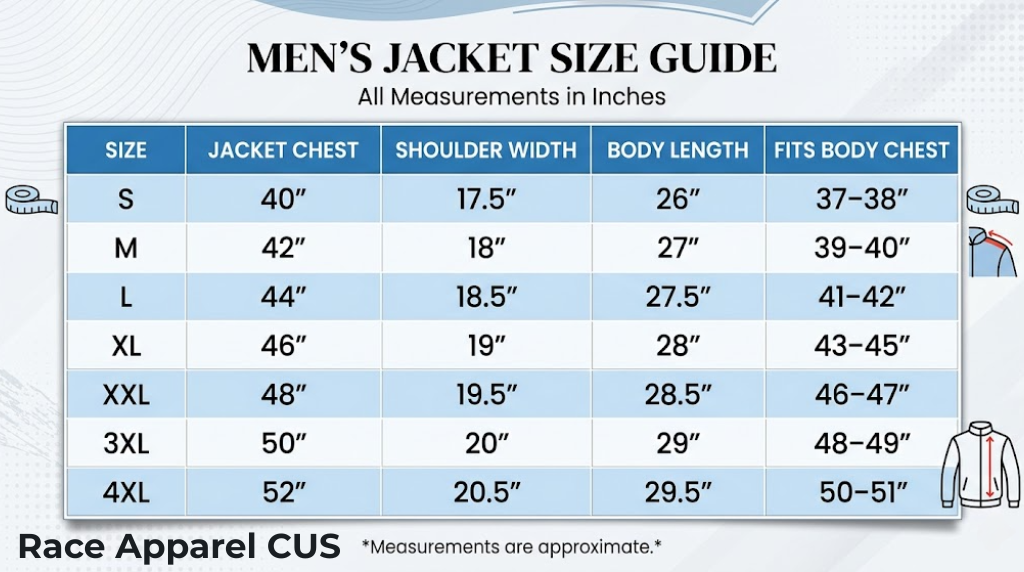
Letterman Jacket Sizing: How to Get It Right
Getting the size right on a letterman jacket is slightly more nuanced than sizing a regular jacket, for two reasons: the ribbed hem adds a contracting element that affects how the body sits, and the traditional cut is often shorter in the body than modern expectations.
Shoulder Fit First — Always
As with any structured jacket, the shoulder is the non-negotiable starting point. The shoulder seam should sit right at the point of your shoulder — not noticeably inside it (too small) and not dropping past it (too large). A shoulder seam that sits off will look wrong regardless of how well everything else fits, and it’s not something that can be easily altered after the fact.
Chest Ease
For a classic fit, you want 2–3 inches of ease in the chest beyond your actual measurement — enough to layer a sweatshirt underneath without feeling restricted. For an intentionally oversized look, add 4–5 inches. For a slimmer, more tailored fit — which tends to look better on taller, lean builds — 1–2 inches of ease is sufficient.
Body Length
Traditional letterman jackets are hip-length, with the hem sitting at or just below the hip bone. If you’re particularly tall or prefer more coverage, look for versions described as ‘longline’ or size up in length. Going significantly shorter than hip length tends to look off for most body types and most styling approaches.
These are jacket measurements, not body measurements. For standard fit, add 3″ to your chest measurement. For oversized, add 5–6″.
Custom Mens Letterman Jackets: Everything You Need to Know
The market for custom letterman jackets has grown considerably over the past five years. Schools, universities, and sports programs have always been the traditional buyers — but increasingly the customer base has expanded to include streetwear brands, music artists releasing merchandise, corporations making branded gifts, and individuals commissioning unique pieces for personal use or special occasions.
If you’re considering a custom order — whether for 30 pieces or 300 — here’s what the process actually looks like and what you need to have clear before you start.
What You Can Customize
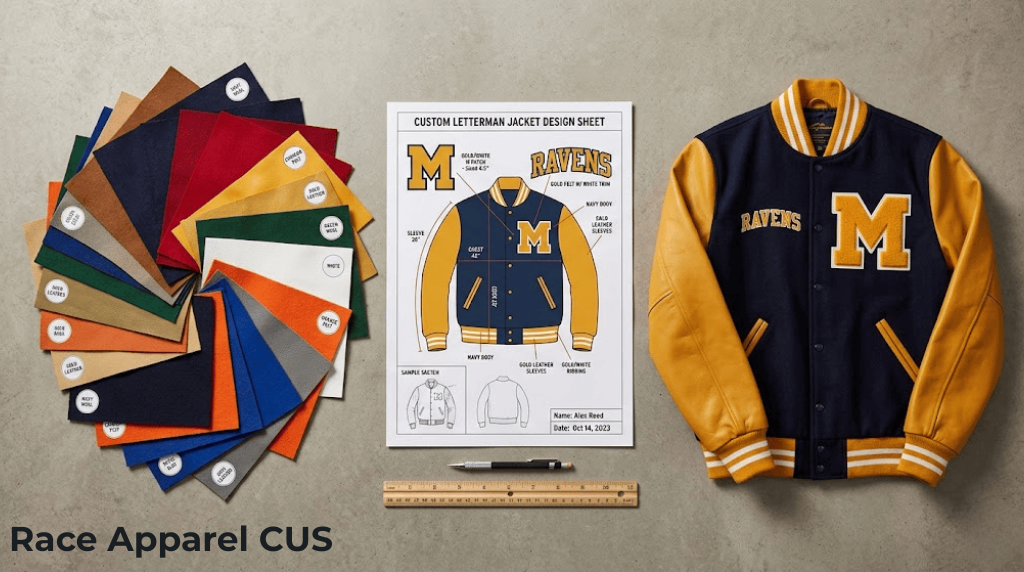
On a properly equipped production line, essentially every element of a letterman jacket is customizable. Here’s the practical breakdown:
- Body color and material — any color in melton wool or wool-poly blend; some factories offer alternative body fabrics on request
- Sleeve color and material — genuine leather in any available color, or PU/bonded leather alternatives
- Ribbing color combination — collar, cuffs, and hem can all be different colors if required
- Front closure — snap button (traditional) or zip; snap color and finish can be specified
- Lining — color, fabric type (satin, quilted, printed custom lining with your branding)
- Chest letter or logo — chenille (traditional), embroidered, or woven patch
- Additional patches — sleeve patches, back patches, name bars, sport-specific emblems
- Interior branding — woven neck label, care label, interior patch
- Hang tags and packaging — for retail and merchandise applications
Typical MOQ and Pricing Structure
Most quality manufacturers work with a minimum order quantity of 30–50 pieces for custom letterman jackets in standard colorways. For fully bespoke specifications — unique color combinations, custom lining prints, or unusual material requests — the MOQ rises to 100 pieces or more to absorb the additional setup cost.
Pricing scales with quantity and specification complexity. A mid-range custom letterman jacket (wool-poly body, PU sleeves, standard chenille letter, full satin lining) typically falls in the $45–$80 per unit range at 50–100 pieces from a direct manufacturer. Genuine leather sleeves add $15–$30 per unit depending on hide quality. Premium melton wool bodies add another $10–$20.
The per-unit cost drops meaningfully at 200+ pieces — typically 15–25% below the 50-piece price. For brands or organizations running annual or seasonal orders, establishing a direct manufacturing relationship pays off quickly.
The Sampling Process
Any legitimate manufacturer will produce a physical sample before bulk production begins. This is not optional — it’s the step that protects both parties. The sample lets you evaluate the actual materials (not just swatches), check the construction quality, confirm color accuracy, assess the fit across your size range, and verify that your embroidery or patch placement looks the way you intended.
Sample lead times typically run 7–14 days. Some manufacturers charge for samples and deduct the cost from the bulk order; others provide them free of charge. Expect to pay for expedited shipping if you need the sample quickly. Never approve bulk production without physically receiving and reviewing a sample — color accuracy on screen is not reliable enough for garment production decisions.
Related reading: Varsity Jacket Customization Options & MOQ Details
Related reading: Jacket Fabric & Material Choices — Full Reference
Who Wears Mens Letterman Jackets in 2026: The Modern Buyer
The customer for a mens letterman jacket in 2026 is genuinely diverse — more so than at any point in the garment’s history. Understanding who’s buying and why helps clarify what you should be looking for in your own purchase or order.
Student Athletes and Academic Programs
The original market remains strong. Schools and universities continue to award letterman jackets to athletes, and the tradition of earning your letter retains real meaning in academic sports culture. These buyers prioritize school colors, quality chenille letters, and durability — jackets that will be worn regularly for years and kept as mementos long after graduation.
Streetwear and Fashion Enthusiasts
This is the segment that has most changed the letterman jacket’s profile over the past decade. Streetwear culture has adopted the silhouette enthusiastically, often departing significantly from the traditional template — tonal colorways, minimal or no lettering, premium materials, collaborations with artists or other brands. These buyers prioritize design, material quality, and the cultural cachet that comes from wearing something that signals awareness of both the garment’s heritage and its contemporary reinvention.
Brands and Organizations
A growing category. Bands, record labels, sports organizations, corporations, and lifestyle brands have all recognized the letterman jacket’s power as a branded object. A well-made custom letterman jacket functions as both merchandise and walking advertisement — it’s worn in public, in photos, and on social media in a way that a standard branded t-shirt rarely is. The investment in quality is directly connected to whether the garment actually gets worn.
Nostalgia-Driven Buyers
Men who wore letterman jackets in their youth — or who grew up with the cultural associations — represent a real segment of adult buyers looking to reconnect with a garment that means something to them personally. These buyers often gravitate toward more traditional styling: classic two-tone colorways, chenille letters, the specific silhouette they remember. Quality matters to this group because they know what a good one should feel like.
Letterman Jacket Care: Keeping It Looking Its Best
A quality letterman jacket is an investment, and how you care for it determines how long it actually delivers on that investment.
Wool Body
The wool body should be dry cleaned for any thorough cleaning — not machine washed. Machine washing risks shrinkage, felting of the wool fibers, and distortion of the body structure. For minor surface marks, a soft damp cloth and very gentle dabbing motion is sufficient. Let the jacket air out after wearing rather than storing it immediately — the wool fibers benefit from a chance to breathe and release any absorbed moisture or odors.
Leather Sleeves
Genuine leather sleeves should be wiped down with a dry or slightly damp cloth for surface cleaning. Treat with a leather conditioner every few months — this keeps the leather supple and prevents the cracking that comes from drying out. Avoid direct heat sources, which dry the leather aggressively. Over time, genuine leather develops a patina that most owners come to appreciate; resist the urge to polish it back to looking brand new.
Faux leather sleeves should be wiped clean with a damp cloth and mild soap. They’re more sensitive to heat than genuine leather — keep them away from radiators and direct sunlight. Avoid folding along the same crease repeatedly, as this accelerates cracking in PU materials.
Storing Correctly
Always store a letterman jacket hanging on a wide-shoulder wooden or padded hanger — never folded. Folding creates permanent creases in the wool body and stress lines in the leather sleeves. Store in a cool, dry location away from direct light. A breathable garment bag (not a plastic dry-cleaning bag) protects from dust while allowing the wool to breathe.
External source: American Wool Council — Understanding Melton Wool Care
External source: Leather Industries of America — Leather Jacket Care Guide
Frequently Asked Questions About Mens Letterman Jackets
What’s the difference between a letterman jacket and a bomber jacket?
They’re distinct garments that are sometimes confused. A letterman jacket has a wool body, leather or faux-leather sleeves, ribbed collar, cuffs and hem, and traditionally features a school letter or emblem on the chest. A bomber jacket typically has a full-length zip front, an elasticated hem, and is usually made from nylon, polyester, or leather throughout — there’s no wool body and no two-material combination. The silhouettes are similar enough to cause confusion, but once you know both, the difference is immediately obvious.
Can I wear a letterman jacket as an adult in my thirties or forties?
Absolutely — and many men do, very well. The key is in the fit and the styling. A properly fitted letterman jacket in quality materials reads as confident and considered on an adult man, not juvenile. The advice is to avoid anything that looks explicitly ‘high school’ — school-specific letters or mascots you didn’t earn, juvenile color combinations, or overly cheap construction. A clean, quality piece in adult-appropriate colors styled simply is entirely appropriate at any age.
How long does a quality mens letterman jacket last?
With proper care, a genuinely well-made letterman jacket with a real melton wool body and quality leather sleeves should last 10–20 years. The leather sleeves will develop a patina and character with age. The wool body will hold its shape and weight. The ribbing may need replacement after 8–10 years of regular wear. Budget versions with synthetic materials and PU sleeves realistically have a lifespan of 2–4 years before the materials begin to show significant deterioration.
What is the minimum order for custom letterman jackets?
For standard colorway custom letterman jackets from a direct manufacturer, MOQs typically start at 30–50 pieces. Fully bespoke specifications — unique color combinations, custom materials, or complex patch arrangements — generally require 100 pieces minimum. Some manufacturers offer single-piece or small-batch production at significantly higher per-unit costs; this is an option for individual commissions but not practical for commercial or team orders.
Can letterman jackets be produced with vegan materials?
Yes — and this has become an increasingly common request. Many manufacturers offer full vegan versions: wool-blend body (wool itself being an animal product, some clients opt for wool-look synthetic alternatives), high-grade vegan leather sleeves, and synthetic lining. The construction quality of vegan versions has improved significantly over the past five years, and the best options are now genuinely difficult to distinguish from their leather counterparts.
Final Thoughts
The mens letterman jacket has survived and thrived across more than a century of fashion change for a simple reason: it’s a genuinely well-designed garment. The combination of materials — warm wool body, durable leather sleeves, structured ribbing — creates something that looks right, feels right, and holds up to real use in a way that much of the disposable fashion produced today simply doesn’t.
Whether you’re buying one for yourself, ordering custom pieces for a team or organization, or sourcing wholesale for a brand — the investment in understanding what makes a good letterman jacket pays off every time you wear it. Know the materials, check the construction, get the fit right, and you’ll have something that doesn’t just look good the day you buy it but keeps looking good years from now.
And if you’re working on a custom order for a team, brand, or event — talking directly to a specialist manufacturer is always the right starting point. The combination of materials, patches, colors, and construction details that defines a letterman jacket makes it a product where expert guidance genuinely matters.
Start Your Custom Letterman Jacket Order: Custom Varsity Jacket Manufacturer — Race Apparel CUS