Custom Windbreaker Jackets for Brands & Teams │ Race Apparel CUS

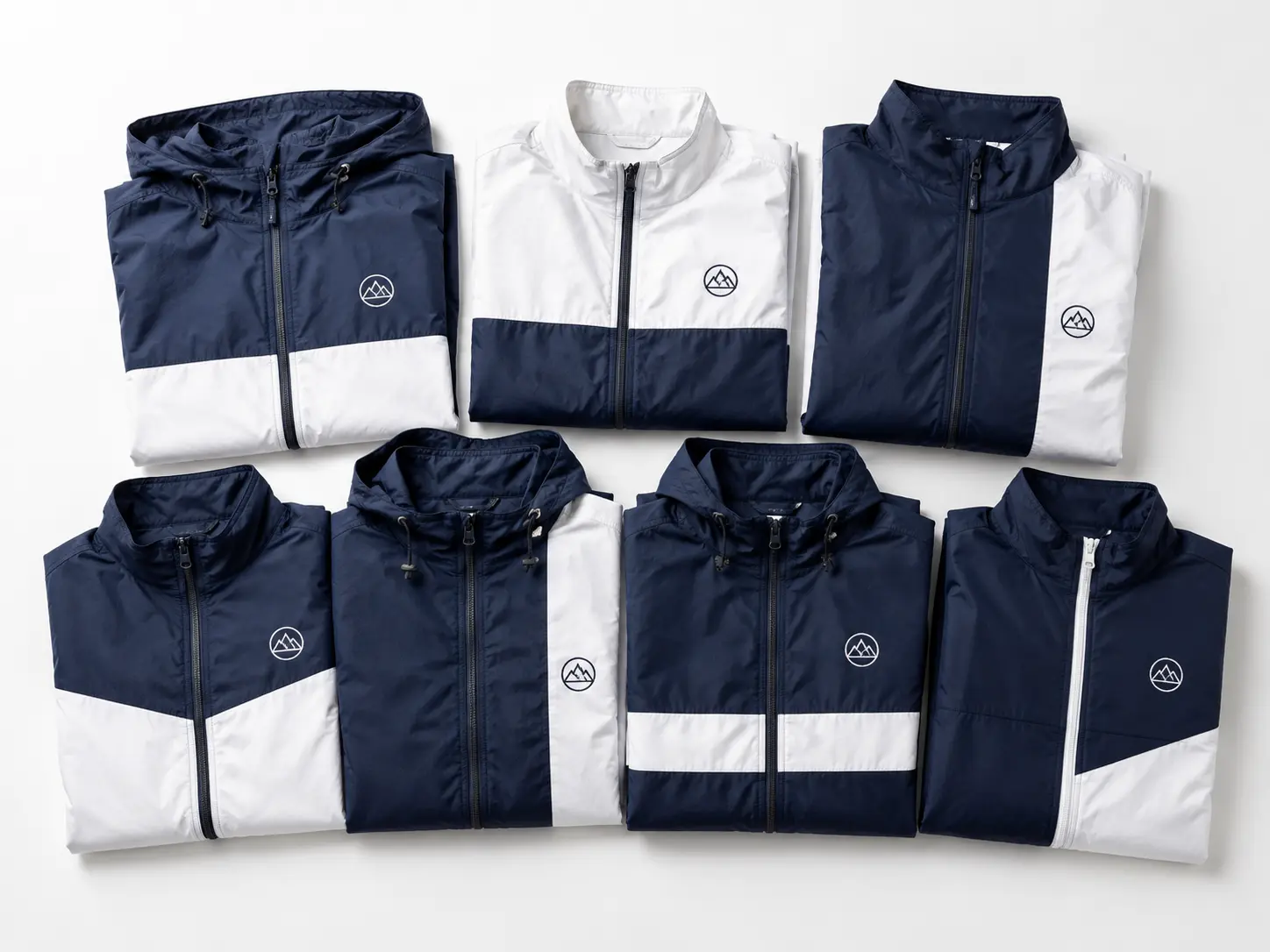
In the spring of this year, one of our customer’s founders reached out to us about ordering 200 windbreakers for a regional cycling team. She had a logo, a colour code and a deadline for delivery. However, she had no idea how to get the jackets produced, or what types of questions to ask about ordering before placing an order.
If you recognize this description, then this guide contains the information you need to know about how to order custom windbreaker jackets. Custom windbreaker jackets are very popular with sports teams, outdoor companies, corporate events, and private label start-ups, so they are one of the most requested items by consumers. Choosing the right fabric, construction method, type of customizing method, and finding the right manufacturer is not as easy as using Google to find out where to buy your custom windbreaker jackets.
This article walks through everything a brand buyer or team manager needs to know before ordering custom windbreaker jackets in bulk.
1. What Makes a Windbreaker Different From Other Jackets
Windbreakers are considered a thin outer garment providing protection against the elements – wind, and some protection against light rain. Because of the difference in the nature of the products, ordering windbreakers instead of insulated (heavier) jackets for bulk order can lead to customer dissatisfaction and costly re-orders.
The main characteristics of a good quality windbreaker include:
• Windproof outer layer made from either nylon or polyester with very tight weave
- Generally weighs between 70 and 150 grams (g/m2) per square meter of fabric, making it very light.
- Water-resistant coating (DWR) on outer shell.
- For those who live in hot, humid climates and use jackets frequently, the option to vent may be useful by including a mesh lining, underarm venting, or venting through perforations.
The jacket that meets the requirements to be considered a “genuine windbreaker” must first have been manufactured with the appropriate DWR (Durable Water Repellent) coating, and second, must not have excessive cushioning inside it where the zippers, seams, and stitching might become damaged when using a heavier weight of material. Therefore, ensuring that you specify these characteristics in your project brief will eliminate production issues during the manufacturing process.
2. Types of Custom Windbreaker Jackets
Custom windbreakers come in different shapes and sizes. When describing your custom windbreaker project to a manufacturer, it is essential to include the type of jacket early in the process to receive accurate quotes and prototypes on the first attempt.
Pullover Windbreaker
This jacket does not have a front zipper, and the wearer pulls it over their head. Since the pullover does not have any additional fasteners, it is an easier-to-produce garment, resulting in a lower price per piece when produced on a larger scale. Due to their lower unit cost, pullovers are preferred by running clubs, school teams, and companies producing merchandise for events, as these items usually require cost-effective production over convenient production.
Full-Zip Windbreaker
Zip front center running the Full Length. More versatile than a Pullover because you can adjust ventilation through use of the zipper as well as layering underneath. The most common format for Corporate Branding and Sports Teams.
Quarter-Zip Windbreaker
A shorter chest zipper than a Pullover but still provides function of a Quarter Zip Pullover and convenience of a Full Zip Pullover. Commonly used in Branded Athletic Apparel or for Outdoor
Lifestyle Brands.
Packable Windbreaker
This product is designed to fold into its own storage pouch or a very small pocket (i.e., typically 3 in x 2 in). It typically requires a very lightweight outer fabric (40D–70D nylon) and specific seam construction and is an excellent choice for either event giveaways or travel brands where portability is part of the product’s value Proposition.
Hooded or Non-Hooded Options
Hooded styles add costs to the production process, but are strongly preferred for outdoor and athletic activities; while non-hooded styles may perform equally well in a corporate environment or in places where the climate is warm enough that they do not offer protection against sun.
3. Fabric and Construction: What to Look For
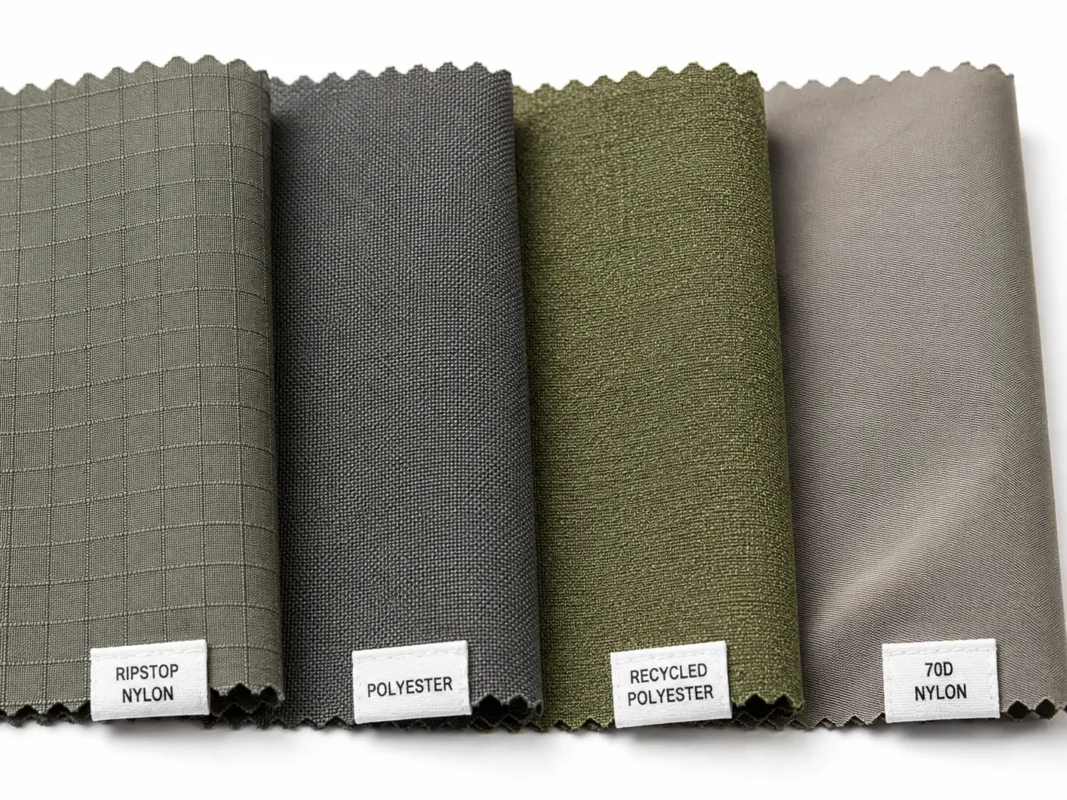
The fabric choice shapes everything — how the jacket feels, how long it lasts, and how much it costs per unit. These are the materials most commonly used in quality windbreaker production.
| Fabric Type | Weight | Best For | DWR Ready? |
| 100% Polyester | 70–100 gsm | Budget team orders, high-volume events | Yes |
| 40D Nylon | 40–60 gsm | Packable styles, lightweight performance wear | Yes |
| 70D Nylon | 70–90 gsm | Balanced durability and weight — most common | Yes |
| Ripstop Nylon | 60–80 gsm | Outdoor brands, technical performance jackets | Yes |
| Recycled Polyester | 80–120 gsm | Sustainability-focused brands and labels | Yes |
In addition to weight of fabric, two of the major construction differences that distinguish a solid windbreaker versus one that is not are:
• The use of tape or sealing at seam locations — to eliminate moisture intrusion via the stitch line
• High-quality YKK® or similar zipper systems — to ensure smooth operation and extended use.
- Flatlock or bound seam finishing — reduces internal bulk and skin irritation
- Elastic cuffs and hem draw cords — functional wind seal at the edges
When it comes to brands that target technical or outdoor markets, you should also inquire specifically with your supplier about the certification of their fabrics regarding ISO 811 Water Resistance Ratings. If your end consumer is concerned about the safety of textiles, OEKO-TEX standard 100 certified fabrics are an excellent way to give them peace of mind while making their purchase decision.
4. Customization Options for Windbreaker Jackets
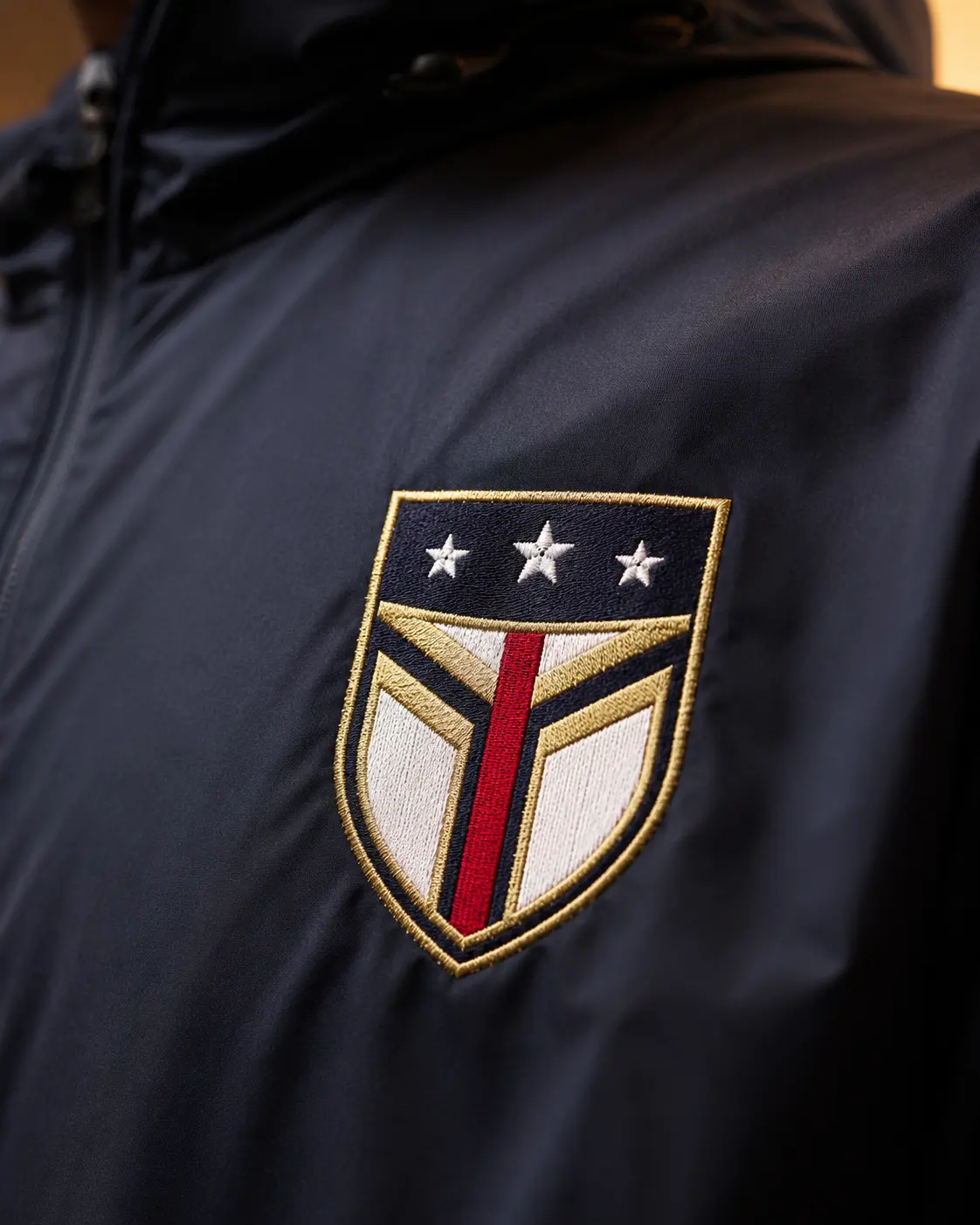
There are multiple ways to decorate windbreaker jackets. Each method fits into a particular style of will, design complexity, and various budgets.
Screen Printing
This is an excellent option for large production runs of bold and simple logos (300+) as it produces consistent costs per unit after volume production increases; however, screen printing is not very effective for gradients or photographic designs.
Embroidery
Embroidery is ideal for branding jackets with durable and high-quality attributes. Because embroidery produces a thicker and heavier product, some consumers will find this type of branding appealing due to the “corporate,” or heritage of the brand. Embroidery is an excellent branding decoration method for shirts, collars, and sleeve logos.
Heat Transfer / Sublimation
Sublimated printing is full-colour printed across the entire panel of the garment. It can be used for all types of prints, gradients, and images. In order to use sublimation, the base shell fabric must be 100% polyester (i.e., nylon and natural blends will not work).
Woven Labels and Custom Zippers
Often overlooked but important for private label brands. Custom woven neck labels, zip pullers, and interior care labels are what distinguish a properly branded private label jacket from a generic jacket. These areas of detail are also what will separate the customer from the product they choose to pick up when they are in the retail environment vs. the one they choose not to pick up.
| Customization Method | Min. Quantity | Best Design Type | Typical Lead Time |
| Screen Print | 50+ units | Simple logos, text, solid colours | 3–4 weeks |
| Embroidery | 30+ units | Chest badge, sleeve logo, collar detail | 3–4 weeks |
| Sublimation Print | 50+ units | All-over print, gradients, full colour | 4–5 weeks |
| Custom Labels/Zips | Any (added to order) | Private label branding | Added to production |
5. Ordering bulk custom windbreaker jackets in a simple manner.
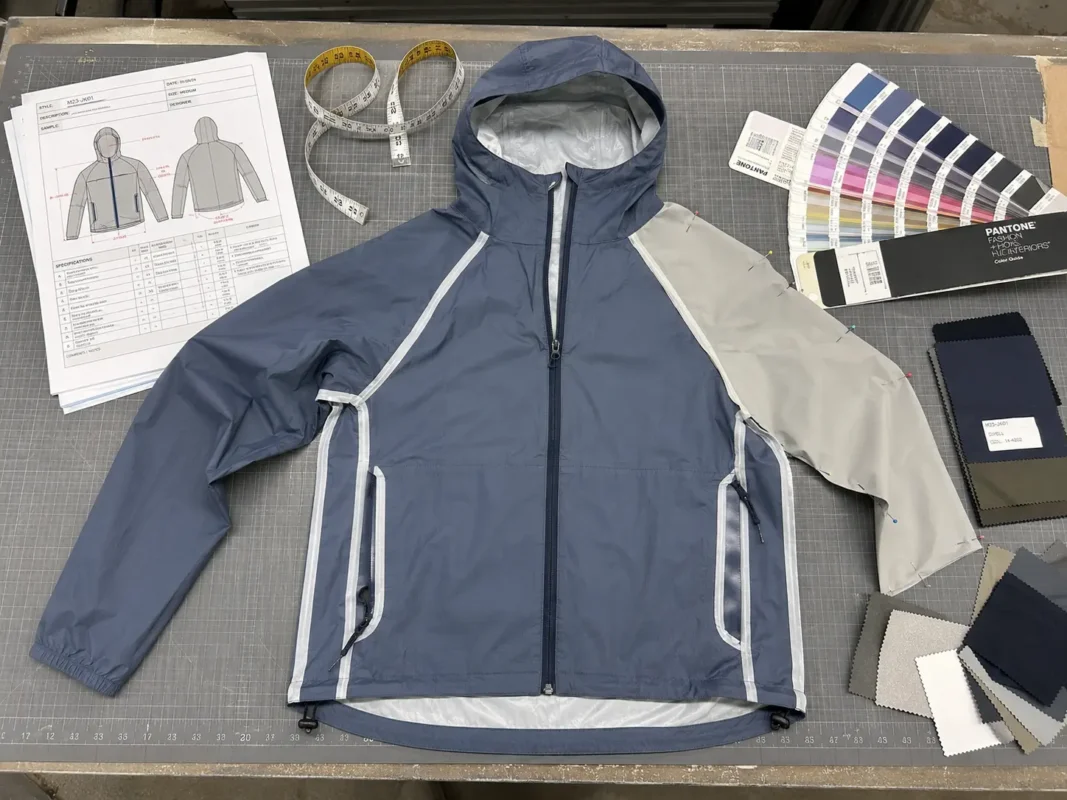
The path from design idea to production involves many stages. If you take any shortcuts, expect increased costs and delays, likely at the least convenient time!
Step 1: Determine the product
The product is required instead of contacting the supplier. Decide on the type of jacket you want (full zip, packaway, etc.), what fabric you prefer, what sizes would be required, what color, and how you want the garment to be decorated before you contact a supplier. A good supplier will give you an accurate Quotation based on your request.
Step 2 — Prepare Your Artwork
Vector files (AI or EPS) need to be provided with the correct color codes (Pantone or CMYK). While raster files (JPEG or PNG) can work for sublimation, they must be very high-resolution. The minimum resolution for printing from these types of files is 300 dots per inch at print size.
Step 3 — Request Samples
Do not place a bulk order for garments until you first approve a physical sample. The sample provides product confidence in the items based on actual fabric feel, construction quality, colour match, and logo placement. Approving a sample will add 2-3 weeks to your project timeline, but it will eliminate the possibility of receiving 300 incorrect jackets at your warehouse.
Step 4 — Confirm MOQ and Lead Time
Inquire about minimum orders for color and size, then also learn how long it will take to receive goods once the samples are approved (this includes time in transit and if ordering from overseas).
Step 5 — Review the Manufacturer
Check whether the factory has experience with your jacket type. Ask for photos of completed orders. Confirm what certifications they hold.
An OEM Jacket Manufacturer Overview is provided on Race Apparel CUS for evaluating a factory for the first time. The information below includes details regarding the Minimum Order Quantity, Sampling Policy and Supporting Fabric Sourcing of an organization or company in regards to their production of a properly structured OEM Jacket.
6. Typical Mistakes made by Buyers
Most issues with ordering can be avoided by being aware of the patterns that reoccur each time brands source windbreaker jackets for the first time.
.
Choosing Price Over Fit
The safest option is often not the lowest price. Factories that offer lower pricing often will substitute the weight of the fabric, use zippers that are not on known brands, and do not tape seams. All of these factors cannot be determined from a picture. The cost associated with remaking an order that does not pass the quality inspection will always exceed the amount saved on the original quote.
Skipping the Sample Stage
Making the large order without first seeing an actual sample is by far the most frequent and also the most expensive error people make when it comes to producing private label clothing. The colour of the print can change dramatically when comparing it to the digital design, The logo’s position is right on paper but wrong when we see it on the actual garment’s three-dimensional shape, And finally, the “hand” or feel of the fabric can never be ascertained just by looking at its specification.
Under-specifying the Brief
When you send a logo file and the color codes to a manufacturer, that is just the beginning; it’s not the whole brief. A complete brief would also include the size grading, the fabric, the zipper type, the label requirements, the packaging and shipping requirements. If there is any missing information, there is a good chance something will be misproduced.
Ignoring Lead Times
It usually takes about three to six weeks to produce a custom garment once a sample has been approved but there are additional timeframes based on the method and location of shipping as well as how long it takes to clear customs which can add an additional amount of time. Therefore, the total time frame for delivery from the time of order to the time of receiving your order is typically about ten weeks. So, anyone who attempts to limit the time frame for getting their custom garment made and shipped can potentially end up waiting a long time to receive it!
7. Why the Manufacturer Choice Matters
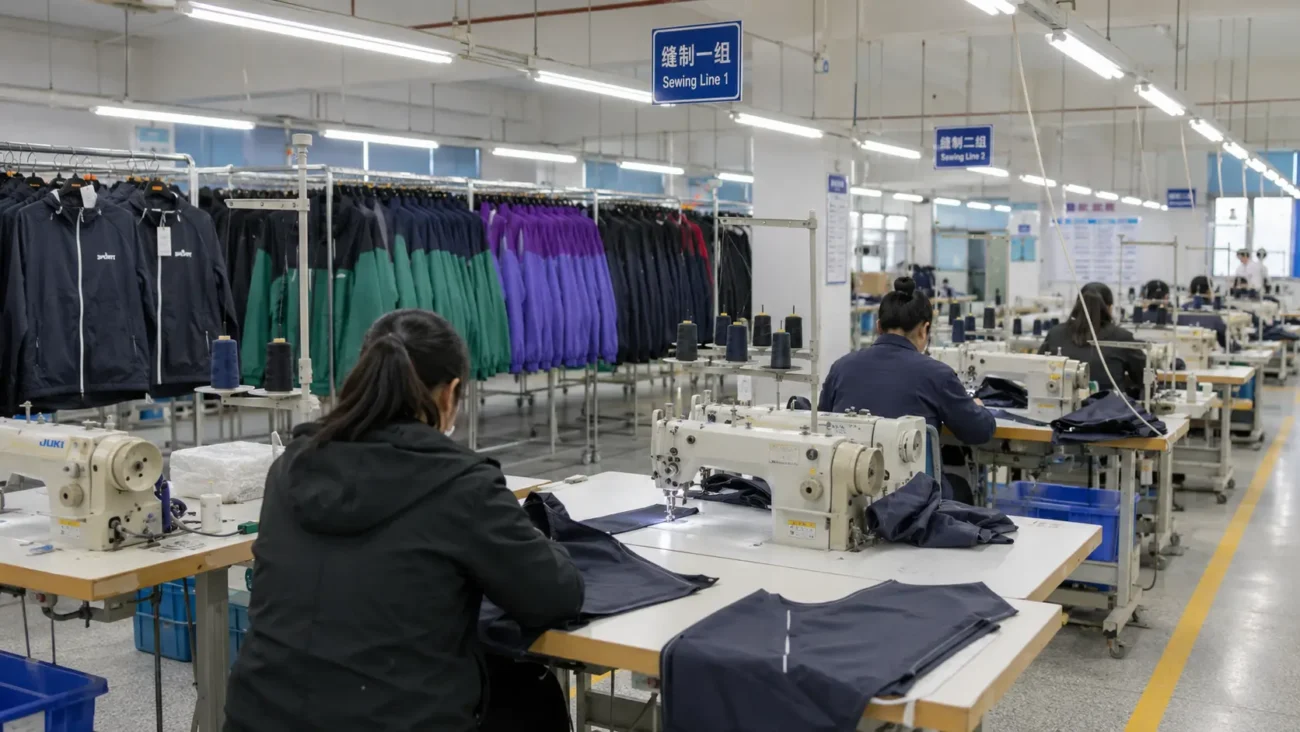
A manufacturer doesn’t only work as your production partner, but also makes a difference to the quality of your product, how fast it gets done (timeline), and how dependable your supply chain will be.
Outerwear factories (and those that produce custom jackets) have much different setups than general garment manufacturers. They will have the appropriate fabric stock on hand; they will be experienced in pattern making for technical construction; and they will understand the elements needed to customize branded team and retail products.
Race Apparel CUS produces custom coats like windbreakers and bombers as well as motorsport. We cater to brands and private labels as well as teams. When creating a private label jacket using Race Apparel CUS, there is full OEM capability with no minimum order, factory-direct pricing, and documented QC from sample to bulk.
For buyers who need ISO-compliant fabric sourcing, all materials sourced for production meet ISO textile testing standards — details available at iso.org/committee/51359.html.
Ready to Order Custom Windbreaker Jackets?
Whether you need 50 team jackets or 500 branded units for retail, the process starts with a clear brief and the right manufacturing partner. Race Apparel CUS produces custom windbreaker jackets for sports teams, private label brands, and corporate buyers — factory-direct, no minimum order required.
Get a free quote in 10 minutes — contact Race Apparel CUS directly.
Frequently Asked Questions
What is the typical MOQ for custom windbreaker jackets?
The minimum order quantity (MOQ) will vary from manufacturer to manufacturer. Most factories will have a MOQ of between 100 and 300 pieces per colour. However, there are some OEM manufacturers such as Race Apparel CUS that work with lower order quantities when producing for brands starting out in production – so always confirm this directly instead of assuming that you have to make a large order initially.
How long does it take to produce custom windbreaker jackets?
The timeline for delivery, from sample approval to bulk delivery, is generally between 6 and 10 weeks. Sample production will take approximately 2-3 weeks, while bulk production will take another 3-5 weeks from the time of approval. Additionally, shipping times can vary based on distance and shipping method (e.g., air, sea), adding another 1-4 weeks to your total delivery time.
Can I get sublimation printing on windbreaker jackets?
Yes, but the jacket must use a polyester shell fabric — sublimation does not bond with nylon or cotton blends.
What is DWR coating and do I need it?
DWR (Durable Water Repellent) is a finish applied during manufacturing, which allows for waterproofing of the fabric surface in terms of forming beads of water on the surface. Most windbreakers will have DWR (Durable Water Repellent) as part of the standard product offering. If your end customers will be working outside in wet conditions, check if the manufacturer offered DWR and also inquire about the number of wash cycles the DWR finish will last.
What files do I need to send for logo customisation?
The best choice of file type is a vector image in either .ai or .eps format and with Pantone colours coded into the image. If you have a raster image (.png or .jpg), it needs to be of high resolution (at least 300 DPI) when printed at the size you want your finished product to be. A low-resolution image will produce blurry or pixelated results during the processes of digitising for embroidery and separating for screen printing.
Can I order windbreaker jackets in multiple colours with the same logo?
Yes. The majority of manufacturers will allow you to produce multiple colour ways of the same style on one order. One of the major factors is whether the minimum order quantity (MOQ) applies to each colourway or to the total order quantity. This makes a substantial difference in the size of your overall commitment.
How do I check if a windbreaker jacket manufacturer is legitimate?
Inquire about reference photographs of previously finished bulk orders (not stock) from vendors to ensure product information was used correctly during production process, and inquire about their quality control protocols. Ask if they have any certifications (for example: ISO, OEKO-TEX) and obtain a sample piece before committing to a bulk run. Manufacturers who are legitimate, as a rule, encourage inquiries such as these; factories that do not want to provide information such as this are questionable.
What is the difference between OEM and private label windbreaker manufacturing?
OEM is when you provide the design and specs plus artwork and the factory produces exactly what you create. Private label is when the factory already has some jackets designed and you can put your logo and/or labels on them. OEM gives you MORE control over the production of your jacket — private label jackets can provide faster options for brand owners who do not have a tech pack yet developed.

One thought on “Custom Windbreaker Jackets for Brands & Teams │ Race Apparel CUS”