How to Start a Clothing Brand With No Money: The Manufacturer’s Route Nobody Tells You About

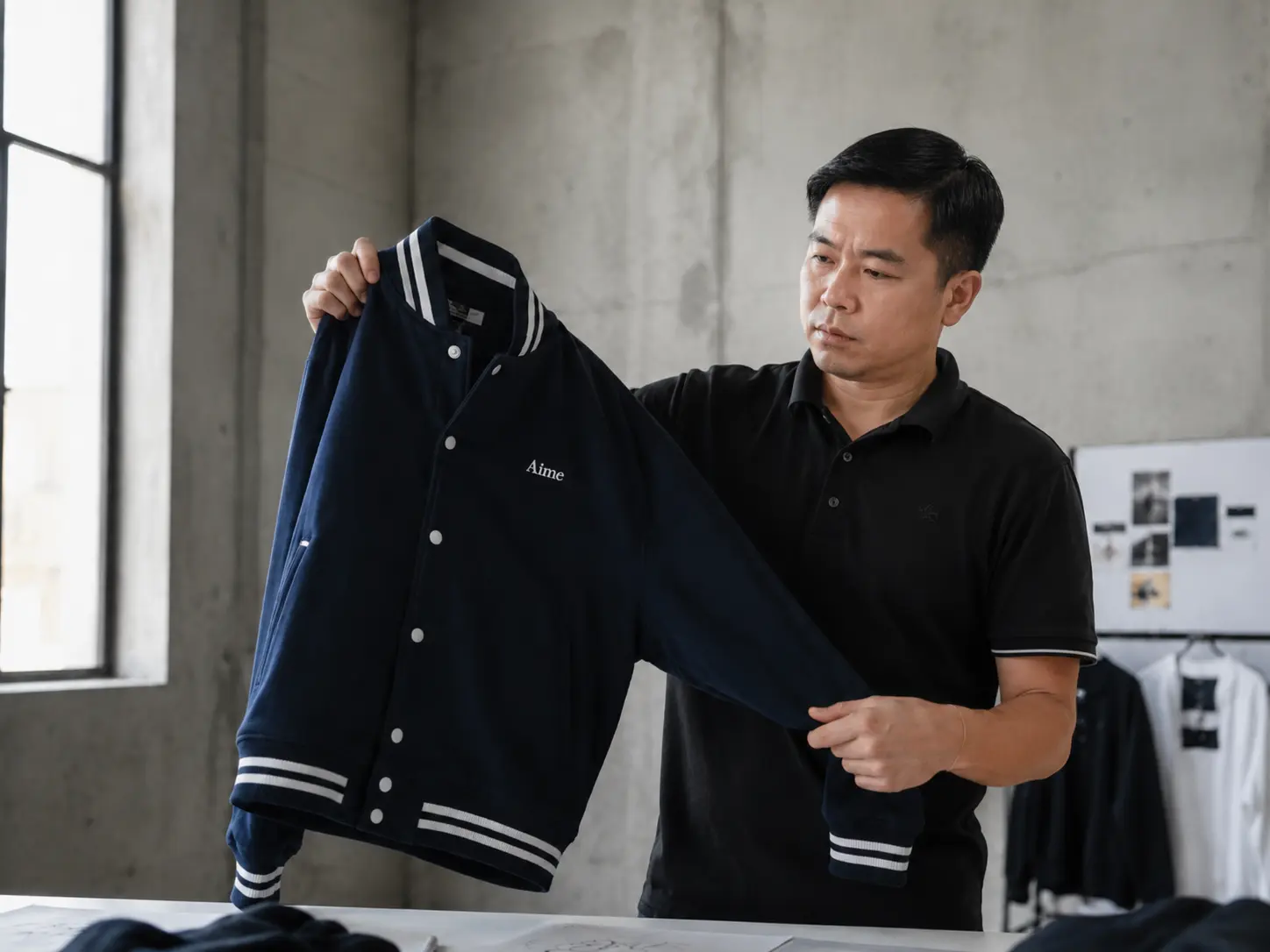
Marcus had everything in place for his new jacket brand, from heavy-duty materials to a stylish logo. After six weeks of designing a logo and setting up an online shop with Shopify, he has now run out of options. The next step is finding a way to capitalize the design while not spending more than $5,000 before selling anything.
He did an internet search. Everything he saw about making a brand suggested that you use Printful or Printify to place an image of your choice on a blank hoodie, and then you’ve made a brand. That’s what he did. He didn’t like the margins and he didn’t like the quality. His brand looked like 50 other brands on Instagram pages.
Most guides usually intentionally miss out on covering the fact that there is a third option to creating a brand; begin with 1 piece of your own, own 100% of your product & then create a real brand with real margins. This type of manufacturing is known as No-MOQ OEM manufacturing, and this entire guide will show you how to do just this.
The Three Ways to Get Clothing Made — and the One Most Guides Don’t Mention
Most brand creators have been here at some point – searching online for information on starting a clothing line without money. And almost every article you read about starting a clothing line includes one of two business models; print on demand and dropshipping – both of which you can be successful with but have real limitations that many of the articles you read don’t point out.
Print-on-Demand (POD)
You create your own custom designs and a 3rd party prints them on blank garments then ships them directly to the customer when purchased. It eliminates the need for an inventory or any upfront costs from you. It sounds like a perfect deal. Unfortunately, the numbers don’t work out. For example, a basic printed T-shirt at Printful has a landed cost of approximately $14-18 so you must sell your tee for approximately $35 to make at least some profit. After taking into account the cost of the advertisement, payment processing fees, packing materials and/or return costs, your gross profit would be less than $17 per tee sold.
More importantly: you don’t own the product. You own a graphic on someone else’s blank. The brand story is thin, and sophisticated customers know it when they see it.
Dropshipping
You’re not involved in the design or manufacturing of your products — they come from your supplier’s catalogue. The margin situation is worse than your previous margins, with no way to differentiate yourself. Customers can purchase the same item on a site such as AliExpress for 1/10th the price you have to sell it for, which makes it nearly impossible to create a true brand under these circumstances.
No-MOQ OEM Manufacturing — The Route That Changes the Maths
What is not typically present in the guides is that there are manufacturers, especially in China, that have shifted to a no minimum order requirement policy for the purpose of servicing start-up brands. You provide them your designs. They create products to your exact specifications and include your labels, selected materials, construction requirements, etc., from start-up brands usually order only 1 product. They also ramp up production based on your volume of orders.
| Why this matters for a founder starting with no money: No Minimum Order Quantity (MOQ) means that your cash outlay is directly tied to the actual demand for your product. You will not have to pay for an untested product that you ordered at an MOQ of 300 pieces. Instead, you can validate your product by pre-selling 1 to 5 pieces before placing your next order and continue to grow your business without ever having dead inventory. |
Step 1: Pick a Niche and a Single Hero Product
The first step is to choose a niche and a single hero product. A common mistake that many early-stage entrepreneurs make is launching a complete collection with a number of styles and colorways (in many cases, up to 24 styles) without them having generated any sales beforehand. This approach can be very expensive and distracts from their main goal. To validate your niche choice with real market data, trend forecasting platforms like WGSN are useful for understanding where apparel categories are heading before you commit to a product direction.
Choose a single item to begin with. The selected item should be one you can rely on, have definite buyers, and can easily be explained in terms of production methods for a beginner entrepreneur to communicate with a factory.
The jacket category has considerable potential for style as well. From a marketplace perspective, jackets are strong starting categories because there are many different kinds. They fall into a number of different categories including varsity jackets, bomber jackets, leather motorcycle jackets, race jackets, and denim jackets. Because of these many different categories and the fact that jackets appeal to different buyer segments, it is often easy to identify specific buyers for jackets quickly. For example, a custom varsity jacket made for a college team is not the same product as a leather racing jacket bought and worn by a member of a motorsport club. However, they are both legitimate markets with quality-minded buyers in both categories.
Step 2: Build a Tech Pack — Even a Simple One
The Tech Pack is the document that you provide to the factory, indicating exactly what your specifications are for the item you want to be manufactured. Factories do work off of specifications. If you only send in a mood board or some vague description, you’ll get back an item that may or may not be similar to your original idea.
A basic tech pack for a startup founder doesn’t need to be a 40-page engineering document. For an initial sample request, you need:
• A drawing or example image showing the outline of the garment (viewed from the front and back)
- Fabric information including weight (e.g., 600g), type of fibre composition (e.g., 60% Wool/Acrylic), and fabric finish (e.g., Brushed).
- Construction specifications such as stitches used (e.g., regular); finish for side seam (e.g., Overlocked), type of lining.
- Trim specifications — buttons, zippers, ribbing, labels
- Sizing — even if just one size for the sample
- Brand label placement and care label text
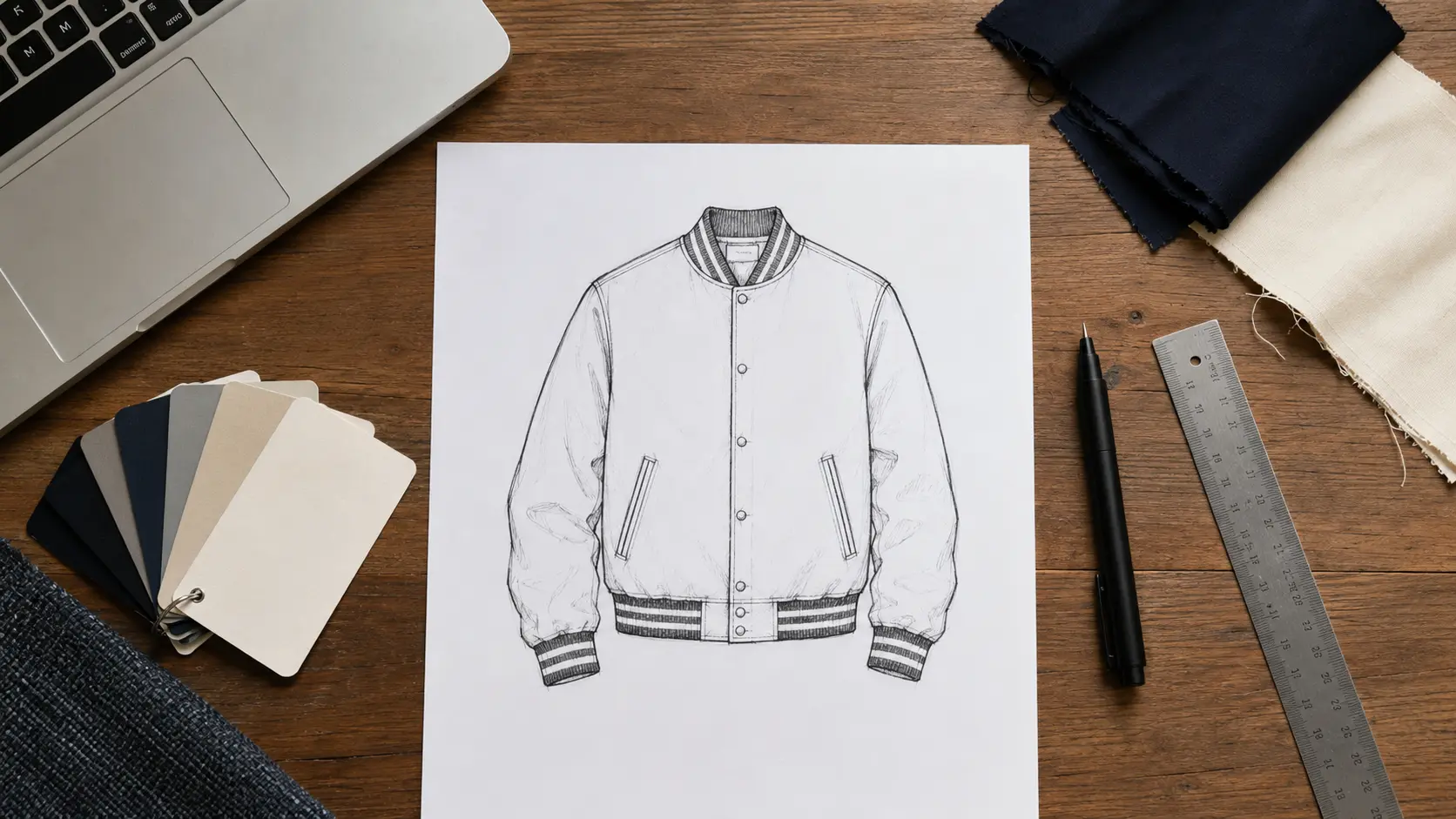
You do not need special tools to create your design. Many companies have produced first samples from sketches with measurements written on them. What a factory requires to produce your product is a picture of its intent, not a picture of how well you can use your design/programme/operation software.
| Production tip from 12 years on the factory floor: The most efficient factories for startup brands are typically those that have a full-time sample team. Make sure to ask your factory, “Do you have your own in-house sample team or do you contract out your sampling?” An in-house team will be much quicker to respond to requests when revisions need making and communicate clearly about those revisions. |
Step 3: Find a Factory That Works for Startup Volumes
Many factories are not equipped to process small amounts of product. The traditional manufacturer has a minimum order quantity (MOQ) of 300 – 500 units/hues, as their cut lines are set up for volume production. To a manufacturer, an order of 10 units is a nuisance vs an opportunity.
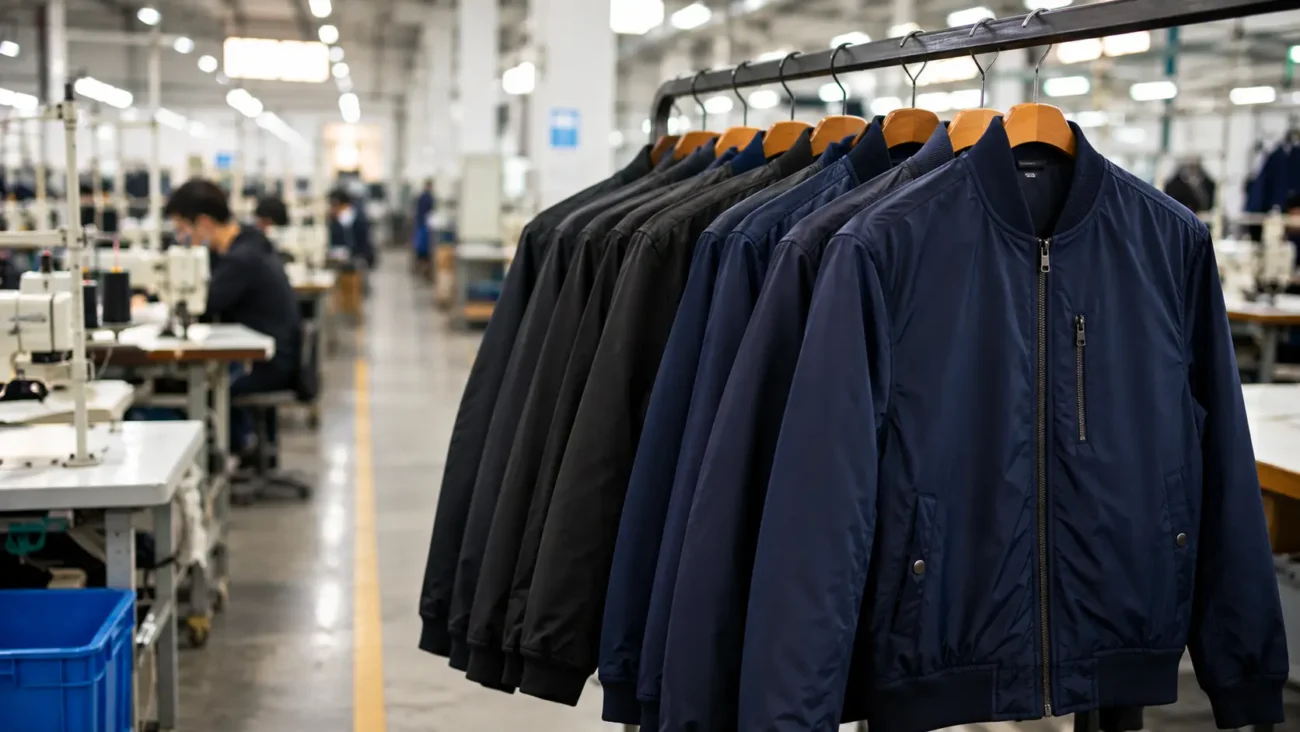
As a startup founder, you’ll find factories that have been specifically redesigned to run smaller runs and are more focused on startups than traditional OEMs. Examples include modular cutting methods, sample manufacturing team that produces single units very efficiently, and will be great partners for producing prototypes. However, it will take some research to find these types of factories. Here are tips on how to locate them:
• Direct OEM factory contact in production hubs (i.e., Guangzhou, Hangzhou, and Jiaxing for jacket production)
• Verified manufacturer directory (i.e., located in countries where products produced in those factories have been shipped)
- LinkedIn — decision-makers at smaller OEM factories are reachable directly, unlike large conglomeratesThe first thing you should do when contacting a manufacturer is to ask them for their minimum sample quantity and the associated cost for sampling before anything else. If the manufacturer is prepared to manufacture large quantities, then they will provide you with a straightforward and direct response. Unfortunately, if they are not prepared to do so, they will either ignore your communication completely or provide an unreasonable MOQ for you to meet as an initial order.
At Race Apparel CUS, orders are filled as they are received. We require no minimums for the order, nor do we utilize sample products to hold your order hostage. We can provide you with both samples and completed production-ready pricing without requiring a volume commitment from you, assuming you have a spec sheet and product direction established. You can review our process for manufacturing custom jackets to see what is included.
Step 4: Sample Before You Scale — Every Single Time
Regardless of your factory’s experience level; regardless of how thoroughly you’ve completed a tech pack; always obtain a sample prior to placing any production orders. This is mandatory. Ordering a sample separates sustainable brand building founders from having stocked inventory which does not match what they sold to customers.
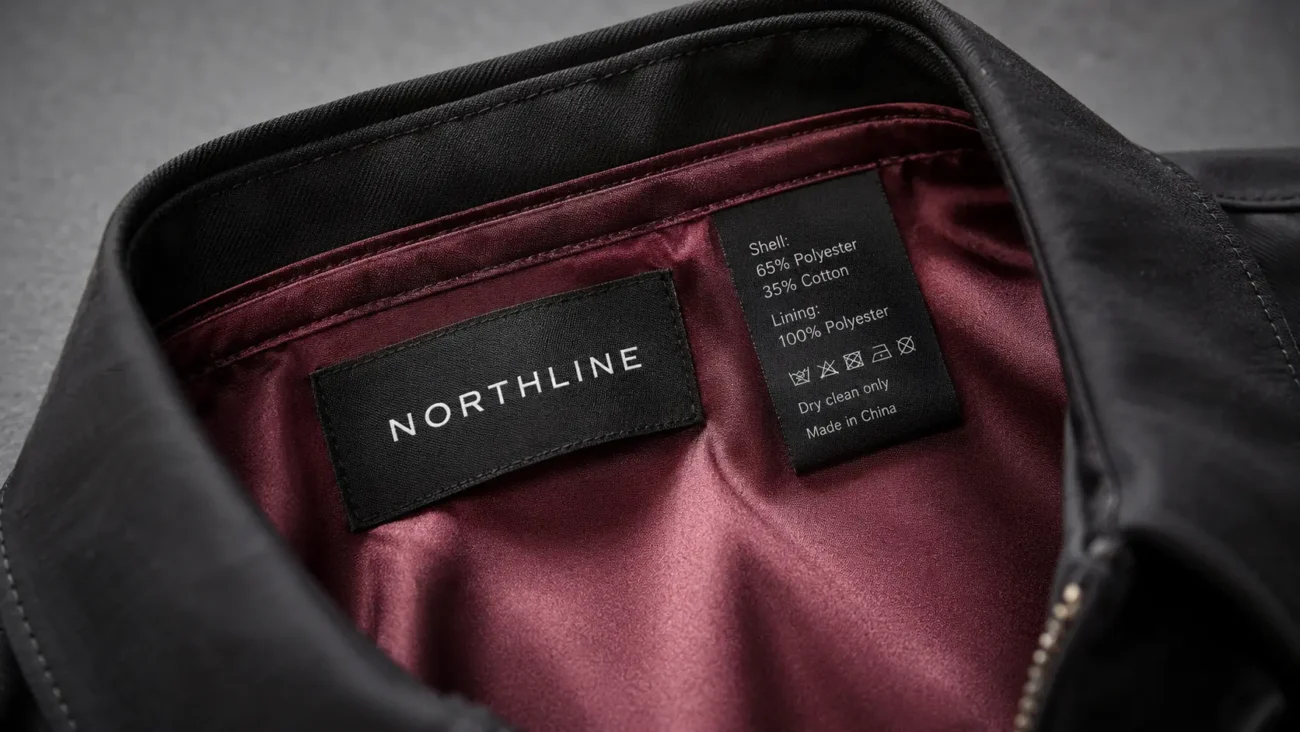
Upon receipt of the sample, you need to verify that it is in agreement with your tech pack on a line-by-line basis. Verification means specifications not impressions. That the weight of the fabric used is as specified, the stitch count is correct, and the fit corresponds by measurement as specified.
Most manufacturers will need to create a sample with one or two rounds of revisions before the sample can proceed to production. You should factor this timeframe into your overall timeline. For example, a realistic sampling cycle for a jacket will take four to six weeks from the time the tech pack is submitted until the sampling is approved and production commences (with two rounds of revisions).
The cost of a single sample jacket from an OEM factory varies from $80 to $200 based on how complex the design is. This cost is applied toward the first order you place with that OEM factory and is likely the most important money you will spend as a brand founder for $150.
Step 5: Price Your Product With Real Margins From the Start
This is where many new and inexperienced entrepreneurs (founders) who have not had much success seem to mess up and will cost themselves tons of money. An entrepreneur will set a price that seems to be competitive with others — then will find out three months later after shipping, returns, and advertising expenses, they are in the red for their operations.
Below is a sample of how to apply the formula below to each clothing brand in question, based on their respective sources/costs, and then arrive at a projected retail price:
• First, find out the landed cost of your clothing (including shipping), which will be used as your base cost.
• Next, determine your projected retail price by multiplying your base cost by 3.5 to 5 times for the purpose of determining what you should charge for each item at retail.
• Keep in mind that the gap account covers credit card fees (2-3%), return rate (budget 15% to 20% of apparel return), packaging, fulfillment, and marketing.
For a custom varsity jacket that costs $38 to produce, it would need to have a retail price range of $133-$190 for it to be commercially viable. At first glance, this appears to be a very high price point. However, when you compare it to the vast array of premium branded varsity jackets made from comparable materials and craftsmanship (retail price points of $120-$280) there is an adequate amount of room for a well-branded company in this industry.
One critical note: never price to compete with fast fashion. You cannot win that race with a properly manufactured product. Compete on quality, specificity, and brand story instead.
Step 6: Pre-Sell Before You Place the First Production Order
A clothing brand owner with limited resources has an unbeatable method at hand — by pre-selling clothes rather than manufacturing them before collecting payment, a brand will reduce the likelihood of failing due to imbalanced stock when it starts out.
The mechanics involved in this process are straightforward. You first get a sample of your product. Then, you photograph it appropriately using good lighting and composition so that customers can see what they are buying clearly. Next, you create an easy-to-read product page that includes accurate size information and expected delivery time. Finally, you price your item at retail price and wait for a certain number of pre-orders (your goal might be 5 or 10). Once you have received enough pre-orders to meet your production minimum, you will place the production order and manufacture only the exact number of products that have been sold.
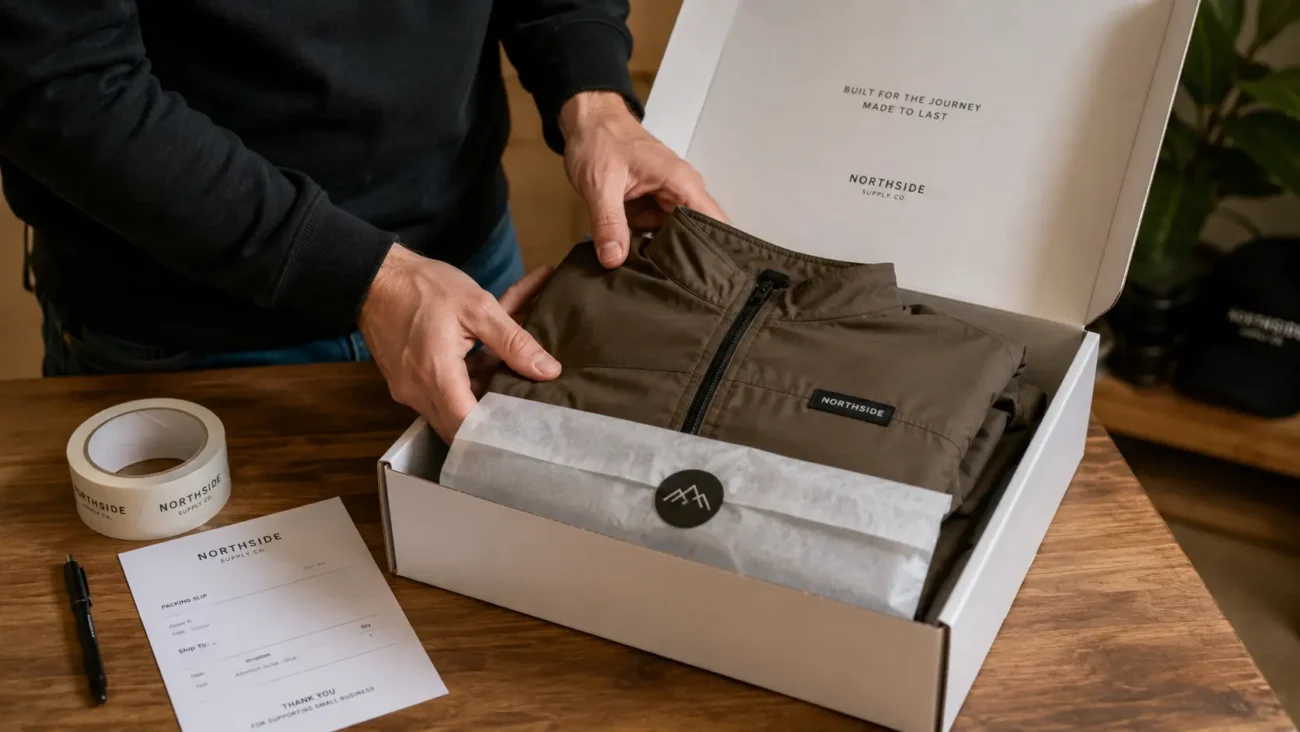
Discipline in marketing & communications is necessary for this method. Customers need to be informed on the anticipated timeframes to produce their product. A customer who is aware that they will have to wait six weeks for their custom jacket is likely to be one of your best long-term customers. Their purchase will have been placed long before the jacket arrives, making them likely to appreciate the jacket more when they finally receive it after such a long wait.
For custom jackets (private-label jackets, teams orders, motorsport apparel), the pre-sell model typically operates flawlessly because purchasers in the aforementioned categories expect and are willing to accept the time from when they order the product to when the item is actually produced.
Step 7: Launch, Collect Feedback, and Iterate Fast
Your initial product run isn’t your final output; it’s a paid acquisition experiment. Any piece leaving your plant becomes a data point. Contact customers when their orders arrive and ask three questions: Did the fit meet your expectation? Is the quality what you were expecting?
What are the changes you would make?
The answers will shape your second order more than any market research you could do beforehand. Real customers touching real product give you feedback no focus group can match.
Keep your second order intentionally smaller than you think you need. Avoid ordering too much just because you have had good success originally. Do as many production runs as you need with twice the volume, do not keep twice the amount of stock. Increase quantity produced based on real confirmed sales volume, not expected.
Stable brands manufacture and develop many of their products as controlled experiments. Consider changing the cut, improving the material used, or adding a feature requested by your customers. After the fourth or fifth production runs you will have a product that practically sells itself due to its development based on input from those who buy it.
Frequently Asked Questions
How much money do I actually need to start a clothing brand?
As an OEM manufacturer with no minimum order quantity, you’ll need at least $300-$600 to get started. This is sufficient to cover the cost of the product sample ($80-$200), any simple photography ($100-$200), and the cost of setting up an online store ($29/month for Shopify). You will also be able to fund your first production order through pre-sales.
Is print-on-demand ever the right choice?
You can use POD to check that a graphics idea has no real commercial value before putting any money into getting it manufactured properly. Once the demand is verified using POD, you can use the product-market signal created by POD as a means of moving toward OEM manufacturing.
What is the difference between OEM and ODM manufacturing?
When you work with an OEM (Original Equipment Manufacturer) supplier, they manufacture products according to your designs and specifications. An ODM (Original Design Manufacturer) supplier develops and manufactures products using previously developed designs that they have created; you will modify the designed product. Therefore, if you want to establish your own brand that has true ownership, using OEMs is typically a better option than using ODMs.
How long does it take to get a first sample?
A jacket’s development (and final garment) takes around 4-6 weeks from tech pack submission until receiving the sample. This entire timeline includes the following steps: producing the sample, performing factory quality checks and the time it takes for international shipping. There are also expedited options; however, they will generally cost more.
Do I need a registered business to work with a manufacturer?
Any OEM factory will typically allow you to do sample orders as an individual. If you’re placing a production order, it will be easier to invoice and clear customs if you have a registered business but for small first orders usually don’t need it. You should confirm this with the actual factory you are working with.
What should I look for in a jacket manufacturer?
When it comes to bringing your product to market, 3 key factors will be whether or not you use 3rd party manufacturers: 1) The first sample; 2) Speed of response (A factory that takes four days to respond to your email will also take 8 days to solve your production issue); 3) Openness about lead times. Make sure to verify their past experience with other brands before proceeding.
Can I put my own label and branding on OEM-manufactured jackets?
To your point, private label manufacturing provides your brand with a complete set of specifications for your brand name; care labels; hang tags; packaging inserts; any woven or printed labels, and more! An experienced OEM partner will take care of developing, producing and shipping all of the above items.
What is the typical lead time for a production order?
The standard lead time for producing jackets is 30 to 45 days after confirmation of order and deposit of fabric. For an extra fee, some factories offer rush production (15 to 25 days). When you pre-sell items, make sure you build the lead time into your pre-sell timeline from the very beginning.
| Ready to Build a Real Brand — Without Minimum Orders? Race Apparel CUS produces custom jackets and race suits for brand founders at all stages without a minimum order quantity or entry requirements. We will manage all manufacturing from initial samples through your first 500 unit order, allowing you to focus on marketing. ➤ Get your free production quote in 10 minutes → raceapparelcus.com/get-a-quote |
