Custom Kart Racing Suits: What to Know Before You Order

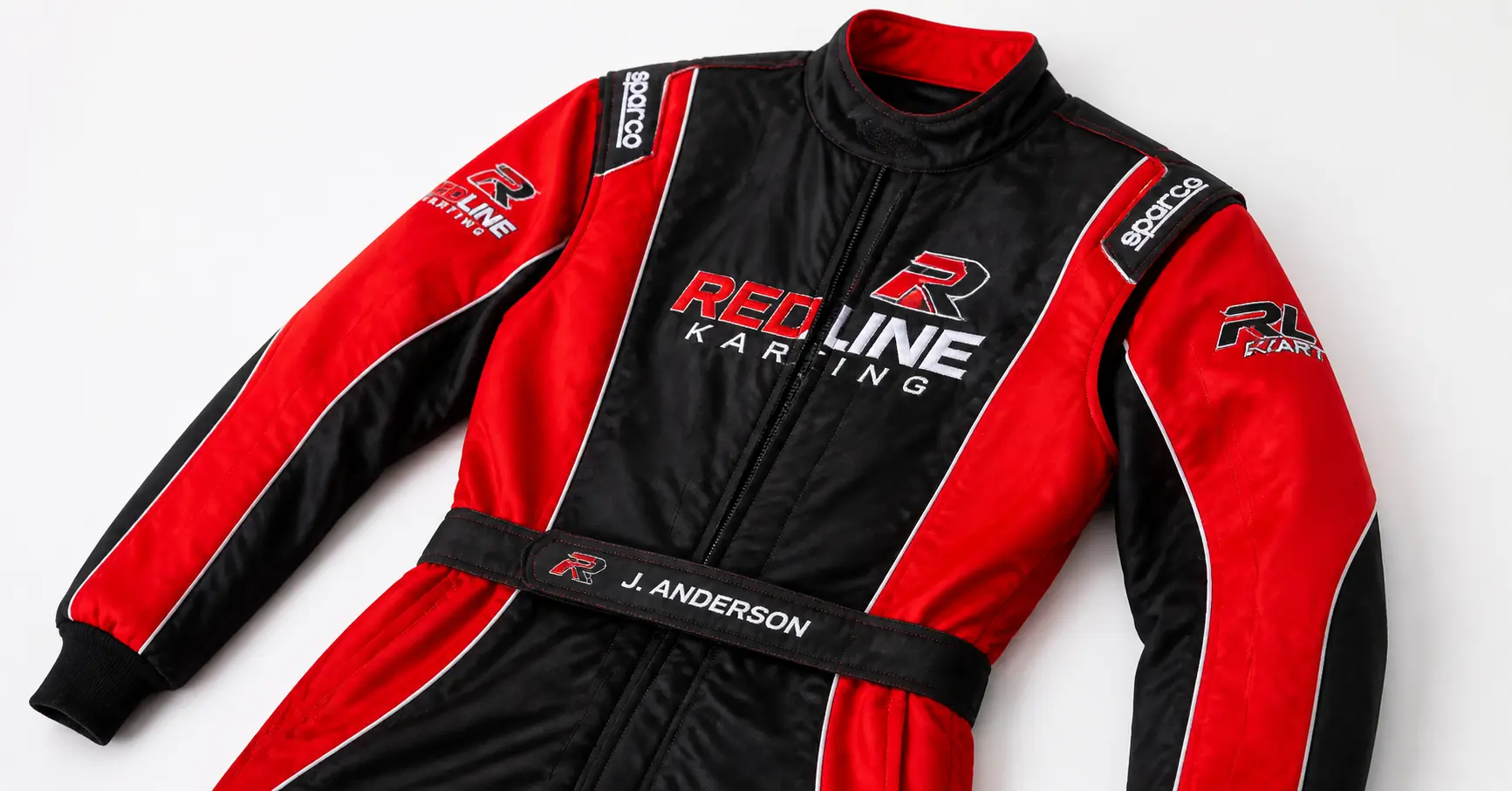
A karting team in Germany placed an order for 12 custom suits from a supplier they found on Alibaba. The suits arrived six weeks later — wrong colors, no CIK homologation tag, and the stitching on two suits was already fraying at the collar. They had to reorder from scratch, eat the cost of the first batch, and delay their season opener by three weeks.
That kind of outcome is more common than most buyers expect. Custom kart racing suits look straightforward on the surface — fabric, stitching, logo placement. But the gap between a suit that looks right and a suit that performs safely under race conditions is where inexperienced suppliers consistently fail.
This guide covers what actually separates quality kart suit manufacturing from the rest — materials, construction standards, customization options, and what to watch for before you place any order.
1. What Makes a Kart Racing Suit Different
A kart racing suit is not just branded sportswear. It is a safety garment. Drivers sit inches from tarmac with no roll cage, no airbags, and no crumple zone between them and the track surface. A suit that fails structurally mid-race is not just a product problem — it is a safety incident.
The primary function of a kart suit is abrasion resistance. In a spin or slide, the suit takes the initial contact with the track. The secondary function is fire resistance — required at competitive CIK/FIA-regulated events. Most professional karters also need suits that manage heat effectively, since karting is a physically intense sport and driver core temperature climbs fast.
The CIK/FIA (Commission Internationale de Karting / Fédération Internationale de l’Automobile) sets the homologation standards for competition kart suits. Level 1 and Level 2 ratings define the specific abrasion resistance, burst strength, and seam integrity requirements a suit must meet to be approved for regulated events. If your suits are intended for competition use, this certification is not optional.
2. Materials That Matter in Kart Suit Manufacturing
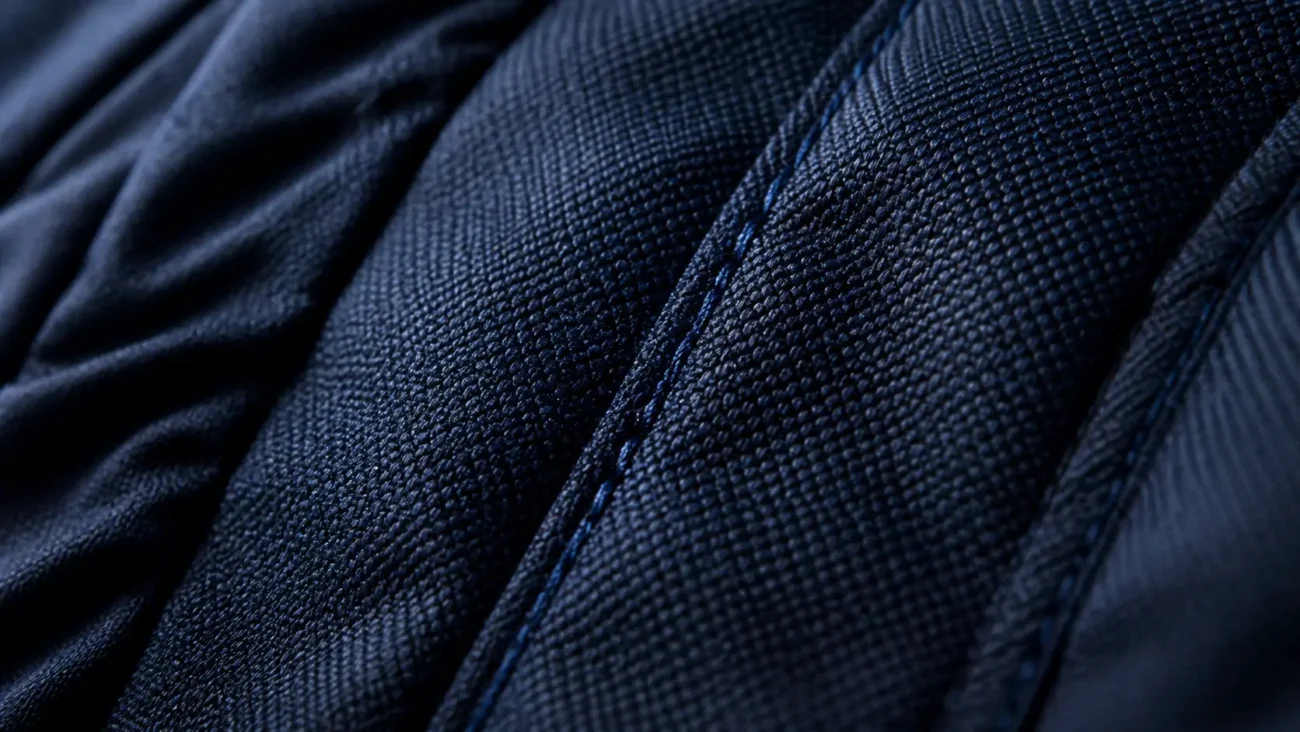
Fabric selection is where most of the real decisions happen. The three materials most commonly used in quality kart suit production are Cordura, Nylon Oxford, and Nomex blends.
Cordura
Cordura is a high-tenacity nylon fabric known for abrasion resistance that significantly outperforms standard nylon at the same weight. It is the dominant choice for club-level and recreational kart suits where CIK homologation is not required. Suits built from 500D or 600D Cordura hold up well under normal karting conditions and are significantly more cost-effective than Nomex alternatives.
Nomex
Nomex is the material required for fire-resistant kart suits at the CIK Level 2 standard. It is an aramid fiber — the same family of materials used in professional motorsport across Formula racing and endurance events. Nomex suits cost more to manufacture, require specific cutting and stitching techniques, and need to be tested and homologated by an accredited body to carry the CIK tag legally.
Nylon Oxford and Polyester Blends
These are used in entry-level and youth kart suits where the priority is affordability and comfort over maximum protection. They are not suitable for competitive regulated events but work fine for recreational tracks, arrive-and-drive rentals, and junior driver programs where CIK certification is not required.
Learn More about custom racing suits manufacturer
| Material | Best For | CIK Eligible? |
| Cordura 500D/600D | Club racing, recreational use | Level 1 (abrasion only) |
| Nomex Blend | Regulated competition, CIK events | Level 1 & Level 2 |
| Nylon Oxford | Youth, rental, recreational | No |
| Polyester Blend | Entry-level, training | No |
3. Customization Options for Brands and Teams
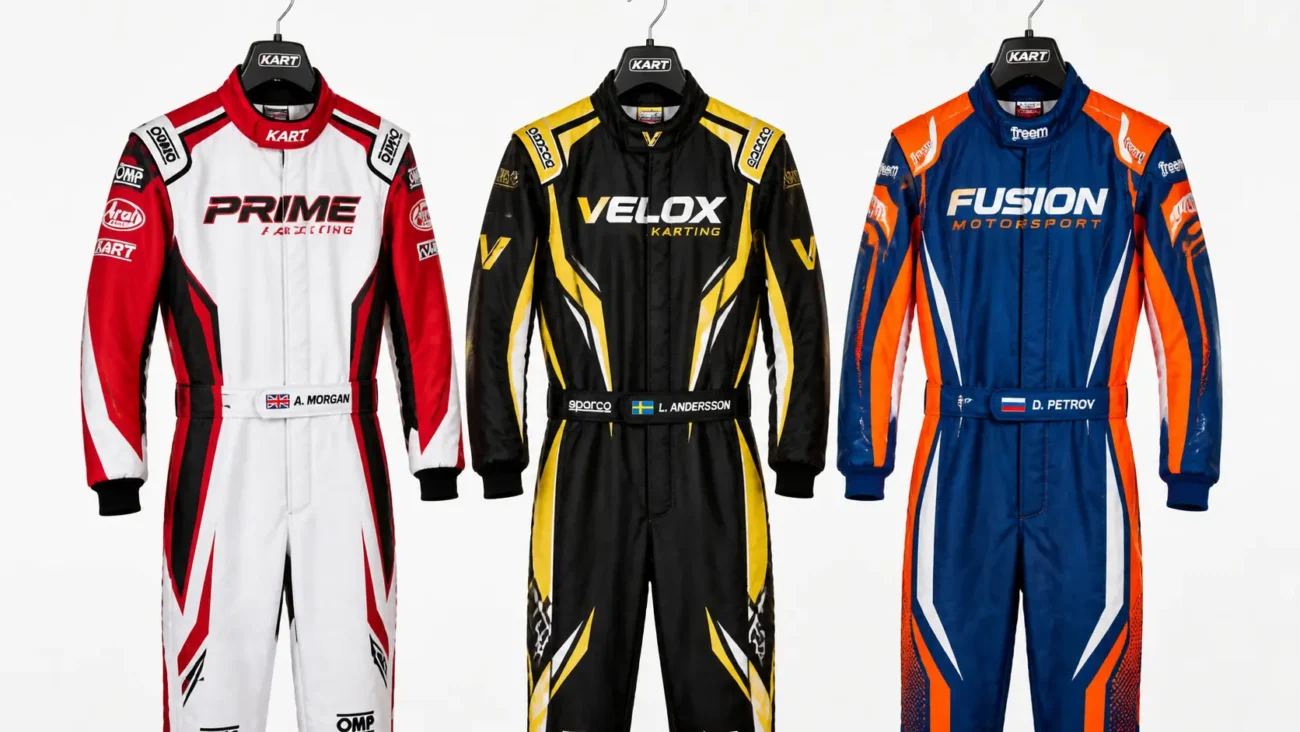
The customization scope on a kart suit is wider than most buyers realize when they first start sourcing. Beyond color and logo, every element of the suit can be specified to match a team or brand identity.
- Color blocking — panels of different colors across torso, sleeves, shoulders, and legs
- Sublimation printing — full-color all-over print directly into the fabric, not applied on top
- Embroidery — raised logo application on chest, collar, or sleeve panels
- Heat transfer printing — for sponsor logos and numbering that require photographic detail
- Custom collar design — mandarin, ribbed, or branded collar options
- Rib cuffs or elastic cuffs — affects both fit and feel at the wrist and ankle
- Knee and elbow reinforcement panels — additional layer of protection fabric at impact zones
- Internal stretch panels — typically on the inner knee and back for mobility
- Custom lining — mesh or cotton lining for moisture management
- Branded hardware — YKK zipper pullers, custom snap buttons, woven labels, hangtags
One detail worth flagging: sublimation printing and screen printing serve different purposes. Sublimation produces seamless, vibrant color that will not crack or peel over time but requires polyester-based fabric to bond correctly. If you are sourcing Cordura suits, sublimation works on certain weaves but not all — confirm this with your manufacturer before committing to a design.
4. How the Manufacturing Process Works
Understanding the production process helps set realistic expectations around timelines, sample quality, and what can be changed at each stage.
Design and Tech Pack
Production starts with your brief. A detailed tech pack — fabric spec, color reference (Pantone codes), measurements, logo files, and any special construction details — allows the factory to cut and sew accurately on the first attempt. Vague briefs produce vague samples. The more specific your input, the fewer rounds of correction are needed.
Sampling
A reputable manufacturer will produce a physical sample before bulk production begins. This sample confirms fabric, color matching, fit, construction quality, and logo placement. Never skip sampling on a first order with a new supplier. A sample costs a fraction of a bulk order and prevents the kind of outcome described at the start of this article.
Bulk Production
Once the sample is approved, bulk production begins. Quality manufacturers run in-line quality checks during production — not just a final inspection at the end. This matters because problems caught mid-production are correctable. Problems caught after 200 suits are finished are expensive.
QC and Finishing
Final quality control checks each suit against the approved sample for color accuracy, stitching integrity, logo placement, sizing, and hardware function. Suits that fail are either reworked or rejected. The result of this stage is what actually ships to you.
5. MOQ, Sampling, and Lead Times
MOQ (minimum order quantity) varies significantly between manufacturers. Large factories with high-volume production lines typically require 50–200 pieces per style as a minimum. Smaller specialist manufacturers — particularly those focused on motorsport and technical apparel — often work with much lower quantities, and some accept single-piece custom orders for prototype or one-off production.
For a new team or brand testing the market, starting with a low MOQ and scaling based on actual demand is the smarter approach. Locking 500 units into a design before you have confirmed fit and customer feedback is a common and expensive mistake.
| Stage | Typical Timeline | What to Expect |
| Sample production | 7–14 days | Physical suit matching your spec |
| Sample revision (if needed) | 5–10 days | Corrections to fit, color, or details |
| Bulk production | 15–30 days | Depends on quantity and complexity |
| Shipping (air freight) | 3–7 days | DHL/FedEx from China to most destinations |
| Shipping (sea freight) | 25–40 days | Lower cost, slower — for non-urgent bulk |
6. Common Mistakes Buyers Make
Most problems in custom kart suit orders come from the same handful of errors. Knowing them in advance makes them avoidable.
- Ordering without a sample — this is the single most common cause of bulk order problems
- Choosing a supplier based on price alone — the cheapest quote rarely includes the same fabric, construction, or quality control as a mid-range quote
- Not specifying CIK requirements upfront — if you need homologated suits, tell the manufacturer at the inquiry stage, not after sampling
- Using low-resolution logo files — vector files (AI, EPS, SVG) are required for embroidery and clean printing; JPEG logos produce blurry or jagged results
- Skipping Pantone color references — describing a color as ‘red’ gives the factory enormous room to interpret incorrectly; provide Pantone codes
- Not confirming stitching type — flatlock, overlock, and bound seam stitching produce different feels and durability levels; specify what you need
- Assuming all manufacturers can produce CIK-certified suits — most general apparel factories cannot; this requires specific materials, testing, and certification expertise
7. Quick-Reference Checklist
| Checkpoint | Why It Matters |
| Confirm CIK requirement | Determines material selection and whether homologation is needed |
| Provide Pantone color codes | Prevents color mismatches in production |
| Submit vector logo files | Ensures clean embroidery and print output |
| Request a physical sample | Confirms quality before committing to bulk |
| Confirm fabric specification | Cordura vs Nomex vs polyester — get this in writing |
| Check stitching type | Flatlock for comfort, bound seams for extra durability |
| Clarify MOQ and lead time | Align production timeline with your racing season |
| Confirm QC process | Ask what checks are done during and after production |
| Review branding details | Labels, zipper pullers, hangtags — specify all of them |
Where RaceApparelCUS Fits In
RaceApparelCUS specializes in custom technical apparel manufacturing — including custom racing suits for motorsport brands, racing teams, and private label buyers. Production runs from single-piece prototypes through to bulk orders, with full customization across fabric, color, branding, and construction. No minimum order quantity means teams at any stage can access the same manufacturing quality.
If you are sourcing custom kart racing suits for a team, a brand launch, or a private label program, the process starts with a brief and a sample. Everything from fabric spec to CIK compliance requirements can be discussed upfront before any commitment is made.
FAQ
What is the minimum order quantity for custom kart racing suits?
MOQ varies by manufacturer. Some factories require 50–200 pieces per style. Specialist motorsport manufacturers often work with much smaller quantities — in some cases down to a single prototype suit. Confirm MOQ directly with your supplier before going deep into design discussions.
Do custom kart suits need CIK/FIA homologation?
Only if they will be used in CIK/FIA-regulated events. Recreational karting, club events, and most arrive-and-drive venues do not require homologated suits. If you are unsure, check the regulations for the specific events your suits will be used in.
What fabric is best for custom kart racing suits?
Cordura is the most widely used material for club-level suits due to its durability and cost-effectiveness. Nomex is required for fire-resistant and CIK Level 2 certified suits. The right choice depends on the use case, the regulations that apply, and your budget.
How long does it take to produce custom kart racing suits?
Sampling typically takes 7–14 days. Bulk production runs 15–30 days depending on quantity and design complexity. Add shipping time based on your preferred freight method — air freight is 3–7 days, sea freight is 25–40 days.
Can I get one custom kart suit made before ordering in bulk?
Yes. Reputable manufacturers will produce a single sample suit for approval before bulk production begins. This is standard practice and strongly recommended — a sample confirms fabric, fit, color, and construction quality before you commit to a full order.
