Mens Varsity Jacket: The Complete 2026 Buying & Style Guide

Mens Varsity Jacket: The Complete 2026 Buying & Style Guide
There’s something about a varsity jacket that never gets old. It has that rare quality in fashion — the ability to look just as sharp on a 19-year-old heading to class as it does on a 45-year-old at a weekend game. It carries history, personality, and a certain effortless confidence that most outerwear can only dream of.
But if you’ve spent any time shopping for a mens varsity jacket recently, you already know the problem: the market is flooded. Some are cheaply made with thin wool that pills after two washes. Others look great online and arrive feeling like a Halloween costume. Getting a genuinely good varsity jacket — one that actually lasts, fits properly, and looks the way it should — takes a bit of knowing what to look for.
That’s exactly what this guide covers. After years working directly with manufacturers, studying what makes a quality varsity jacket, and understanding how this garment has evolved from locker rooms to fashion runways, here’s everything you actually need to know.
What Exactly Is a Mens Varsity Jacket?
The varsity jacket — also called a letterman jacket, baseball jacket, or college jacket — originated in American university sports culture in the late 1800s. Harvard University is widely credited with producing some of the earliest versions, where athletes were awarded a large letter representing their school upon excelling in a sport. The jacket became the physical symbol of that achievement.
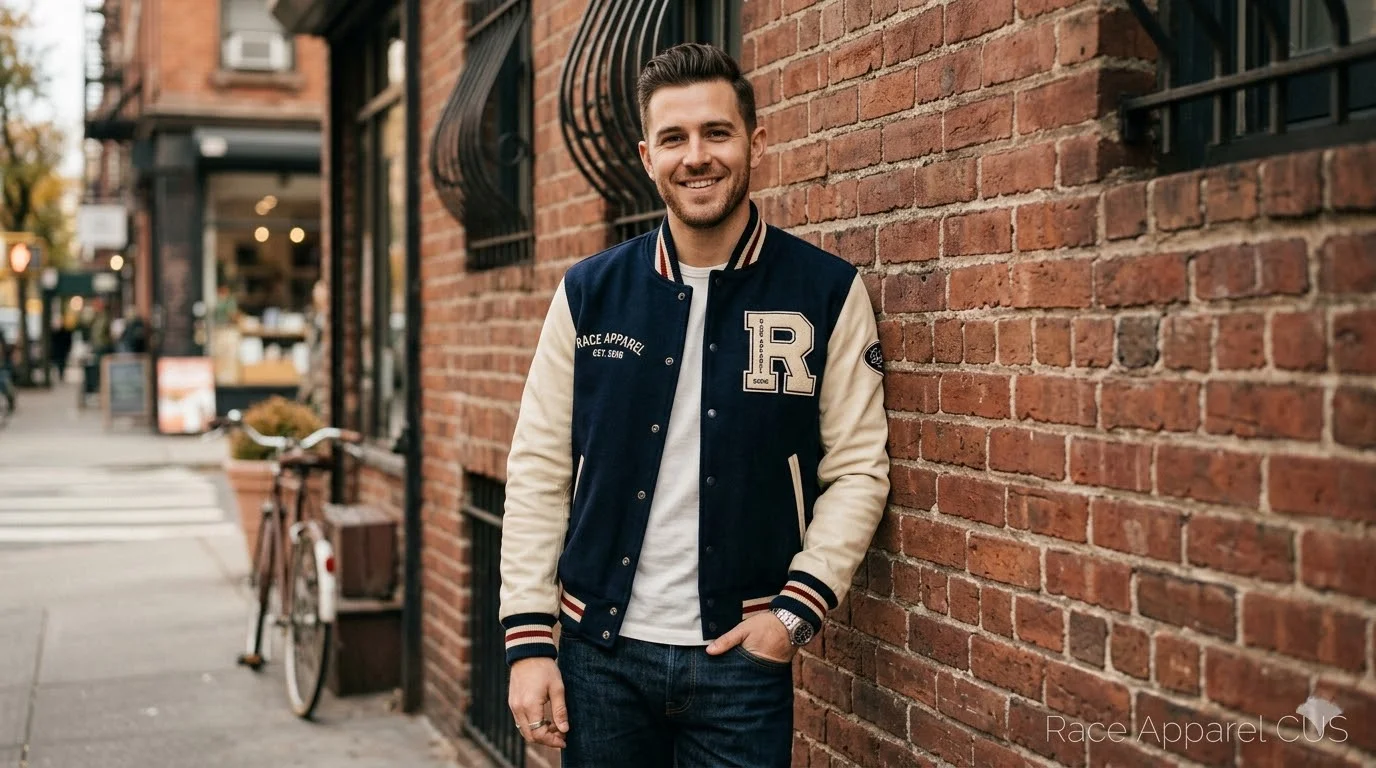
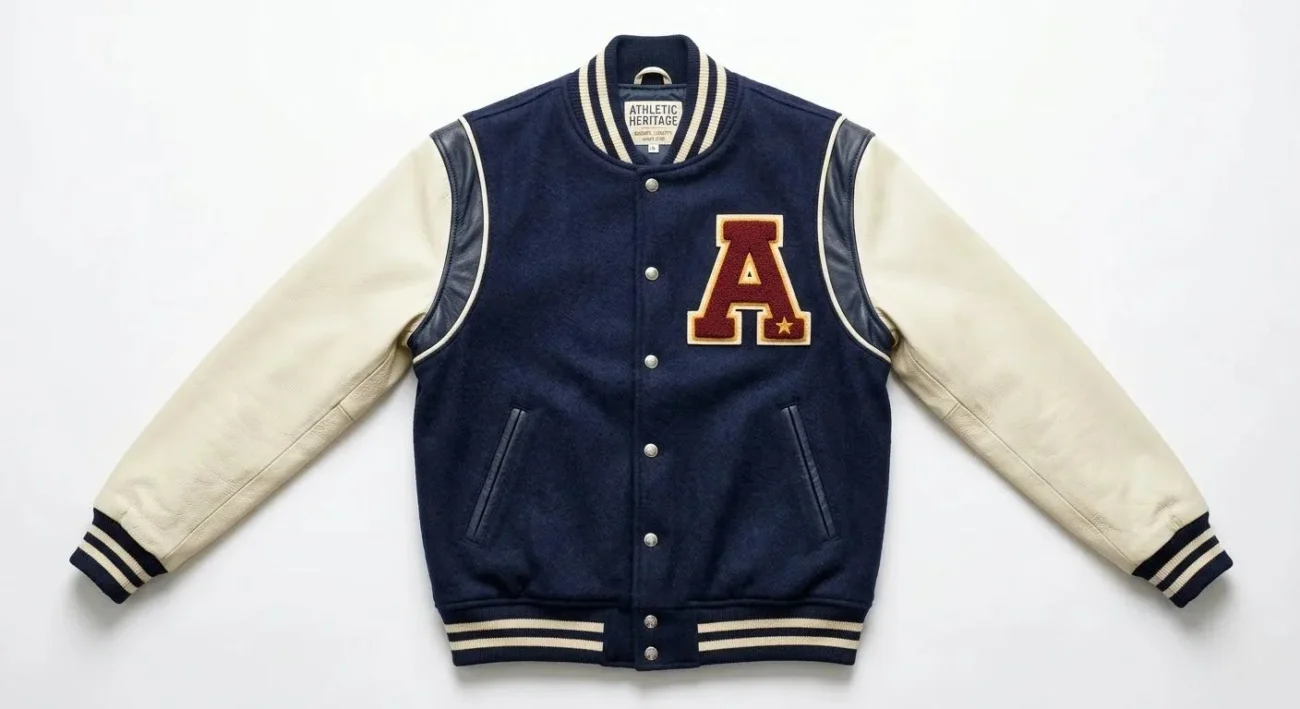
Over the following century, the design locked into a recognizable silhouette that has barely changed since: a wool body, leather or faux leather sleeves, ribbed cuffs and hem, a snap-button or zip front closure, and usually at least one large chenille or embroidered letter or patch on the chest.
What changed is who wears it and why. Today’s mens varsity jacket isn’t just for athletes. It’s worn by streetwear enthusiasts, brand loyalists, music fans, sports supporters, and anyone who appreciates a jacket that bridges casual and considered dressing.
Related: Explore Custom Varsity Jacket Options & Target Buyers
The Anatomy of a Quality Mens Varsity Jacket
Before you spend your money on any varsity jacket, you need to understand what separates a well-made one from the countless cheap imitations out there. The difference lives in five key areas.
1. The Body Fabric
Traditional varsity jackets use a melton wool blend for the body — typically a 60/40 or 80/20 wool-polyester mix. Melton wool is a tightly woven, brushed fabric that gives the jacket its characteristic weight and warmth. It resists pilling, holds its shape, and gets better with age.
What you want to avoid is anything described simply as ‘wool-look’ or ‘fleece body’ at a budget price point. These will pill, stretch, and look tired within months. A proper melton wool blend will feel noticeably heavier in your hand — that weight is what you’re paying for.
2. The Sleeves
Sleeve material is where you see the biggest variation in quality. Genuine leather sleeves are the gold standard — they develop a patina over time, mold to your body, and can last decades with basic care. Most mid-range jackets use faux leather (PU or PVC), which can look great when new but tends to crack or peel after a few years, particularly at stress points like the elbow.
If budget is a consideration, look for high-grade bonded leather rather than thin PU — it’s a middle ground that holds up considerably better than cheap synthetic alternatives.
3. The Ribbing
The cuffs, collar, and hem ribbing should be thick, even, and resilient. Cheap ribbing loses its elasticity quickly and starts to look baggy. Quality ribbing uses a tight-knit cotton-acrylic blend that snaps back every time and keeps the jacket’s silhouette crisp for years.
4. The Lining
A quality varsity jacket has a full satin or quilted lining — not just a half lining or raw interior. The lining affects how the jacket feels to put on, how it moves with you, and how warm it actually is. Satin linings are traditional and add a luxurious feel. Quilted linings add warmth. Either is fine — just make sure there’s a proper full lining.
5. Hardware and Closures
Snap buttons should be solid metal, not plastic. They should click with a satisfying firmness and not pull loose from the fabric. Zips, where used, should run smoothly without catching. These small details are telling — brands that cut corners on hardware are cutting corners everywhere.
Mens Varsity Jacket Materials at a Glance
Here’s a quick reference for the most common material combinations you’ll encounter when shopping for a mens varsity jacket:
| Body Material | Sleeve Material | Quality Tier | Durability | Best For |
| Melton Wool Blend | Genuine Leather | Premium | 10–20+ years | Investment piece / custom orders |
| Melton Wool Blend | Faux Leather (PU) | Mid-Range | 3–7 years | Everyday wear / team orders |
| Wool-Polyester Mix | Bonded Leather | Mid-Range | 4–8 years | Brand merchandise / clubs |
| Fleece / Synthetic | PVC / Thin PU | Budget | 1–2 years | One-off events / costumes |
| Cotton Twill | Cotton Sleeves | Casual | 5–10 years | Lighter weight / summer styling |
Related: View Materials & Chenille Patches Used in Our Varsity Jackets
Mens Varsity Jacket Styles in 2026: What’s Actually Trending
Varsity jacket styling has gone through several evolutions over the past decade, and 2026 has its own distinct flavor. Here’s where things stand right now.
Oversized Fit
The slim-fit varsity had its moment, but the pendulum has swung. Today’s most-worn silhouette is relaxed to slightly oversized — think one or two sizes up, worn over a hoodie or heavy knit. The shoulders drop slightly, the body is roomier, and the overall effect is that effortless, thrown-on look that’s become the signature of contemporary streetwear. If you’re buying new, this is the silhouette to lean into.
Tonal and Monochrome Colorways
The classic two-tone (navy body, white sleeves, or black body, cream sleeves) remains a staple — but the look dominating 2026 is tonal. All-black varsity jackets, all-navy, all-olive, and all-cream are everywhere. The lack of contrast reads as more mature, more fashion-forward, and honestly easier to style.
Heavyweight Versions
There’s been a strong move toward heavier garments across menswear — heavier tees, heavier sweatshirts, and yes, heavier varsity jackets. Jackets using thicker melton wool (at least 600g/m weight or higher) are commanding a premium and selling well. Weight reads as quality.
Collaborative and Limited-Edition Pieces
Some of the most sought-after varsity jackets in recent years have come from brand collaborations — a streetwear brand working with a sports team, or a musician releasing a limited run for a tour. This has elevated the jacket from casual wear to collectible, and it’s driven serious demand for custom and small-batch manufacturing.
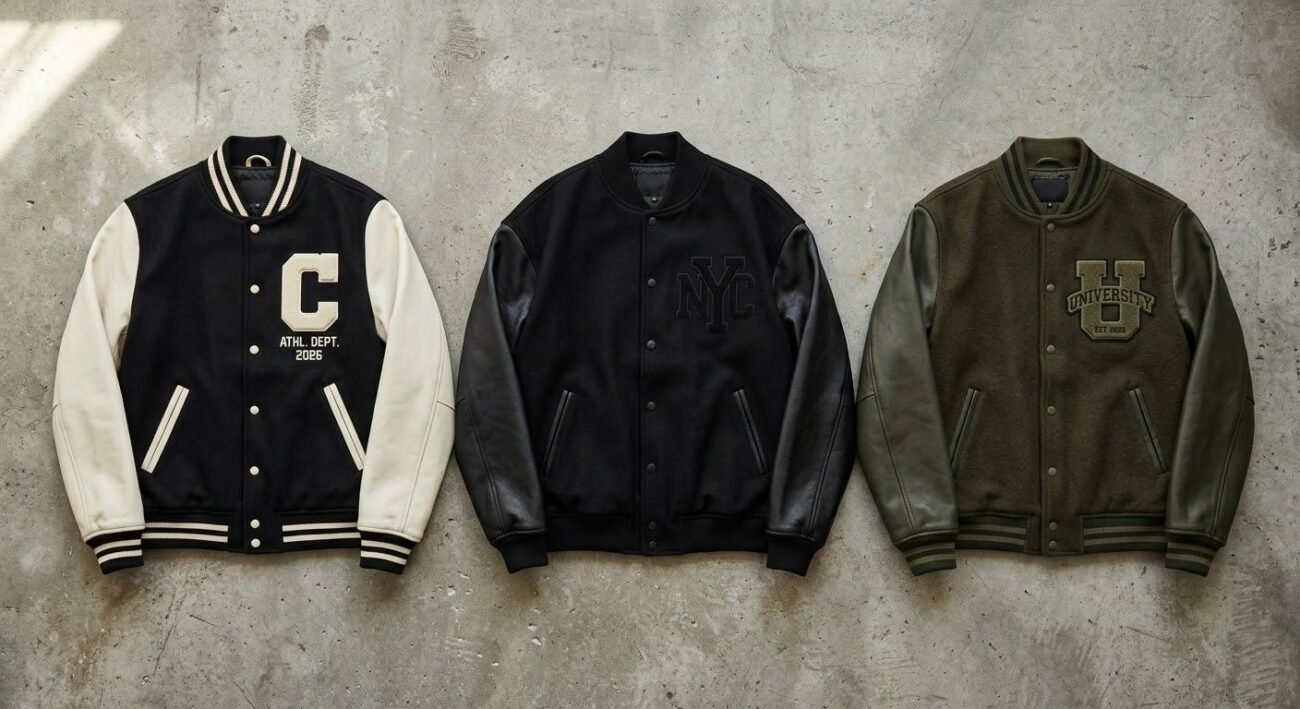
How to Style a Mens Varsity Jacket: 5 Outfits That Actually Work
The varsity jacket is a layering piece. Its proportions work best when you’re building an outfit around it rather than throwing it on top of whatever you’re wearing. Here are five combinations that genuinely work.
1. The Classic Casual
White crew-neck tee, straight-leg dark jeans, clean white sneakers, varsity jacket. This is the blueprint — and there’s a reason it’s been working for 50 years. Keep the tee tucked slightly (not fully), let the ribbed hem of the jacket sit at the hip, and make sure the jeans don’t taper too aggressively. Simple, clean, always works.
2. The Athletic Heritage Look
Wear it over a lightweight crewneck sweatshirt in a contrasting but complementary color — navy jacket over a grey sweat, for instance, or black jacket over a white sweat. Add jogger-style trousers and low-profile athletic sneakers. This leans into the jacket’s sporting origins while keeping things modern.
3. The Layered Street Look
An oversized varsity over a graphic hoodie, with wide-leg cargo or chino trousers. Layer the hood out over the jacket collar. This works particularly well with tonal or monochrome jackets where there’s no clash with the hoodie graphics. Add chunky boots or high-top sneakers to anchor the look.
4. Smart Casual (Yes, It Works)
A well-cut varsity jacket in a premium material can sit alongside smarter pieces than you’d expect. Try it over a simple mock-neck or fine-gauge rollneck in a neutral tone, with tailored trousers and leather Chelsea boots. The key is that the jacket needs to be genuinely quality — this look falls apart immediately with a cheap jacket.
5. The Brand Statement
If your varsity jacket carries significant branding, patches, or embroidery — a team name, a school, a brand collaboration — let it be the statement. Pair with the simplest possible supporting pieces: plain black tee, straight jeans, clean white trainers. Everything else should step back and let the jacket speak.
Mens Varsity Jacket Sizing: Getting the Fit Right
Sizing a varsity jacket is slightly different from sizing a regular jacket. The ribbed hem and cuffs contract the fit, and the traditional cut tends to run slightly short in the body compared to modern expectations. Here’s how to navigate it.
Chest and Shoulders First
Always size from the chest and shoulder measurements. The chest should have 3–4 inches of ease (room beyond your actual chest measurement) for a regular fit, or 5–6 inches for an oversized fit. The shoulder seam should ideally sit right at the edge of your shoulder or very slightly past it — a shoulder seam that sits too far inward will make the jacket look cheap regardless of quality.
Body Length
Traditional varsity jackets are hip-length — the hem sits roughly at the hip bone. If you’re tall or prefer a slightly longer garment, size up or look specifically for ‘longline’ versions. Going too short looks off for most purposes outside of very specific streetwear styling.
Sleeve Length
With the ribbed cuffs, sleeve length is somewhat forgiving — the cuff will gather slightly if the sleeve is marginally long. But you still want the end of the sleeve to sit roughly at the wrist bone. If sleeves are significantly too long (more than an inch of excess), size down or look for a jacket with adjustable cuffs.
| Size | Chest (inches) | Shoulder (inches) | Body Length | Best Chest Measurement |
| S | 38–40″ | 17–17.5″ | 26″ | 34–36″ |
| M | 40–42″ | 17.5–18″ | 27″ | 37–39″ |
| L | 42–44″ | 18–18.5″ | 27.5″ | 40–42″ |
| XL | 44–46″ | 18.5–19″ | 28″ | 43–45″ |
| XXL | 46–48″ | 19–19.5″ | 28.5″ | 46–48″ |
| 3XL | 50–52″ | 20–20.5″ | 29″ | 49–51″ |
Note: Measurements refer to the jacket dimensions, not your body measurements. Always add 3–4 inches of ease to your chest measurement for a standard fit, or 5–6 for oversized.
Custom Mens Varsity Jackets: What to Know Before You Order
Custom varsity jackets — whether for a sports team, a brand, a school, or personal use — have become one of the most popular categories in OEM apparel manufacturing. The demand has grown enormously over the past five years, driven by streetwear culture, the rise of brand merchandise, and the increasing accessibility of small-batch custom manufacturing.
If you’re looking to order custom, here’s what you need to know.
Minimum Order Quantities
Most quality manufacturers work with minimum order quantities (MOQs) of 30–50 pieces for custom varsity jackets. Some allow as low as 10 pieces for standard colorways, though this usually comes at a higher per-unit price. For private label or fully custom designs with unique specifications, MOQs of 100+ are common to make the tooling and sampling costs viable.
Lead Times
Expect 30–45 days for standard custom orders from sample approval to delivery. Complex designs with multiple embroidery placements, special patches, or unusual material combinations can push this to 60 days or more. Always build buffer time, especially if there’s a specific event or launch date involved.
Sampling
Any reputable manufacturer will offer a physical sample before bulk production. This step is non-negotiable — it’s your chance to check the fit, materials, print quality, and overall construction before committing to a full order. A factory that resists or discourages sampling is a red flag.
What You Can Customize
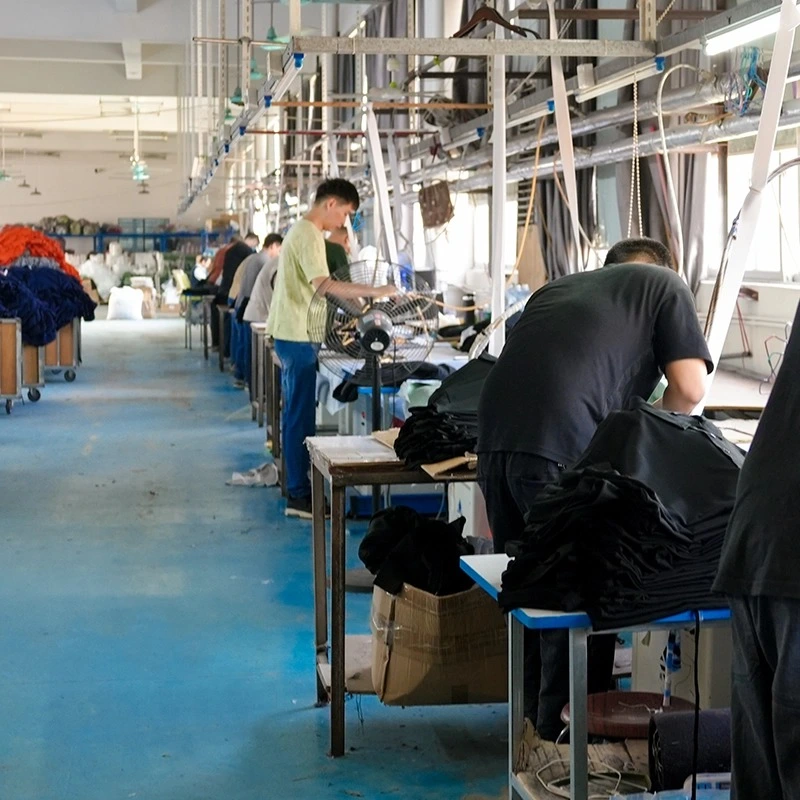
On a well-equipped production line, almost everything on a varsity jacket can be customized: body and sleeve colors and materials, lining color and fabric, ribbing color combinations, front closure type (snap or zip), pocket styles and placement, embroidery text and patches, chenille letters, woven labels, hang tags, and packaging. The more elements you customize, the longer the production lead time and the higher the per-unit cost.
Related: Varsity Jacket Customization Options & MOQ Details
How to Care for a Mens Varsity Jacket
A good varsity jacket is an investment. Treating it right means it can last a decade or more. Here’s what actually matters for care.
- Spot clean first — most minor marks on the wool body can be lifted with a damp cloth and a very small amount of mild detergent. Rubbing aggressively will mat the wool fibers.
- Dry clean the wool body — machine washing a melton wool jacket risks shrinkage and fiber damage. If the whole jacket needs cleaning, dry cleaning is the safest option.
- For leather sleeves — wipe with a damp cloth and treat periodically with a leather conditioner. Never machine wash. Genuine leather will develop a patina with age; don’t try to keep it looking brand new.
- For faux leather sleeves — clean with a damp cloth and mild soap. Avoid heat. Store carefully to prevent cracking.
- Store hanging, not folded — folding a varsity jacket creates permanent creases in the wool body. A wide-shoulder wooden hanger is ideal.
- Keep away from direct heat sources — radiators, hot car interiors, and direct sunlight will dry out both leather sleeves and wool body over time.
Where to Buy Mens Varsity Jackets: Retail vs. Custom Manufacturing
There are broadly two routes to a mens varsity jacket: buying off-the-shelf from a retailer, or going direct to a manufacturer for a standard or custom piece. Each has its place.
Retail options (department stores, streetwear boutiques, online marketplaces) offer convenience and immediate availability. You can try before you buy, returns are generally simple, and you don’t need to commit to quantities. The downside is that you’re limited to whatever designs and colorways the brand has chosen to produce, quality at a given price point is hit-or-miss, and you’re paying retail markup on top of the actual production cost.
Going direct to a manufacturer makes sense if you want custom branding, specific materials, a particular design not available off-the-shelf, or if you’re ordering for a group (team, club, brand). You’ll get significantly better value per jacket at quantity, have full control over the specification, and receive something genuinely unique. The trade-off is lead time and the need to know what you want before you commit.
Source: The Varsity Jacket’s History in American Sports Culture — Smithsonian Magazine
Frequently Asked Questions
What is the difference between a varsity jacket and a letterman jacket?
They’re the same garment — the terms are used interchangeably. ‘Letterman jacket’ refers to the tradition of athletes receiving a large embroidered letter representing their school or team. ‘Varsity jacket’ is the more general term used today, particularly outside the US.
How should a mens varsity jacket fit?
The shoulder seam should sit at or just beyond the point of your shoulder. The chest should have 3–4 inches of ease for a standard fit, or more for an oversized look. The hem should fall roughly at the hip bone. Sleeves should end at the wrist with the cuff resting just above the hand.
Are varsity jackets warm enough for winter?
A proper melton wool varsity jacket with a full lining is genuinely warm — suitable for temperatures down to around 5–8°C (40–45°F) in dry conditions. For colder climates or wet weather, layer underneath or consider a jacket with a quilted lining. They’re not designed as heavy-duty winter coats, but they hold their own in cool to cold temperatures.
Can I wash a varsity jacket at home?
Not recommended for wool-bodied jackets. Machine washing risks shrinkage, felting of the wool fibers, and damage to leather or faux leather sleeves. Spot clean minor marks, and dry clean for a thorough clean. Synthetic varsity jackets (fleece body, synthetic sleeves) can generally be machine washed on a gentle cycle.
What’s the minimum order for custom varsity jackets?
Minimum order quantities vary by manufacturer, but 30–50 pieces is a typical starting point for custom orders. Some factories work with lower MOQs for standard colorways. For fully bespoke designs with custom materials and hardware, 100 pieces is a more common minimum.
Final Thoughts
The mens varsity jacket has earned its permanent place in the wardrobe for good reason. When it’s made properly, with real materials and real craft, it’s one of those rare garments that genuinely improves with age and becomes a personal artifact rather than just a piece of clothing.
Whether you’re buying one for yourself, ordering custom pieces for a brand, or sourcing wholesale for a retail operation — understanding the materials, construction, and fit is the difference between a jacket that disappoints and one that becomes the piece you reach for every time.
If you’re considering custom or wholesale varsity jackets, talking directly to a manufacturer who specializes in this category will always give you a better outcome than sourcing generically. The knowledge of what’s possible — and what details actually matter — lives with the people who make these jackets day in and day out.
Related: Start Your Custom Varsity Jacket Order — Race Apparel CUS
